Description
Wind Tower Production Line
Production Line Overview
Anbakai’s wind tower production line is an advanced integrated intelligent solution tailored for the global high-end wind tower manufacturing industry. Technically, it integrates cutting-edge automation technology, precision processing craftsmanship, and a full-cycle quality management system. It is primarily designed to produce high-reliability, long-service-life onshore and offshore wind towers for 2MW to 8MW units, with the maximum diameter of large offshore units reaching 8.5m. Flexible customization is also available to meet the specific requirements of various projects.
Unlike traditional production lines, Anbakai adopts a highly integrated modular design that optimizes the entire production process. Boosts efficiency by 40%, and reduces labor costs by 25%. With over 10 years of experience in the wind power equipment manufacturing industry. We remain committed to technological innovation and have earned the trust of more than 50 customers worldwide. Fully compliant with international authoritative standards—including EN 1090-2, ISO 17640, CE. AWS D1.1—our production line ensures products seamlessly enter the global market and support the development of global clean energy.
Process Flow Diagram
Single Tower Tube Production Process:
Multiple Tower Tubes Production Process:
Tower Tube Sandblasting and Painting Production Process:
Main Components of Wind Tower Welding Line:
- Bending Machine:
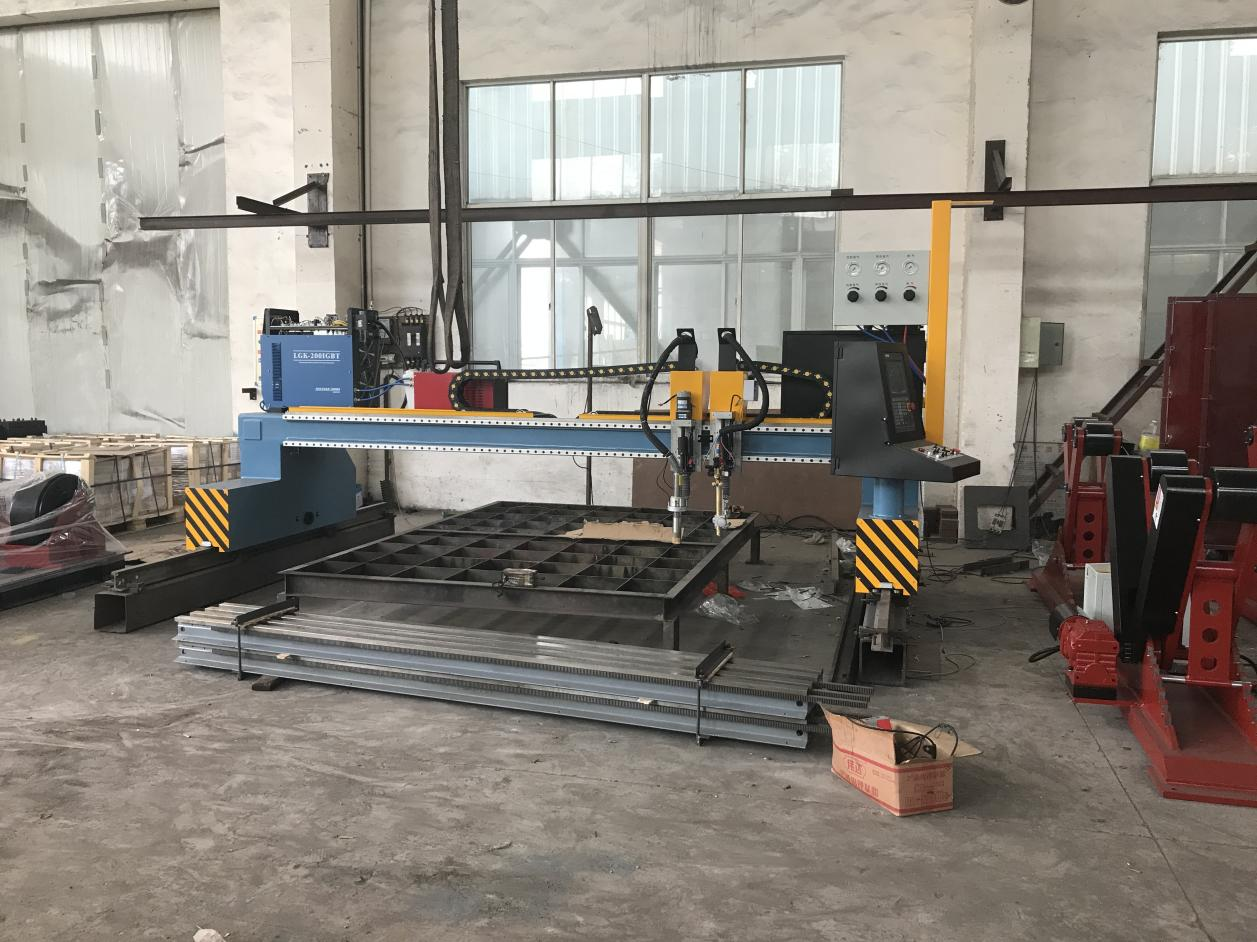
- CNC Cutting Machine:
There are two kinds of CNC cutters for you to choose: CNC flame cutting machine and CNC plasma cutting machine, and both of them can simultaneously cut several plates, so the cutter is highly efficient.
- Welding Equipment:
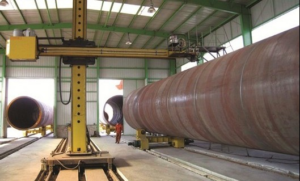
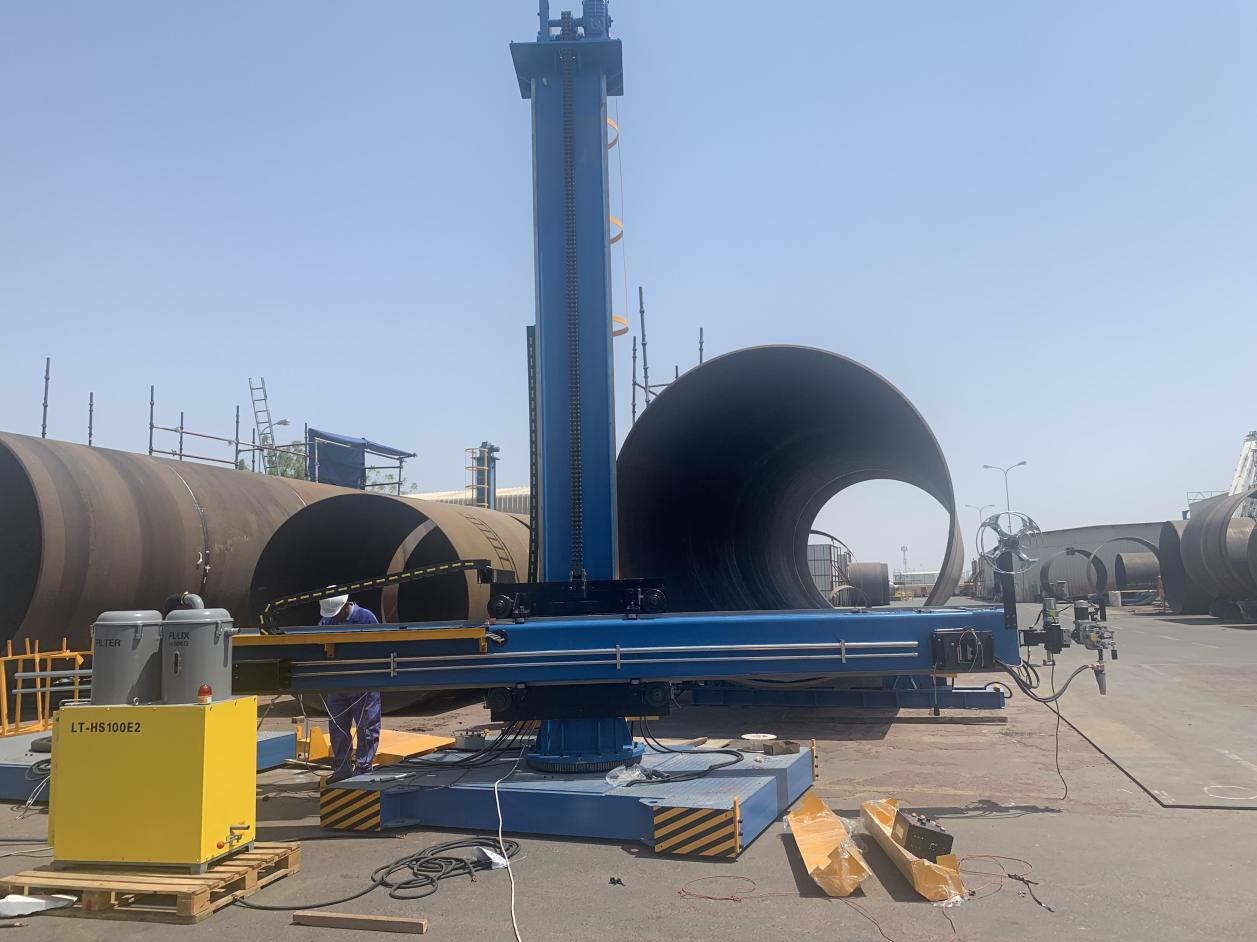
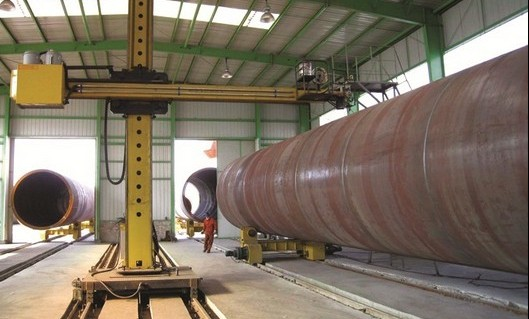
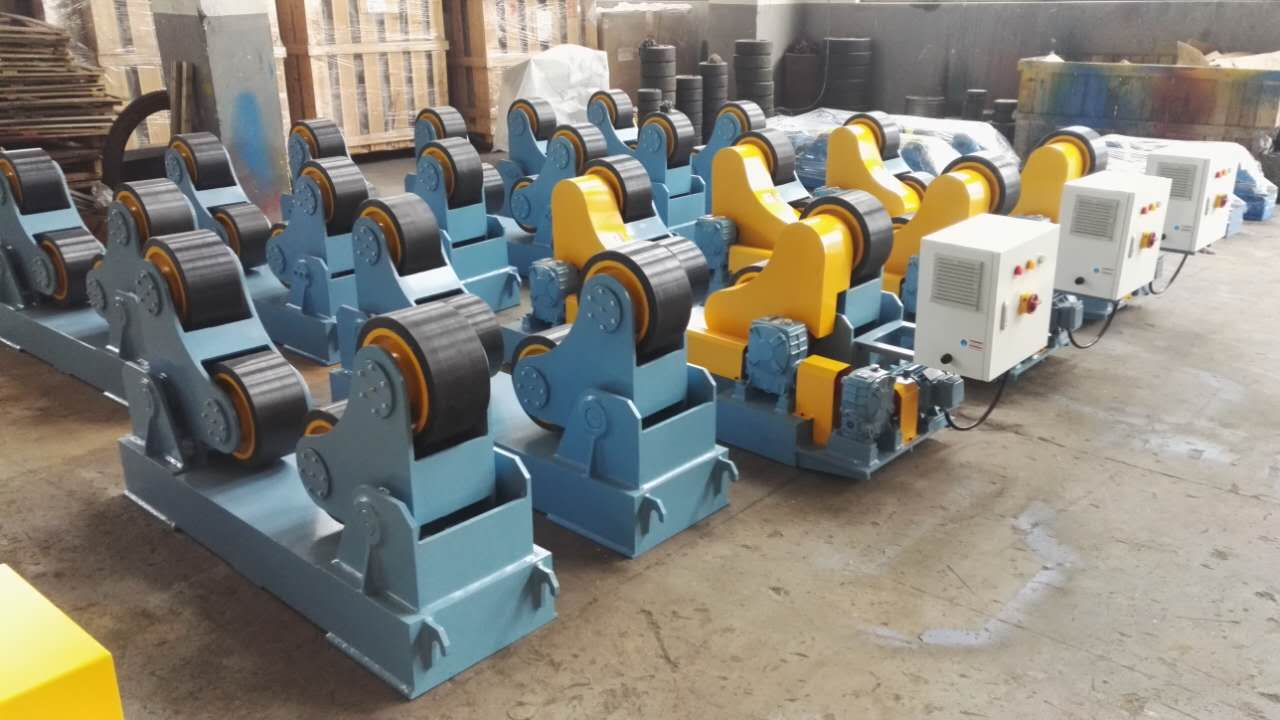
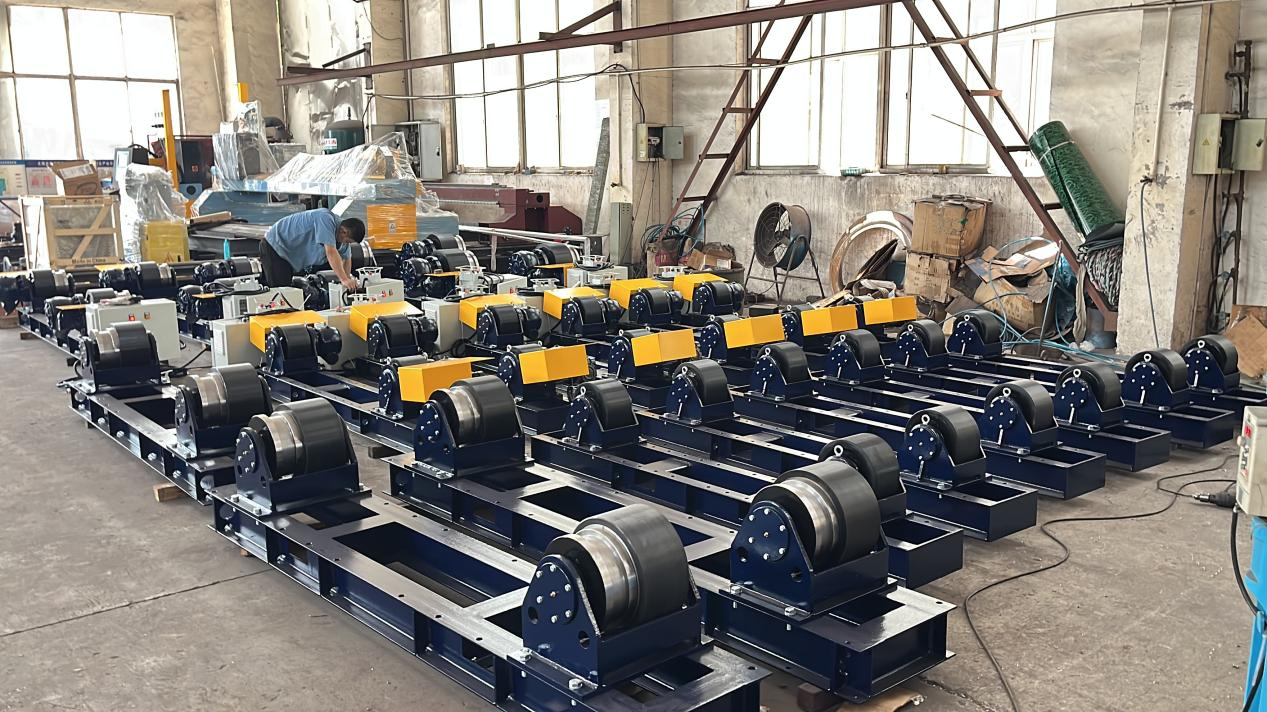
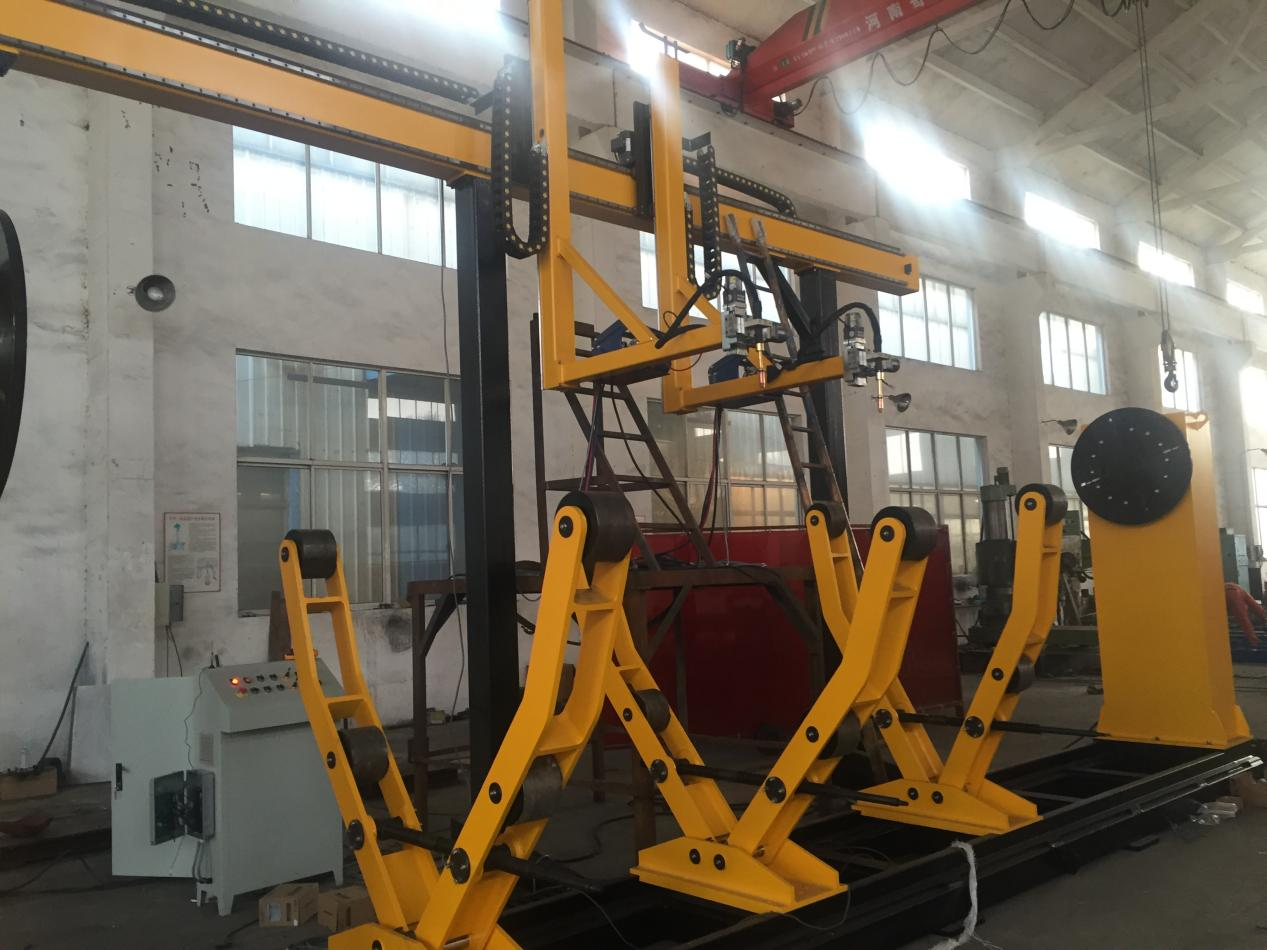
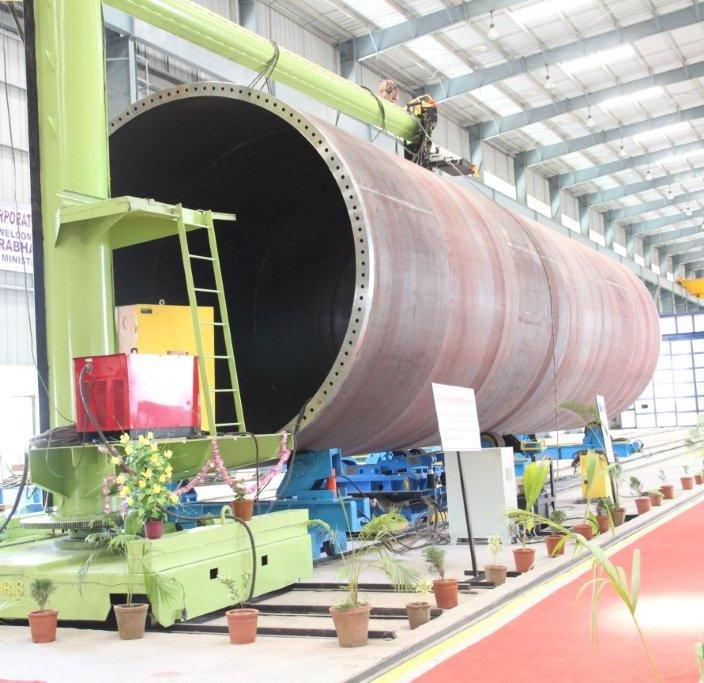
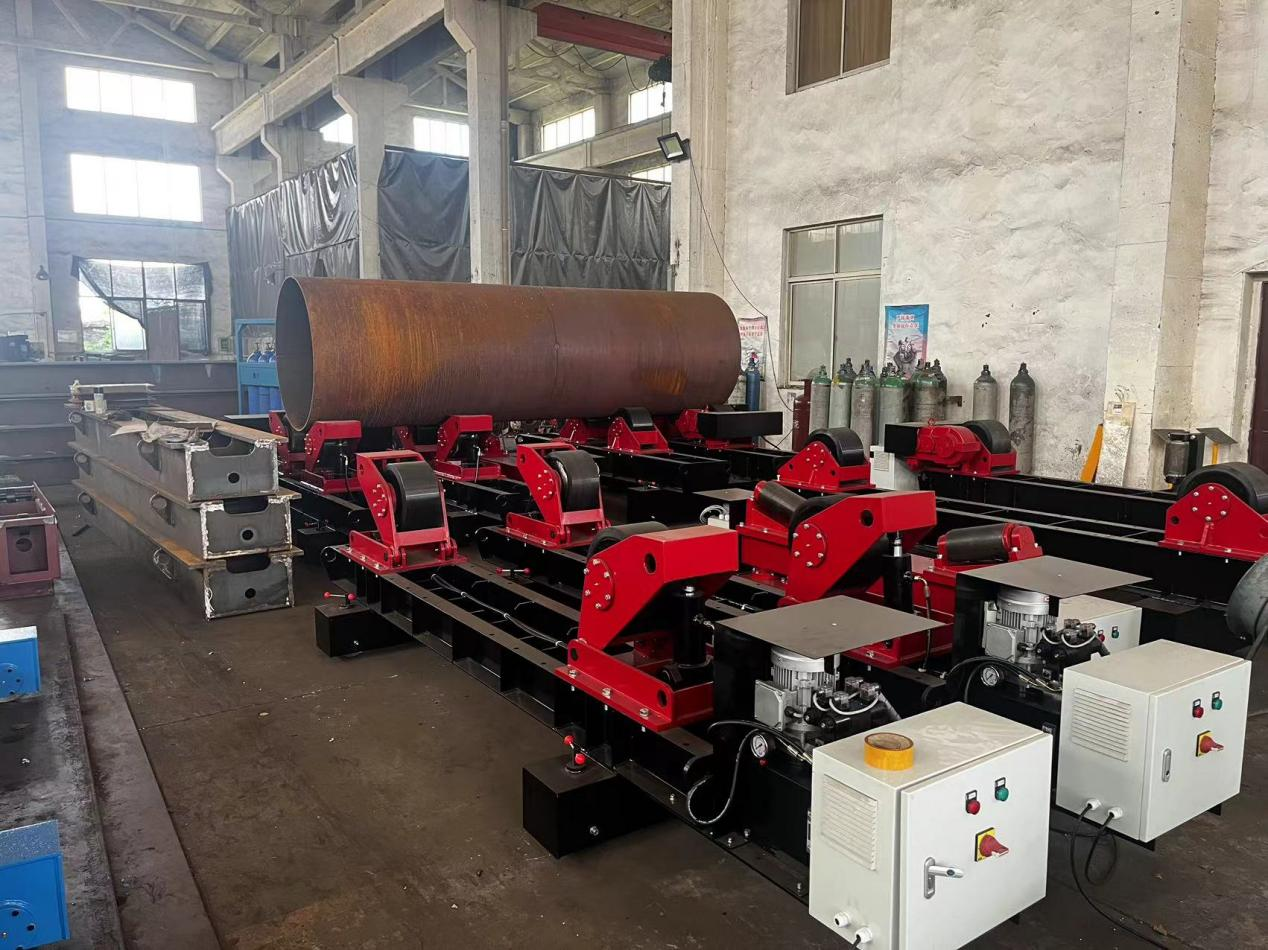
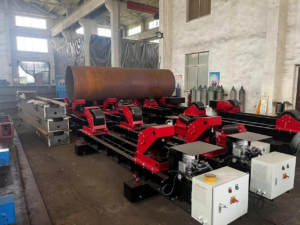
The welding equipment mainly consists of welding manipulator, submerged-arc welding system, automatic recycling feeding system, and welding rotator.
- Welding Rotator Set:
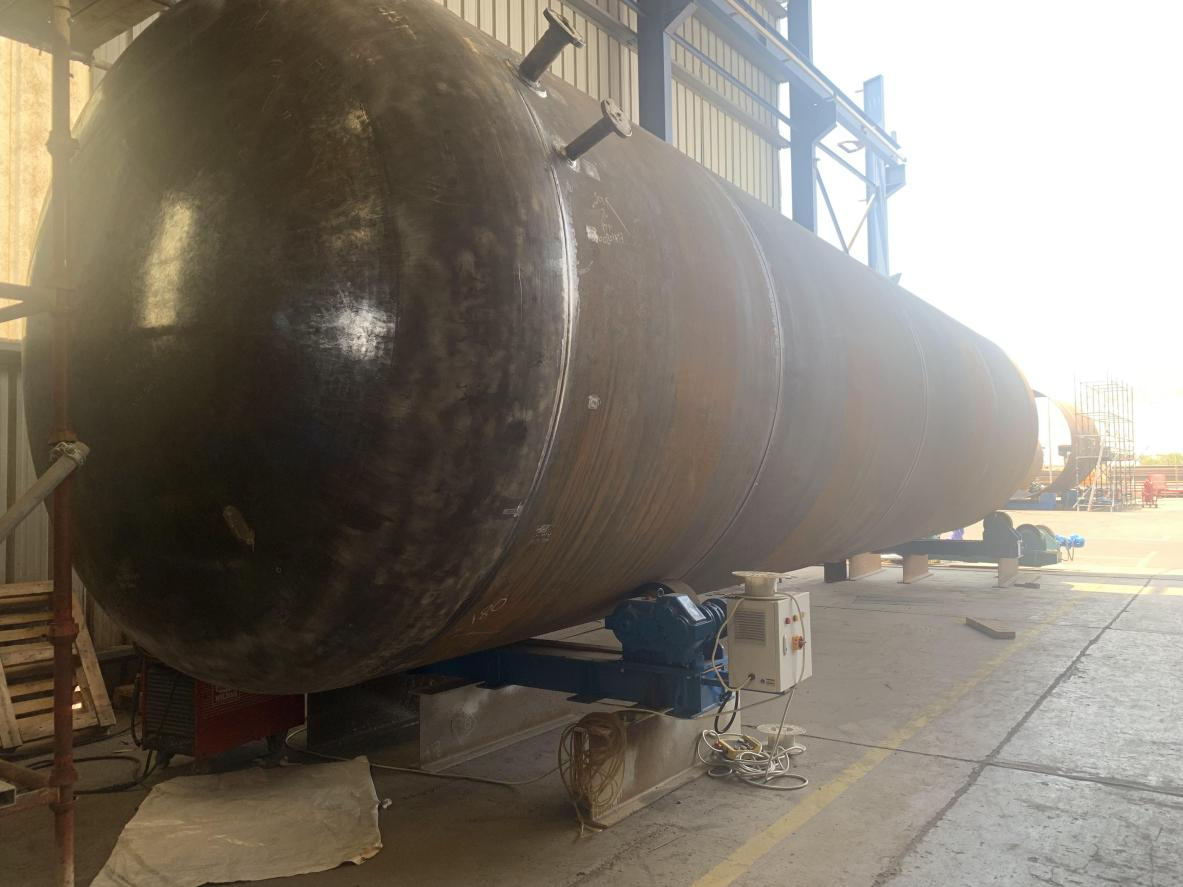
The matching part and circular seam welding section of the wind tower tube are mainly made up of welding manipulator, submerged arc welding system, automatic recycling feeding system, welding rotator.
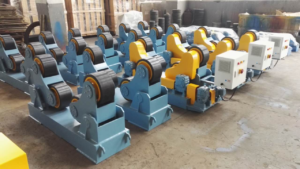
- Sandblasting and Painting
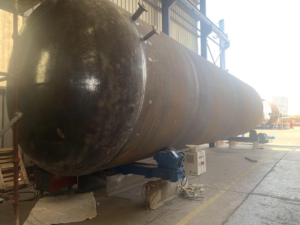
Turning rolls, with walking ability, are fitted to facilitate the sandblasting and painting process of the tower tubes. The painting turning rolls have adopted middle-concave roller wheels, which can be used to support flanges so that painting work can be finished conveniently. The motor is anti-explosive and dust-proof.
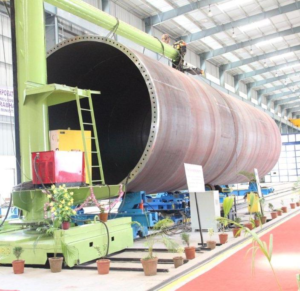
Equipment for Each Stage
Wind tower manufacturing consists of 6 key stages, each equipped with professional, high-performance intelligent equipment—critical to ensuring precision and efficiency at every production step. Below is a detailed overview of the core equipment for each stage, aligned with Anbakai’s Equipment Cards UVP module and reflecting our expertise in offshore wind tower manufacturing solutions and onshore production efficiency advantages.
Raw Material Pretreatment Stage —The Foundation of Tower Quality
This stage is critical to the final quality of wind towers. It involves processing low-alloy high-strength steel plates (e.g., Q355, S355) to remove surface defects, enhance material performance, and lay a solid foundation for subsequent manufacturing. The core equipment includes two key types:
CNC Plasma Cutting Machine: Equipped with advanced laser positioning and real-time thickness compensation technology, it achieves blanking accuracy of ±1.5mm, making it suitable for high-precision cutting of conical and cylindrical tower sections. It supports automatic loading and unloading, efficiently cuts steel plates up to 210mm thick, and adjusts cutting parameters flexibly to accommodate diverse tower designs—all with user-friendly operation.
Shot Blasting Machine: Utilizing high-pressure shot blasting technology, it completely removes rust, scale, and surface contaminants, ensuring surface cleanliness meets ISO 8501-1 Sa2.5 standards. This treatment significantly improves subsequent coating adhesion, enhances tower corrosion resistance, and extends service life in harsh environments (e.g., coastal areas, high altitudes)—a key advantage of Anbakai’s production line.
Plate Rolling & Forming Stage — Key to Tower Structural Stability
The core task of this stage is forming pretreated steel plates into cylindrical or conical tower sections—directly impacting structural stability. Anbakai’s carefully selected core equipment ensures superior forming precision:
Three-Roll Plate Bending Machine: A high-rigidity CNC hydraulic model with a processing diameter range of 2.5m–16m. It features a proportional hydraulic control system that adjusts bending force in real time based on steel plate thickness and material, ensuring uniform section curvature, precise edge alignment, and no deformation from uneven force—critical to Anbakai’s tower forming quality.
Section Alignment Platform: Equipped with dual electronic and laser positioning systems, it accurately corrects formed section deformation, keeping longitudinal seam precision within ±0.5mm. This significantly reduces welding defects caused by misalignment, enhances tower structural stability, and facilitates subsequent welding. For detailed equipment parameters, contact Anbakai anytime.
Welding Stage Core of Wind Tower Manufacturing, Defining Strength and Safety
Welding is the core of wind tower manufacturing, directly determining structural strength and safety. Anbakai’s high-precision intelligent welding equipment ensures the reliability of every weld:
Cantilever Submerged Arc Welding (SAW) System: CNC-controlled with robotic circumferential welding and flange alignment capabilities, it achieves joint precision of ±1mm. Its multi-layer continuous welding mode boosts efficiency by over 50% compared to manual welding. The submerged arc process effectively isolates air, minimizing pores and oxides for uniform, dense, and reliable welds—proven stable in real-world applications.
Welding Dust Removal Device: Integrated with the welding system, it uses high-efficiency filtration technology (over 99% filtration efficiency) to quickly remove welding fumes and dust. This creates a safe, eco-friendly working environment for operators and fully complies with EU and North American environmental standards, enabling Anbakai to meet global customer requirements.
Flange Assembly & Processing Stage Critical for Tower-Unit Connection
Flanges are key components for wind tower connection and unit support, requiring extremely high processing precision—even minor deviations can affect subsequent assembly. Anbakai’s core equipment at this stage ensures flange precision and stability:
Flange Welding Deformation Control System: Comprising a 300-ton hydraulic straightening machine and post-weld heat treatment station, it reduces flange runout to within 2mm/m (exceeding DNV GL-ST-0126 offshore standards) through precise temperature and pressure adjustment. This effectively eliminates welding residual stress and ensures long-term flange stability. Contact Anbakai for customized configurations.
CNC Flange Drilling Machine: Utilizing multi-axis linkage technology, it achieves hole positioning accuracy of ±0.5mm for reliable flange assembly. It drills multiple holes simultaneously, boosting efficiency while ensuring hole position consistency—laying the groundwork for smooth tower assembly and reflecting Anbakai’s production line efficiency advantages.
NDT & Quality Inspection Stage Eliminating Safety Hazards
This stage uses Non-Destructive Testing (NDT) to fully verify weld quality and tower structural integrity, ensuring compliance with strict safety standards—it is the core of Anbakai’s quality inspection system. Our top-tier industry equipment includes:
Digital Ultrasonic Testing (UT) Equipment: Equipped with Olympus EPOCH series detectors, it features DAC/TCG functions and curved surface probes. It accurately detects internal weld defects (e.g., cracks, pores) in compliance with NB/T 47013.3 and ISO 17640 standards, displaying defect data in real time to support rapid repairs—user-friendly for Anbakai’s quality inspectors.
Visual Inspection (VI) Station: Equipped with high-definition cameras and professional lighting, it comprehensively detects surface defects (e.g., cracks, dents, rust) in compliance with ISO 17637 standards, ensuring tower surface quality. Think of it as a “visual inspection” for towers, leaving no surface hazards undetected. Contact Anbakai for specific inspection standards.
Coating & Finishing Stage Enhancing Corrosion Resistance, Extending Service Life
This stage focuses on improving wind tower corrosion resistance and appearance, ensuring stable operation in harsh onshore and offshore environments and extending service life. Anbakai’s core equipment for this stage includes:
Automatic Painting Turntable: Using automatic spraying technology, it applies anti-corrosion paint and topcoat uniformly, with adjustable film thickness (50–200μm) based on service environment. Offshore wind towers use a three-layer coating system compliant with ISO 12944 standards, ensuring excellent marine corrosion resistance—with proven uniform spraying performance in applications.
Drying Oven: Utilizing temperature control and hot air circulation technology, it ensures uniform coating curing, enhances adhesion, and extends tower service life to over 25 years. Oven temperature adjusts flexibly for different coating types to ensure stable curing—critical to long-term tower operation. Contact Anbakai for customized configurations.
Welding Process & QC
In addition to professional equipment at each stage, Anbakai optimizes welding processes and implements a strict full-cycle quality management system to ensure wind tower reliability and stability. As the core of wind tower manufacturing, welding directly determines structural strength and service life. Guided by a “quality-first” philosophy, we use intelligent welding processes and comprehensive QC to ensure every weld meets international standards—aligned with Anbakai’s QC Checkpoint Chart UVP module. We also provide detailed quality inspection standard documents to standardize all inspection steps.
Welding Process Details Balancing Efficiency and Quality
Anbakai’s welding processes are optimized specifically for wind tower manufacturing, integrating automation and precise parameter control to balance efficiency and quality. Every step adheres to established process standards, which is critical to ensuring consistent wind tower quality.
Weld Preparation: In compliance with Welding Procedure Specification (WPS) and ISO 15614-1 standards, joint bevel angles are strictly set to 60°±5°, with root gaps controlled between 2–4mm. Prior to welding, joint surfaces are thoroughly cleaned to remove oil, rust, and other contaminants—preventing defect formation and ensuring full weld penetration, the first step to quality welding.
Preheating and Interpass Temperature Control: High-strength thick steel plates undergo preheating (80–150℃) before welding, with interpass temperatures maintained between 100–180℃ during welding. This prevents cold weld cracks, reduces welding stress, and enhances weld toughness—with real-time temperature monitoring in production to ensure compliance.
Automatic Welding Operation: The cantilever submerged arc welding (SAW) system precisely controls parameters—current (500–1200A), voltage (28–36V), and welding speed (30–60cm/min). A path-tracking robot ensures stable, uniform welding paths, eliminating defects from manual errors. This system significantly improves welding efficiency and quality consistency in practice.
Post-Weld Heat Treatment: After welding, stress relief annealing is performed at 600–650℃ for 2–4 hours. This reduces welding residual stress, enhances weld toughness, prevents tower section deformation, and ensures structural stability—critical to long-term wind tower operation.
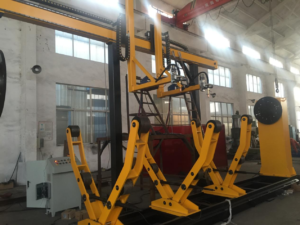
Quality Control (QC) System & Inspection Standards —— Full-Process Oversight for Compliance
Anbakai implements a full-process QC system covering pre-production, in-production, welding-specific, and post-production stages, with clear inspection nodes and detailed standards. Aligned with Anbakai’s QC Checkpoint Chart UVP module, the following is a streamlined breakdown of our quality inspection documents to ensure full production traceability. Downloadable Anbakai-QC-001 to 004 standard documents are available; contact us for complete specifications.
1. Pre-Production QC Checkpoint (Standard No.: Anbakai-QC-001) —— Source Defect Prevention
- Verify the completeness and validity of the latest approved design drawings. (e.g., tower diameter, height, material thickness) against project requirements, with double-checked results recorded in the “Pre-Production Design Verification Form.”
- Inspect raw material grade, heat number, and Material Test Certificate (MTC) (including chemical composition, mechanical properties, heat treatment status) to match design requirements (e.g., Q355, S355). Batch sampling follows GB/T 1591-2018, with results in the “Raw Material Inspection Record Form.”
- Calibrate production measuring instruments (e.g., laser rangefinders, thickness gauges) by an authoritative organization (valid calibration certificates) and inspect equipment operation; record results in the “Equipment Instrument Calibration Record Form.”
- Confirm welding/assembly WPS/SOP documents are up-to-date; ensure all operators are professionally trained, certified, and assessed, with training records filed.
2. In-Process QC Checkpoint (Standard No.: Anbakai-QC-002) —— Real-Time Deviation Correction
First Piece Approval (FPA): Inspect the first rolled section and weld joint (size, weld quality, alignment) before mass production; production starts only after inspector sign-off (results in “First Piece Inspection Record Form”).
Blanking Precision: Verify cut steel plate dimensions (tolerance ±1.5mm) with multi-point detection for large-diameter sections; results in “Blanking Precision Inspection Record Form.”
Rolling & Alignment: Check formed section curvature and longitudinal seam alignment (error ≤±0.5mm/m); results in “Rolling and Alignment Inspection Record Form.”
Welding Parameter Monitoring: Real-time track and record parameters (current, voltage, speed) per WPS; data traceable in “Welding Parameter Monitoring Record Form.”
Weld Visual Inspection: Prohibit cracks, pores, undercuts (depth ≤0.5mm, ISO 17637) or incomplete fusion; results in “Weld Visual Inspection Record Form.”
3. Welding-Specific QC Checkpoint (Standard No.: Anbakai-QC-003) —— Weld Reliability Assurance
- Inspect joint preparation (bevel angle, root gap) with double-checks; record measurements for filing.
- Verify welding materials (e.g., electrodes) comply with WPS; store in a dedicated drying oven, recording temperature/humidity in “Welding Material Storage Record Form.”
- Monitor preheating and interpass temperatures via infrared thermometer; record data in production logs.
- NDT Plan: Use RT for critical welds and DP for surface defects; record/repair defects ≥φ2mm, with re-inspection post-repair (results in “Non-Destructive Testing Record Form”).
4. Final QC Checkpoint (Before Dispatch) (Standard No.: Anbakai-QC-004) —— Qualified Delivery Guarantee
- Dimensional Inspection: Verify tower dimensions (height, diameter, flange hole position) against drawings using laser rangefinders/coordinate measuring machines; results in “Final Dimensional Inspection Record Form.”
- Appearance & Coating: Check for surface defects (dents, rust) and coating quality (thickness, adhesion per ISO 12944); results in “Coating Quality Inspection Record Form.”
- Document & Label Inspection: Ensure all labels, tags, and documents (inspection reports, NDT reports, MTC) are complete, accurate, and traceable; assign a unique serial number to each tower.
- Functional Inspection: Verify internal components (ladders, platforms, circuits) and conduct load testing; results in “Functional Inspection Record Form.”
All QC records are filed, with each tower assigned a unique serial number for full traceability. Anbakai adheres strictly to the “Right First Time (RFT)” principle, integrating QC into every production step to ensure wind towers meet the highest international standards. Contact us for more details.
Capacity & Specifications
Anbakai’s wind tower production line is highly flexible and scalable, seamlessly adapting to the production needs of various onshore and offshore wind towers. Its modular design allows quick equipment parameter adjustments, supporting both standard tower production and customization for large, special-specification towers—making it suitable for both small-to-medium enterprises and large wind power equipment manufacturers.
Production Capacity —— Flexible Adjustment for Diverse Needs
Standard Capacity: A single production line can produce 60–120 sets of 3MW wind towers annually. Operating 24/7 for 300 working days per year, it takes just 3 days to produce 2 sets of 3MW towers—ensuring timely order delivery and reflecting Anbakai’s production efficiency.
Expanded Capacity: Adding modular workstations increases capacity to 600 sets per year, meeting the needs of large wind power projects (e.g., regional wind power bases). The modular design enables capacity expansion without production interruptions, minimizing impact on schedules and ensuring continuity. This is a core Anbakai advantage—modular design reduces upgrade costs by 30% while avoiding downtime.
Annual Steel Processing Capacity: Up to 500,000 tons per year, supporting the production of large-diameter, heavy-weight wind towers (max 5,000 tons per unit). This capacity fully meets the needs of large offshore wind power projects requiring large-diameter, heavy tower structures—with flexible adjustments available per project requirements.
Product Specifications —— Comprehensive Coverage with Customization
Anbakai’s production line supports wind tower manufacturing for 2MW–8MW wind turbines. Detailed specifications are shown below, with all parameters validated through real-world projects for accuracy and reliability:
| Specification Item | Range |
| Wind Turbine Capacity | 2MW – 8MW |
| Tower Height | 60m – 160m |
| Tower Diameter | 2.5m – 16m (max diameter 8.5m for 15MW units) |
| Steel Plate Thickness | 10mm – 210mm |
| Tower Weight | 50 tons – 5000 tons per set |
| Material | Q355, S355, and other low-alloy high-strength steels |
| Application | Onshore and offshore wind power projects |
Table 1: Product Specification Parameters of Wind Tower Production Line
The production line’s modular design enables quick parameter adjustments, reducing product switching time and costs. Anbakai delivers tailor-made solutions for both standard onshore wind towers and customized large offshore towers for deep-water projects. For example, we customized a production line with a maximum processing diameter of 8.5m for the North Sea offshore. Wind power project, perfectly meeting its large-diameter tower requirements. Contact Anbakai for customized solutions.
Industries & Clients
Anbakai’s wind tower production line targets the global renewable energy industry. Focusing on wind power equipment manufacturing. With high-quality solutions and professional technical services, we have established long-term. Stable partnerships with leading global wind turbine Original Equipment Manufacturers (OEMs). Energy enterprises solutions are widely used in onshore and offshore wind power projects. Supporting clean energy infrastructure across North America, Europe, Asia, and other key regions.
Industry Applications Versatile for All Scenarios
Onshore Wind Power:
Anbakai’s production line is widely used in wind farms across North America, Europe, and Asia. Supporting mass production of 2MW–8MW onshore wind towers. It is particularly suited for large wind power bases in wind-rich regions. Such as the northwestern U.S., Northern Europe, and northern China. For example, we provided a customized production line. (capable of producing 120 sets of 3MW towers annually) for a large onshore wind power base in northern China. Supporting its construction and stable operation. Contact Anbakai for detailed case studies.
Offshore Wind Power:
Equipped with advanced corrosion-resistant processing technology and large-diameter capabilities. Anbakai’s production line meets the strict requirements of offshore wind towers. It is widely used in deep-water projects (e.g., North Sea, East China Sea) and complies with DNV and GL international standards. Ensuring reliable operation in harsh marine environments (high salinity, humidity, and strong winds). Our professional solution for the North Sea offshore project produces 8MW offshore wind towers with an 8.5m diameter, meeting strict quality and efficiency requirements.
Wind Turbine OEM Supporting:
Anbakai provides customized production line solutions for leading global wind turbine manufacturers. Helping them produce towers tailored to their models—boosting efficiency and quality. Our production line is compatible with major OEM tower design standards. Ensuring seamless tower-unit integration and supporting wind power equipment upgrades. Contact Anbakai for OEM support details.
Key Clients —— Trusted by Industry Leaders
International Wind Turbine OEMs:
We have 8-year partnership with Vestas, delivering 3 customized offshore wind tower production lines. With over 200 offshore wind towers produced to date.
Regional Energy Enterprises:
Our annual 600-tower production line for CS Wind America Inc. strengthens its global leading position in wind tower manufacturing.
Heavy Industry Manufacturers:
Dajin Offshore Heavy Industry improved production efficiency by 40% and reduced labor costs by 25% with Anbakai’s production line.
To date, Anbakai has provided production line solutions to projects in the U.S., Saudi Arabia, China, etc. Helping customers expand capacity, cut costs and drive wind energy sustainability. Contact us for detailed case studies.
Why Anbakai Wind Tower Lines
Anbakai stands out with core advantages aligned with its three UVP modules. (Process Flow Diagram, Equipment Cards, QC Checkpoint Chart), solving customer pain points like insufficient capacity and high costs.
Integrated Intelligent Process (Process Flow Diagram UVP):
Visualized, seamless workflow with real-time intelligent monitoring, reducing human error and boosting overall efficiency by 40%.
High-Quality Equipment & Modular Design (Equipment Cards UVP):
Core equipment from international leading brands (100% European core components for offshore lines). With modular design for flexible configuration and 30% lower upgrade costs.
Strict QC System (QC Checkpoint Chart UVP):
Full-process quality control compliant with ISO 17640, NB/T 47013.3 and EN 1090-2, with traceable records and zero-defect philosophy.
Customized Solutions & Cost Efficiency:
Tailored solutions cut production costs by 20–30%, improve efficiency by 40%, and shorten project cycles by 25%.
Comprehensive After-Sales Service:
Turnkey solutions with global on-site support within 48 hours, spare parts supply, training and long-term technical upgrades.
Get a Quote
If you’re seeking an efficient, high-quality wind tower production line, contact Anbakai today. We provide customized quotes and professional technical consultation, designing tailor-made solutions based on your capacity, product specifications, and budget.
To receive a quote within 24 hours, please provide the following information:
- Expected annual production capacity
- Wind turbine rating and tower dimensions
- Onshore or offshore application scenario
- Budget and project timeline
Partner with Anbakai to accelerate your wind tower manufacturing business and achieve greater success in the global renewable energy industry.
UVP Modules
1. Process Flow Diagram
Anbakai’s wind tower production flow (with 6 QC checkpoints) and downloadable version:
<p>Raw Material Incoming → Material Inspection (QC1) → Shot Blasting → CNC Blanking → Blanking Precision Inspection (QC2) → Plate Rolling & Forming → Section Alignment → Longitudinal Welding → Weld Appearance Inspection (QC3) → Flange Assembly → Circumferential Welding → Post-Weld Heat Treatment → NDT Inspection (QC4) → Defect Repair (if needed) → Re-inspection → Coating → Coating Quality Inspection (QC5) → Final Assembly → Final Inspection (QC6) → Packaging & Dispatch.
2. Equipment Cards
Key parameters of core production equipment:
- CNC Plasma Cutting Machine: Blanking precision ±1.5mm, max steel plate thickness 210mm, with laser-guided feeding and automatic loading/unloading.
- Three-Roll Plate Bending Machine: Processing diameter 2.5m–16m, CNC control, high rigidity, real-time force adjustment.
- SAW System: Joint precision ±1mm, 50%+ welding efficiency improvement, robotic circumferential welding and flange alignment.
- NDT Equipment: Digital UT (DAC/TCG, curved surface compensation), compliant with ISO 17640.
- Automatic Painting Turntable: Coating thickness 50–200μm, uniform spraying, continuous operation, suitable for onshore/offshore towers.
3. QC Checkpoint Chart
Anbakai’s QC Checkpoint Chart covers pre-production, in-production, welding and final inspection, with clear items, standards and methods, full traceability. Customizable per project/quality standards to ensure product quality and international compliance.
Reviews
There are no reviews yet.