From excavator booms and crane frames to mining truck chassis and concrete mixer drums — WXABK welding positioners, rotators, and manipulators help construction and heavy equipment manufacturers maintain production throughput, reduce rework, and weld complex fabrications in the optimum position every time.
Construction and heavy equipment fabrication covers some of the most geometrically complex weldments in manufacturing. Excavator booms, crane jibs, mining truck frames, bulldozer blades, concrete mixer drums, and agricultural equipment frames all require multi-axis weld access — welding fillet and groove joints from multiple orientations on large, asymmetric steel structures.
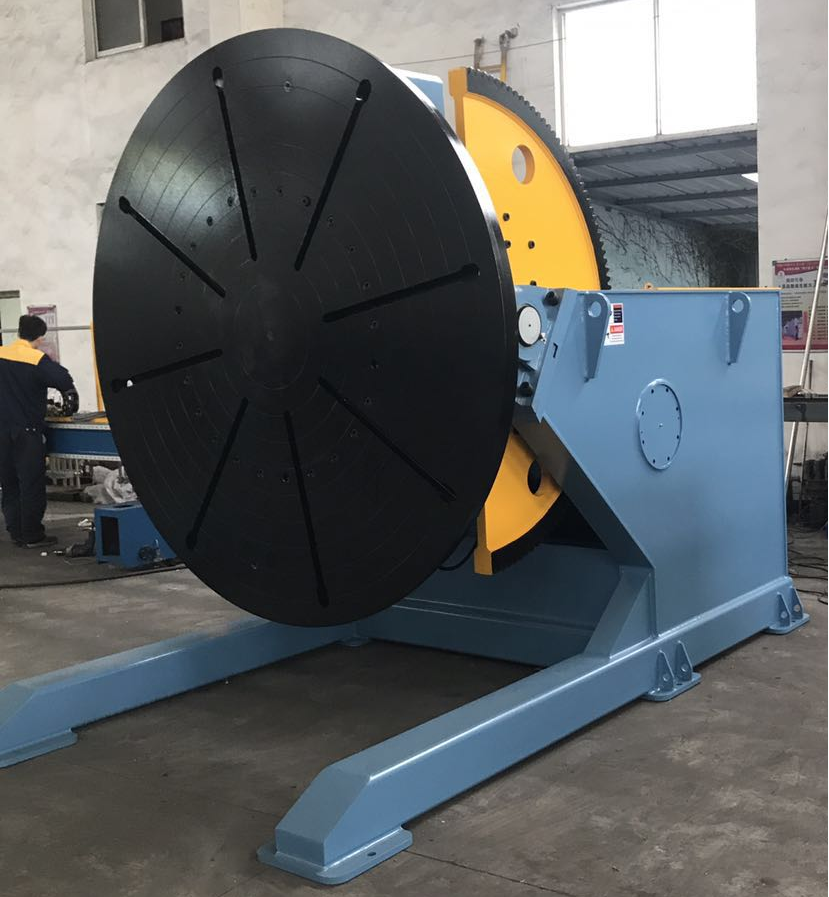
Manual repositioning of these assemblies by crane or overhead hoist is slow, fatiguing, and introduces safety risks. WXABK welding positioners and custom rotators automate the tilting and rotation of heavy asymmetric fabrications — presenting every joint in the flat or horizontal-vertical position for optimum weld quality and operator comfort, with no crane moves between passes.
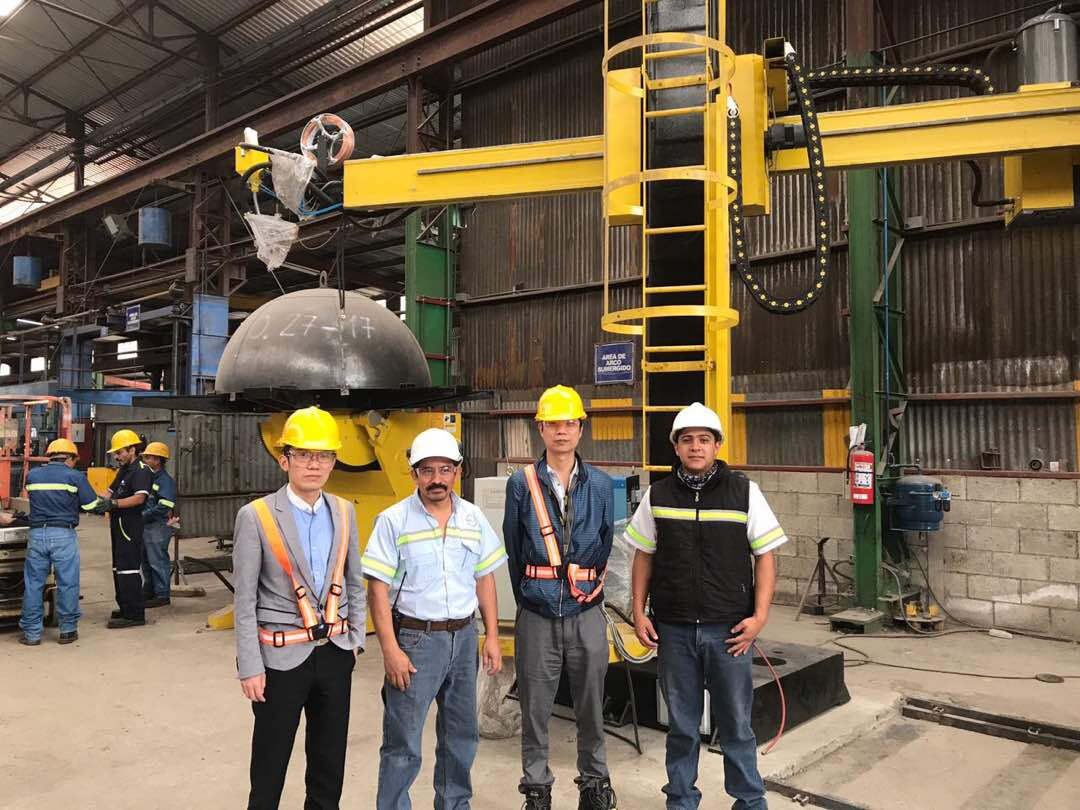
These are the production and quality challenges heavy equipment manufacturers and construction steel fabricators face most — and how WXABK solves each one.
Excavator booms, crane jibs, and equipment frames require weld access from multiple angles. Without powered positioning, operators must use overhead cranes to reposition the assembly between every weld pass — losing hours per unit to crane moves and rigging.
Heavy equipment frames carry dynamic loads in service. Weld defects from overhead or vertical positional welding — porosity, undercut, incomplete fusion — can lead to in-service fatigue failures with serious safety and warranty consequences.
Concrete mixer drums, hydraulic cylinder bodies, axle housinhat are nearly impossible to weld circumferentially by hand without introducing quality inconsistencies.gs, and shaft assemblies are cylindrical components
WXABK Solution → Welding rotators rotate cylindrical heavy equipment components at precisely controlled speeds — consistent circumferential welds on every drum, cylinder, and shaft.
Overhead and vertical welding on large equipment frames produces high rates of porosity, undercut, and slag entrapment defects. Rework on heavy equipment structural welds is extremely costly — involving grinding, re-welding, and re-inspection.
Welding in overhead and vertical positions on large frames is physically demanding. Operator fatigue increases error rates and contributes to musculoskeletal injuries — increasing absenteeism and workers’ compensation costs for fabricators.
Heavy equipment OEMs expect reliable volume commitments from fabrication suppliers. Manual production processes make it difficult to guarantee weekly unit output — and underdelivery risks losing supply contracts to competitors with more automated capacity.
Every WXABK machine below is used daily in heavy equipment manufacturing,construction steel fabrication, and mining equipment production facilities around the world.
Our NDE rejection rate dropped from 3.1% to 0.3% in the first quarter. As a result, that improvement alone saved us more per month than the machine repayments. Furthermore, the reduction in rework improved overall productivity. Meanwhile, our team experienced fewer delays and quality issues. Consequently, the investment delivered measurable returns almost immediately. Therefore, we wish we had made the investment ten years ago.
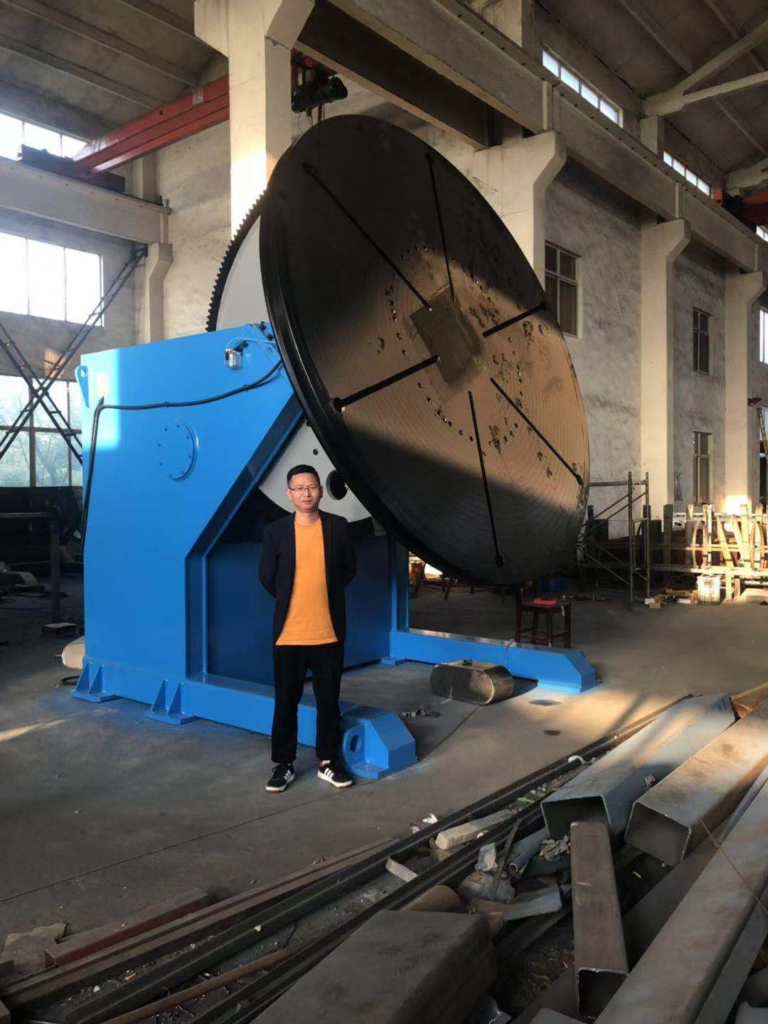
Our end-to-end process ensures the right machine is engineered, tested, shipped, and commissioned on time — every time.
Share your workpiece dimensions, load capacity, and production goals with our engineers.
We design a machine configuration matched exactly to your welding process and facility.
Built in our ISO-certified factory with full load testing, run-off, and inspection report.
Sea, air, or land freight with full export documentation, crating, and insurance.
On-site installation, operator training, and 12-month warranty support included.
Every WXABK machine below is used daily in heavy equipment manufacturing,construction steel fabrication, and mining equipment production facilities around the world.
First, the tack-welded equipment frame or boom assembly is lifted by crane and mounted on the WXABK positioner table. Next, mounting fixtures securely locate and stabilize the assembly. As a result, the positioner handles all repositioning throughout the entire welding sequence. Consequently, no further crane movements are required during the welding process. Therefore, welding operations become safer, more efficient, and more consistent.
The operator selects the tilt angle and rotation position via the control pendant. The positioner tilts and rotates the assembly to present the first group of fillet or groove joints in the flat welding position.Welding begins immediately — no rigging, no wait.
Working through the welding sequence, the operator repositions the assembly on the positioner for each joint group. Every pass on every joint is welded flat — consistent penetration, consistent bead profile, no overhead or vertical welding anywhere in the sequence.
With all structural joints completed in the flat position, the finished assembly is inspected. Consistent weld profiles reduce grinding and dressing time before paint preparation — and rework rates drop to near zero for standard equipment frames within weeks of positioner installation.
A Canadian fabricator producing excavator boom arms and crane components was struggling to meet production targets due to manual crane repositioning. Each boom arm required 18–22 crane moves, which increased welding time and safety risks. As a result, rework from welding defects reached 8% of weekly output, driving up costs and affecting delivery schedules.
Every pipe & vessel enquiry is reviewed by a specialist engineer not a generic sales team.
We model your exact payback period based on current labour rates and output — at no charge.
Leasing, hire-purchase, and instalment payment options available through our financial partners in 30+ countries including Canada.
A consultation and quote costs you nothing. We provide expert advice regardless of purchase timeline.
Fill in the form and a specialist engineer will respond within 24 hours.