
Description
Self-Aligning Welding Rotator
Overview
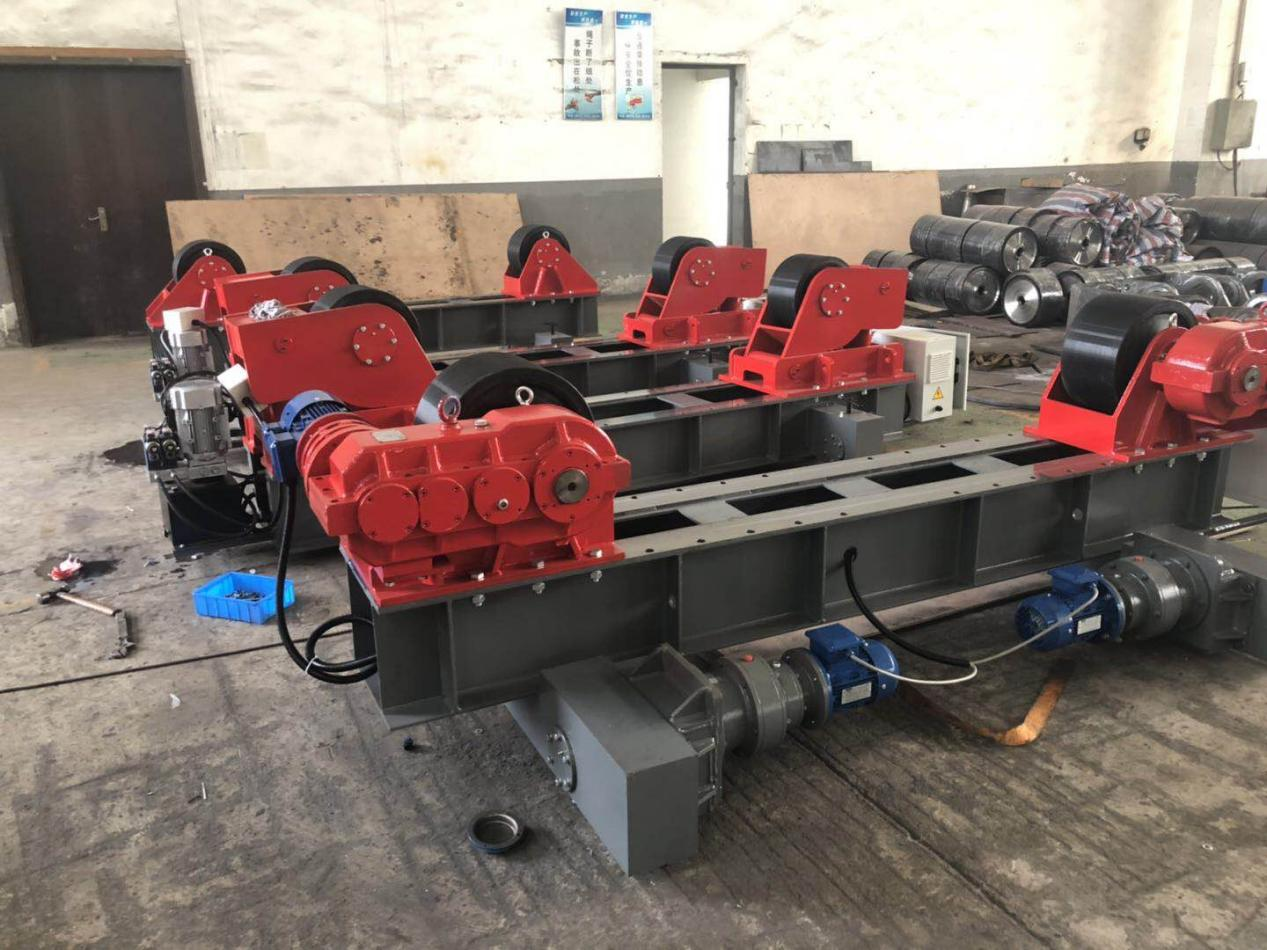
The Self-Aligning Welding Rotator (SAWR), also widely referred to as self-aligned turning rolls, self-adjusting welding rollers, or self-aligning tank rotators in the North American market, is a core auxiliary equipment for welding cylindrical workpieces. Engineered specifically for industrial manufacturing environments, it automates and optimizes the circumferential and longitudinal welding processes of pipes, pressure vessels, storage tanks, wind tower sections, and other cylindrical components.
Its core design objective is to eliminate the inefficiency associated with manual roller adjustment. Within its rated working range, the rotator automatically adapts to the workpiece’s diameter, ensuring stable centering, smooth rotation, and consistent welding quality. Whether deployed in small fabrication workshops or large-scale heavy-industry facilities, its heavy-duty frame reliably supports large cylindrical workpieces while maintaining exceptional operational stability.
The user-friendly design significantly reduces workpiece changeover time, cutting adjustment duration by approximately 80% compared to conventional fixed welding rotators. Unlike traditional models— which require manual repositioning when switching between workpieces of different diameters—this self-aligning system utilizes a specially designed pivoting structure to achieve instant adaptation. This makes it particularly valuable in high-mix production environments where flexibility and efficiency are non-negotiable.
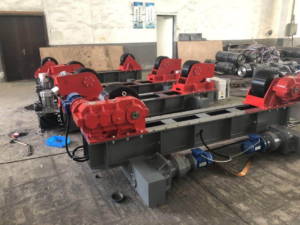
Equipped with a precision drive system, infinitely variable speed control, and a full set of safety protection devices, the rotator fully complies with international industrial standards, including EU EN 1090-1:2009 (Execution Classes 2–4) and US AWS D1.1:2020 Structural Welding Code. This ensures compatibility and compliance for projects across Europe, North America, and other major industrial markets. By minimizing manual intervention and enhancing operational safety, the self-aligning welding rotator supports high-quality automated welding for submerged arc welding (SAW), MIG, and other common welding processes.
Self-Aligning Mechanism Explained
The distinguishing performance advantage of the Self-Aligning Welding Rotator stems from its gravity-driven self-aligning structure, which eliminates the need for manual adjustment and maintains optimal workpiece positioning throughout the entire welding process.
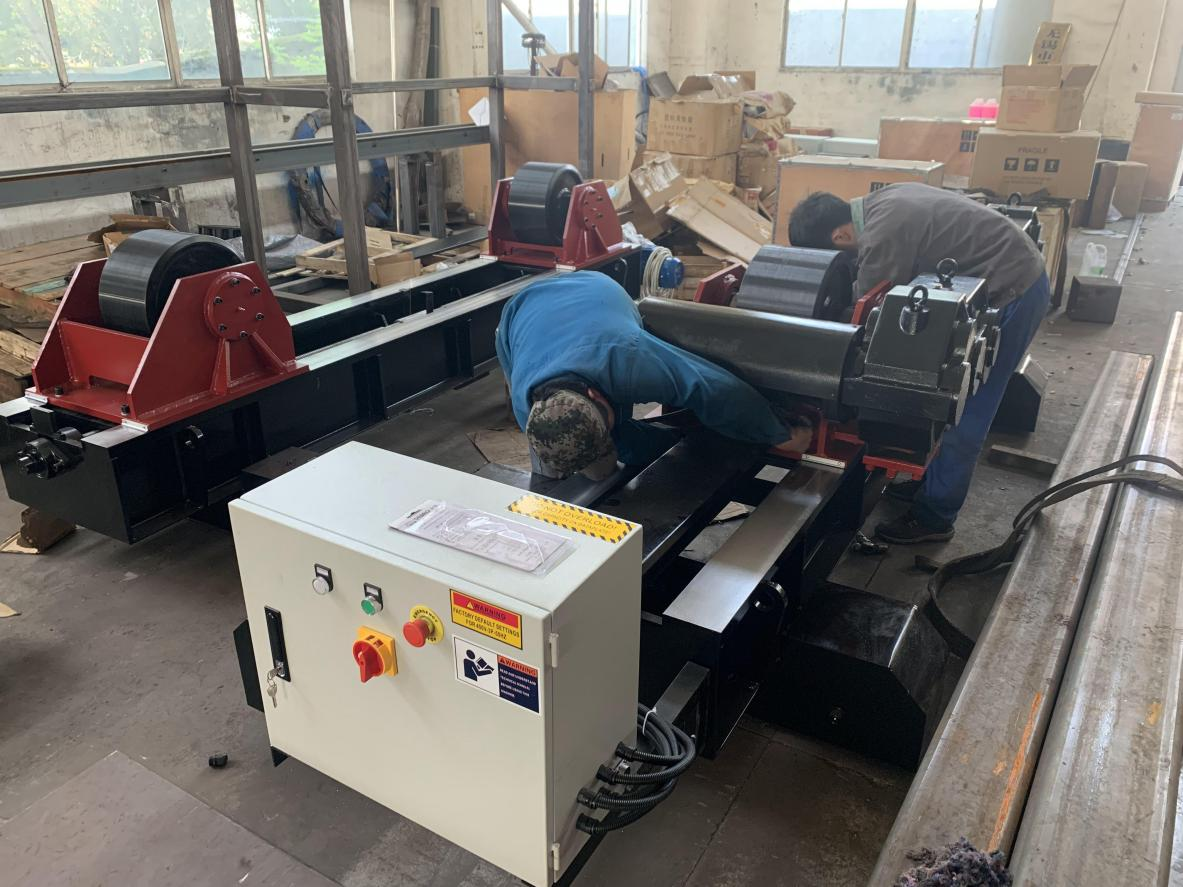
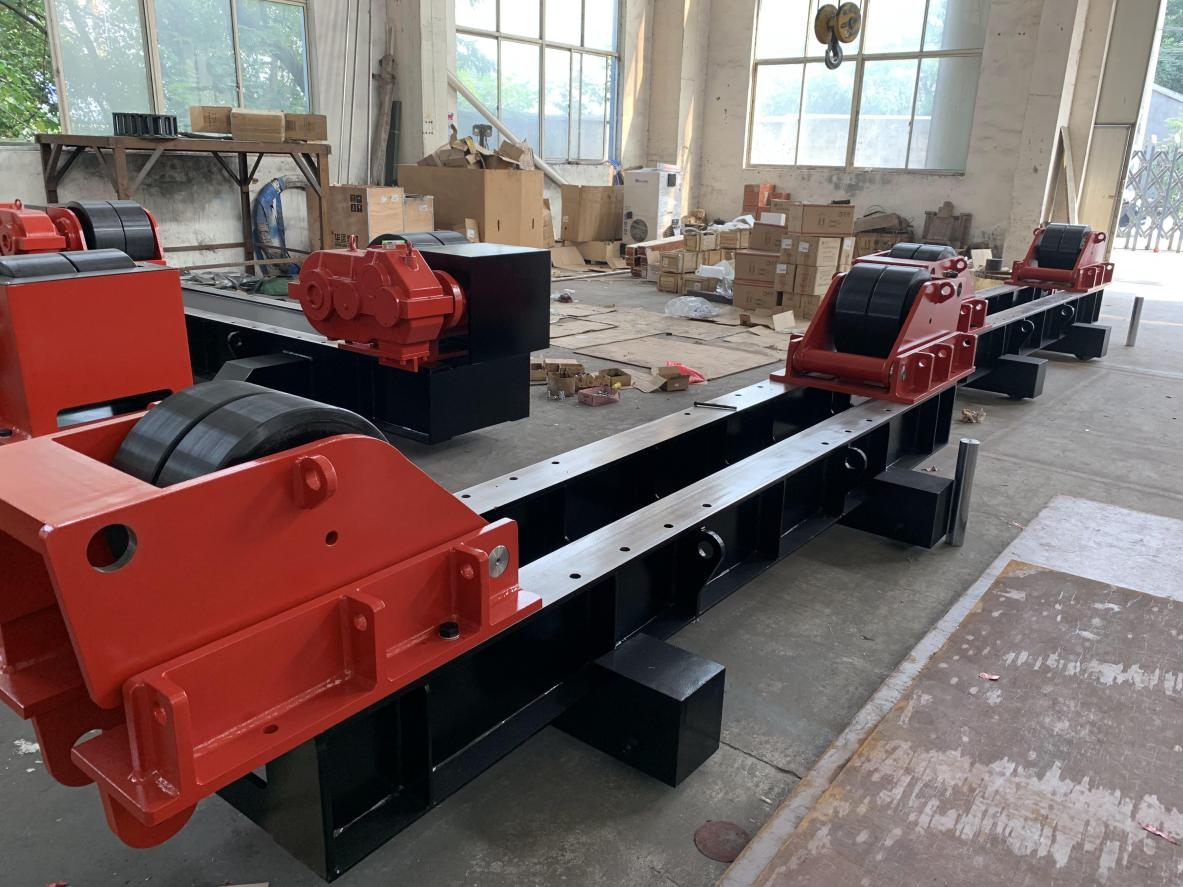
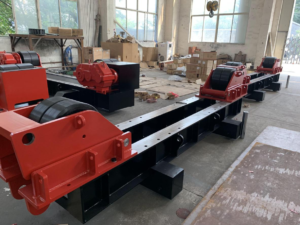
At the core of the system is a pivoting roller bracket assembly supported by a rocker-arm frame. Each side is equipped with two independent rubber or steel rollers that cradle the workpiece. When a cylindrical workpiece is placed onto the rolls. The brackets automatically tilt to match the workpiece’s diameter. Maintaining a stable contact angle and even load distribution. This prevents concentrated stress, surface indentation, and workpiece deformation— a critical benefit, especially for thin-walled vessels.
Structurally, the system comprises a drive unit (powered rotator) and an idler unit (passive rotator). The drive unit is fitted with a high-precision variable-frequency drive (VFD) offering speed regulation accuracy within 0.1%, paired with a durable gear reducer that delivers mechanical efficiency above 95%. The idler unit operates passively, compensating for radial and axial runout to minimize slip and vibration— both of which directly impact welding quality.
This self-aligning capability supports workpiece diameters ranging from 250 mm up to 9500 mm, enabling what industry operators call “drop-and-weld” functionality. Operators can switch between different cylinder sizes in seconds, without the need for tools or manual adjustments. The four-point contact design also improves weight distribution, reduces component wear, and ensures reliable traction even under heavy-load conditions.
Models & Specifications
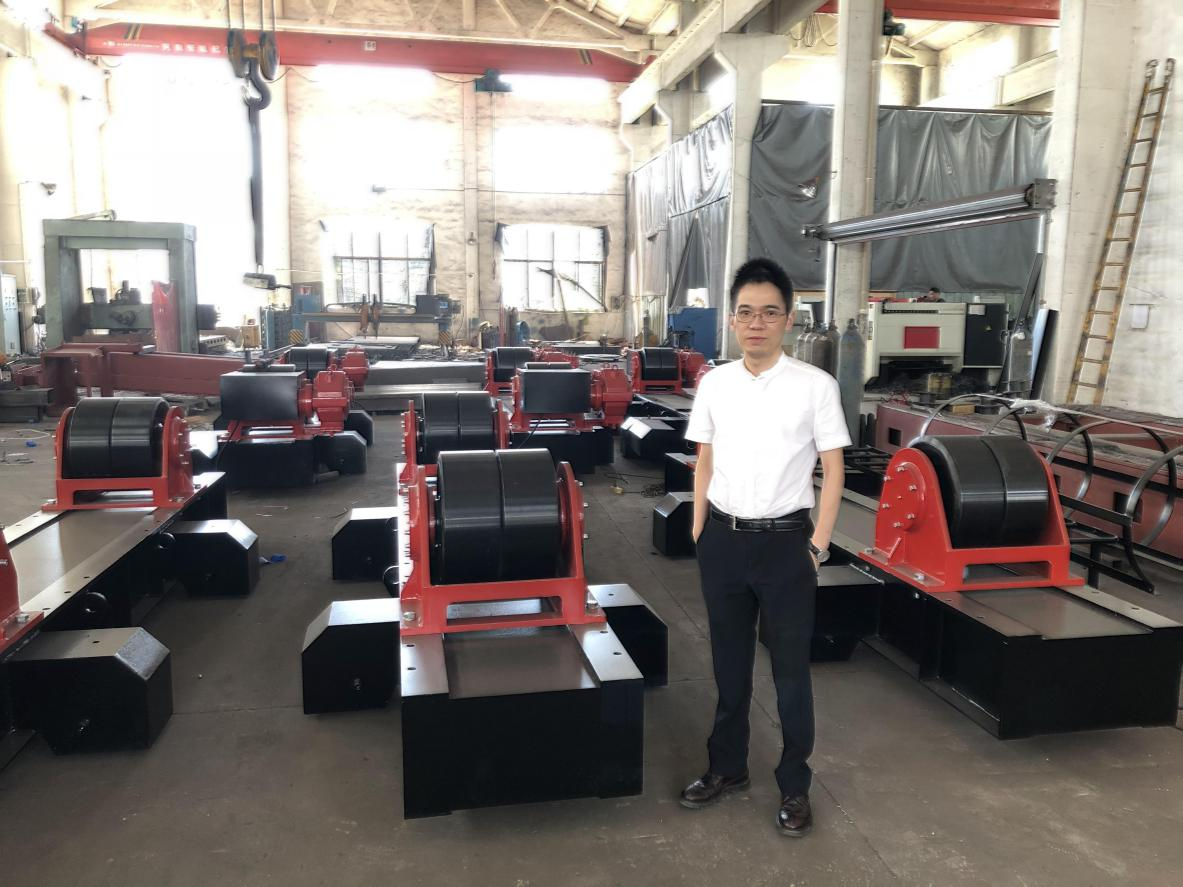
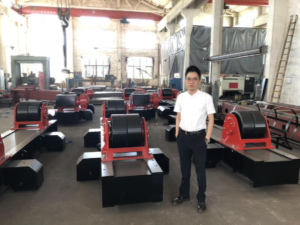
We offer a complete series of self-aligning welding rotators, covering applications from light-duty workshop use to heavy-duty wind tower and pressure vessel production. All models feature rugged construction, intuitive controls, and configurable options to meet diverse industrial requirements.
Below are the standard specifications for supplied models:
| Model | Max Load Capacity | Workpiece Diameter Range (mm) | Roller Diameter (mm) | Roller Width (mm) | Rotation Speed (mm/min) | Motor Power (kW) | Roller Material |
| Model | Max Load Capacity | Workpiece Diameter Range (mm) | Roller Diameter (mm) | Roller Width (mm) | Rotation Speed (mm/min) | Motor Power (kW) | Roller Material |
| BZT-10 | 10 Ton | 400 – 3200 | 300 | 170 | 100 – 1000 | 1.1 | PU-coated steel (Shore 85±5D) |
| BZT-40 | 40 Ton | 700 – 4500 | 350 | 220 | 100 – 1000 | 2.2 | PU-coated steel (Shore 85±5D) |
| BZT-80 | 80 Ton | 1000 – 5500 | 425 | 220 | 100 – 1000 | 3.0 | PU-coated steel (Shore 85±5D) |
| BZT-200 | 200 Ton | 1700 – 8000 | 550 | 300 | 60 – 900 | 4.0 | Carbon Steel Q235B |
| BZT-500 | 500 Ton | 2500 – 9500 | 650 | 600 | 60 – 800 | 5.5 | Carbon Steel Q235B |
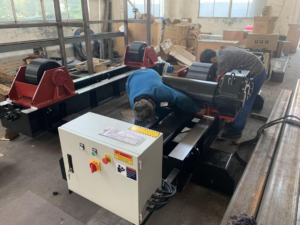
All models come standard with a 6–8m wired remote control, featuring forward, reverse, stop functions, and a digital speed display— allowing operators to adjust settings from a safe distance. Optional upgrades include wireless remote control, motorized travel carriages, and custom roller materials tailored to stainless steel, aluminum, or high-temperature applications.
Each unit includes a one-year factory warranty, with an optional extension to 13 months for registered customers. A full operation manual and electrical schematic are provided to simplify installation, commissioning, and routine maintenance.
Applications
The Self-Aligning Welding Rotator is widely used across industries that require stable, high-precision rotation of cylindrical workpieces. Its automatic diameter adaptation and heavy-load performance make it an essential tool in both heavy engineering and precision fabrication.
Oil & Gas Industry
Its stable rotation and precise alignment ensure tight, defect-free welds capable of withstanding high pressure and corrosive media.
Shipbuilding & Marine Engineering
In shipyards worldwide, the rotator serves as an indispensable core equipment for the welding of key marine components, including hull sections, cylindrical ballast tanks, and large-diameter marine piping systems. Its advanced self-aligning function eliminates the need for tedious manual adjustment when switching between workpieces of different sizes and specifications, thereby significantly reducing changeover time and improving overall operational efficiency in the shipyard. More importantly, it ensures consistent and high-standard welding quality throughout the process, which is crucial for maintaining the structural safety and seaworthiness of marine vessels, effectively avoiding potential risks caused by welding defects in harsh marine environments.
Wind Energy Industry
As a pivotal piece of equipment in wind tower manufacturing, the rotator provides stable, smooth, and precise rotation for wind tower sections and flanges during the welding process. Boasting excellent high-load capacity and a wide diameter range, it is fully compatible with both onshore and offshore wind towers with a maximum diameter of up to 9500 mm. Due to its outstanding performance in ensuring structural integrity and welding precision—two critical requirements in wind energy projects—it has been widely adopted in major wind energy markets across Germany, Denmark, and North America, supporting the stable and efficient operation of wind power facilities.
Petrochemical & Power Generation
In petrochemical plants and thermal power stations, where equipment operates under extreme conditions of high temperature and high pressure, the rotator plays a vital role in the welding of core equipment such as boilers, heat exchangers, reactor vessels, and large-scale industrial piping systems. By enabling uniform and high-quality weld seams that possess excellent high-temperature and pressure resistance, the rotator effectively reduces welding defects, enhances the reliability of critical equipment, and extends its service life, thereby minimizing maintenance costs and ensuring the safe and continuous operation of production systems.
General Metal Fabrication
For small-to-medium-sized metal fabrication shops, the rotator offers a cost-effective and user-friendly welding solution for processing cylindrical workpieces, storage tanks, metal tubes, and various steel components. Its simple and intuitive operation design allows even less experienced operators to quickly master the skills and achieve consistent, high-quality welding results. This versatility and practicality make it a valuable investment for small and medium enterprises, helping them improve production efficiency, reduce labor costs, and expand their processing capabilities.
FAQs
Q1: What is a Self-Aligning Welding Rotator, and how is it different from standard turning rolls?
A1: A Self-Aligning Welding Rotator is a precision welding support device that automatically adjusts its roller angle to match the diameter of cylindrical workpieces. Unlike fixed turning rolls, it requires no manual adjustment when switching between workpiece sizes, greatly reducing downtime and improving productivity. It also distributes load more evenly, lowering the risk of workpiece damage.
Q2: What is the maximum load and diameter range?
A2: Our standard models range from 10 tons to 500 tons, accommodating workpiece diameters from 250 mm to 9500 mm. Custom models are available for special oversized or ultra-heavy applications.
Q3: How do you operate the rotator, and what safety features are included?
A3: Operation is straightforward via the control panel or remote control, allowing for easy adjustment of speed and direction. Safety features include overload protection, an emergency stop button, overcurrent/overvoltage protection, fully enclosed drives, and real-time speed monitoring
Q4: Can it work with welding manipulators or SAW systems?
A4: Yes. The rotator is equipped with a standard linkage interface to synchronize with welding manipulators, column & boom units, and automatic welding systems. This creates a fully automated welding station that enhances accuracy and efficiency.
Q5: What routine maintenance is required?
A5: Maintenance requirements are minimal. We recommend weekly inspection of roller surfaces, monthly lubrication of gearboxes and bearings, quarterly checks of electrical connections, and regular cleaning of welding slag and dust. Detailed maintenance schedules are provided in the user manual.
Q6: Do you offer customization for special materials or standards?
A6: Yes. We provide customized roller materials for stainless steel, titanium, and other non-ferrous metals. We also adjust electrical systems and design documentation to meet EU EN, AWS D1.1, and other regional standards.
UVP Module
Spec Sheet
Our full specification sheet provides comprehensive technical data, model comparisons, dimensional drawings, and configuration options. It includes rated loads, speed ranges, motor parameters, power supply requirements, and warranty terms. Downloading the sheet allows you to quickly compare models and obtain a customized quotation based on your project needs.
Alignment Mechanism Diagram
This diagram visually explains the operating principle of the self-aligning system, including the pivoting brackets, rocker arms, drive unit, and idler unit. It helps engineering and maintenance teams understand the internal structure, making equipment training and troubleshooting more efficient.
Reviews
There are no reviews yet.