
Description
Welding Turntable
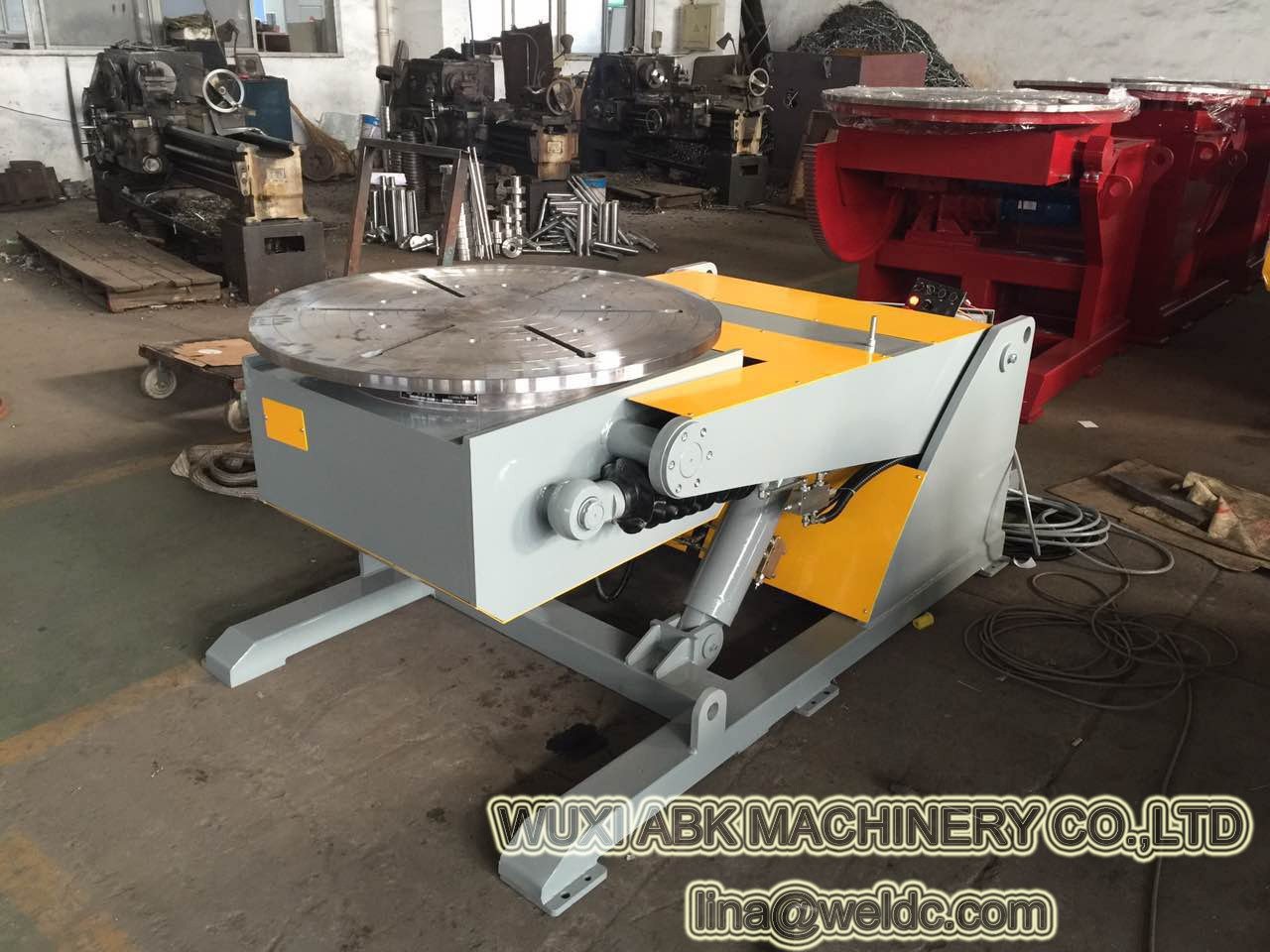
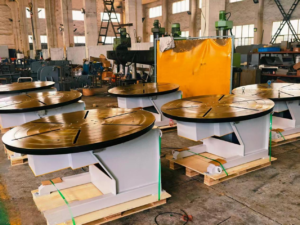
As a core piece of equipment in contemporary welding production, a welding turntable is specifically engineered to rotate workpieces with precise angle and speed control—this is a foundational technical requirement for modern welding operations. Simply put, it makes accessing weld joints much easier, cuts down the time workers spend manually repositioning workpieces, and effectively boosts both work efficiency and weld quality across multiple manufacturing fields. Structurally, its core components include a sturdy base, a rotatable work surface, a transmission system, a control panel, and clamping tools. All are scientifically designed to accommodate workpieces of varying sizes, weights, and shapes, from small precision components to heavy-duty industrial parts.
Our industrial welding turntables combine robust build quality with practical functionality, featuring modular designs that can be tailored to your unique application requirements. Whether you use manual, semi-automatic, or fully automated welding configurations, our turntables seamlessly integrate into your existing work processes—no complicated adjustments required. We use high-strength cast iron for the base to enhance structural stability, preventing workpiece displacement during rotation, and the precision-machined worktable (with a runout of ≤0.02mm) effectively prevents weld defects caused by workpiece vibration. Notably, every turntable undergoes three rigorous quality inspection stages (raw material testing, assembly checks, and final performance validation) to ensure reliable operation in harsh industrial environments with high temperatures, heavy dust accumulation, and strong vibrations.
Motorized vs Manual Turntables
Welding turntables are mainly categorized into two types: motorized and manual. Each type is engineered to suit different welding scenarios, budget constraints, and productivity goals—so choosing the right one ultimately depends on your specific operational needs, workpiece dimensions, and production volume. There’s no one-size-fits-all solution; it all depends on matching the tool to your actual work demands.
Manual Welding Turntables:
These devices are fully hand-operated, making them an excellent choice for small-scale operations, hobbyists, or low-volume welding tasks where precise speed regulation is not a top priority. They have a simple, lightweight structure with a hand-rotated worktable (often paired with a hand crank or friction-based rotation mechanism), so they’re cost-effective, easy to maintain.
And portable—ideal for small workpieces, repair jobs, or workshops with limited power supply access (e.g., on-site repair scenarios). The main drawback is that they require constant operator supervision to adjust the workpiece position, which can increase labor time and lead to inconsistent weld quality when handling complex or high-volume tasks. Overall, they’re best suited for light-duty applications where cost is the primary concern.
Motorized Welding Turntables:
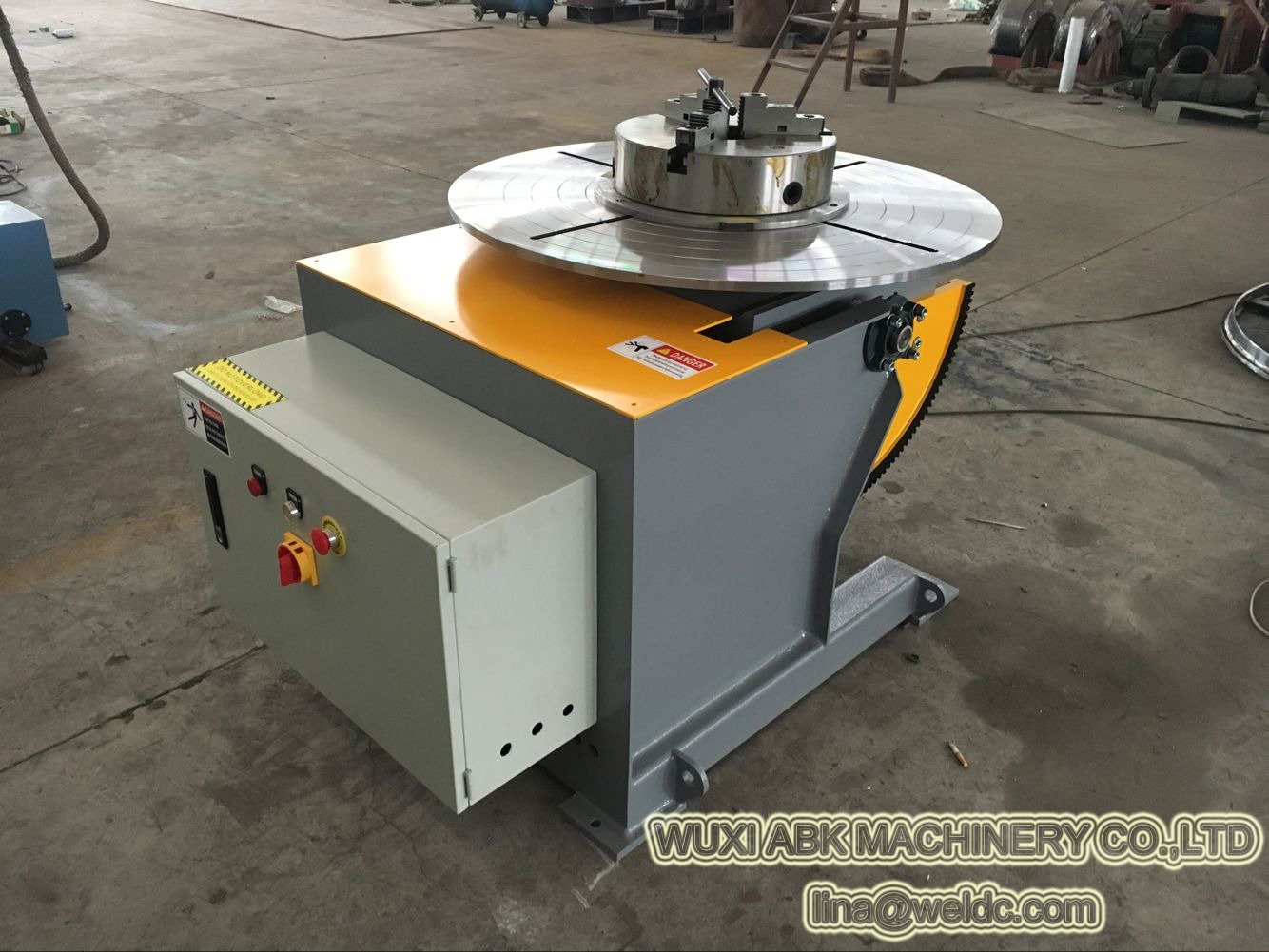
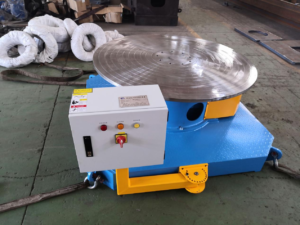
Driven by electric motors with adjustable speed controls, these turntables are specifically built for industrial-scale, high-volume, or precision-critical welding operations. In terms of technical performance, they offer stepless speed adjustment (0.01-5rpm), programmable rotation angles (0-360°), and smooth integration with PLC controls or robotic welding systems (such as FANUC and KUKA robots) to enable fully automated workflows. By eliminating the need for manual repositioning, motorized welding turntables reduce operator fatigue by an average of 40% and maintain consistent rotation speeds—key to achieving uniform welds on large, heavy, or complex workpieces (e.g., large pipes, industrial tanks).
They are available in servo-driven or frequency-conversion models, ranging from small bench-top units (for light-duty precision tasks) to heavy-duty industrial turntables (for large workpieces). You can also customize them with foot switches, remote controls, or tilt functionality (up to 135°) for greater versatility. Servo-driven models, in particular, offer high positioning accuracy (±0.1mm), making them ideal for ultra-precision welding tasks like aerospace component manufacturing and precision pipe welding. While they cost more than manual models, their ability to boost productivity and weld quality makes them a smart long-term investment for professional manufacturing facilities.
Models & Specifications
Also we offer a comprehensive range of standard welding turntables, with load capacities ranging from 50kg to 2000kg. These include both manual and motorized options to meet different application needs—so you can easily find one that fits your work. All parameters fully comply with international industry standards (ISO 9001:2015), and detailed technical specifications for our most popular models are provided in the table below, making it easy for you to compare and select the right one.
Model | Load Capacity | Table Diameter | Rotation Speed | Motor Power | Tilt Angle | Control Mode | Power Supply |
| BY-50 | 50kg | 200mm | 0.5-5rpm | 25W | 0°(fixed) | Speed regulator | AC220V/50Hz |
| BY-100 | 100kg | 250mm | 0.3-4rpm | 40W | 0° | Speed regulator | AC220V/50Hz |
| BY-300 | 300kg | 320mm | 0.2-3rpm | 60W | 0° | Speed regulator | AC220V/50Hz |
| BY-500 | 500kg | 400mm | 0.15-2rpm | 90W | 0° | Speed regulator | AC220V/50Hz |
| BY-1000 | 1000kg | 500mm | 0.1-2rpm | 120W | 0-90° | Speed regulator+hand crank (manual tilt adjustment) | AC220V/50Hz |
| BY-2000 | 2000kg | 600mm | 0.08-1.5rpm | 180W | 0-90° | Speed regulator+hand crank (manual tilt adjustment) | AC220V/50Hz |
Also all our welding turntable models are equipped with precision gear drives made of hardened alloy steel. Which deliver high torque (up to 500N·m for heavy-duty models), stable operation (with a runout of ≤0.02mm). and Also strong anti-offset performance in terms of mechanical properties. These technical features ensure consistent weld quality even during 24-hour continuous operation. Critical for high-volume production. Also they can be fitted with three-jaw chucks (160-630mm), which can be quickly adjusted to fit different workpiece diameters. Custom fixtures, and center holes (φ20-φ80mm) to simplify pipe penetration welding, reducing labor time by 20-30% for your team. If you have special application requirements, all models support customization, including custom table diameters, higher load capacities, specialized clamping fixtures, or integration with robotic welding systems. Our engineering team will work closely with you to design a tailored solution that meets your exact needs.
Welding Process Compatibility
Our welding turntables are engineered to be compatible with all major welding processes, making them highly versatile for a wide range of manufacturing applications. In terms of technical performance, their robust design and precise control make them suitable for both manual and automated welding techniques, and they can adapt to different material types (including steel, aluminum, and stainless steel) as well as various weld requirements. In short, they’re designed to work seamlessly with any welding process you use.
MIG/MAG Welding:
This welding process is ideal for high-volume, semi-automatic, or automatic welding of steel, aluminum, and other metals (such as carbon steel and aluminum alloy). Motorized welding turntables with stepless variable speed control ensure consistent bead placement, effectively reducing spatter and improving weld uniformity—a key technical requirement for the MIG/MAG continuous wire-feeding process, which requires stable workpiece rotation. This compatibility makes them perfect for automotive and general manufacturing lines (e.g., car frame production, metal bracket fabrication).
TIG Welding:
TIG welding requires high precision and stable workpiece positioning, and our turntables are ideal for this process. Manual or servo-driven models allow for slow, controlled rotation, keeping the weld seam in the optimal position for the TIG torch—resulting in clean, high-quality welds for thin materials or precision components, such as aerospace parts. This level of precision is exactly what TIG welding requires.
MMA/Stick Welding:
This process is compatible with both manual and motorized welding turntables, especially for welding large or irregular workpieces. The turntable’s rotation eliminates the need for operators to manually reposition the workpiece, reducing fatigue and ensuring consistent weld angles throughout the entire seam—ideal for on-site repairs and heavy-duty manufacturing. It’s a simple, effective way to improve efficiency.
Plasma Welding & Cutting:
Our motorized welding turntables with precise speed control are ideal for plasma processes, as they ensure uniform heat distribution and clean cuts/welds on both thick and thin materials. Their ability to program rotation angles makes them perfect for circular or cylindrical workpieces, such as pipes and pressure vessels. Additionally, our turntables integrate seamlessly with robotic welding systems, including cobots and industrial robots, to create fully automated welding cells. This integration reduces downtime by allowing simultaneous loading and welding. Further boosting productivity and reducing human error—key to improving production efficiency in modern manufacturing.
Applications
Welding turntables are versatile tools used in a wide range of industries where precise, efficient, and consistent welding is critical. Their ability to handle diverse workpiece sizes and weights makes them essential for both small workshops and large-scale manufacturing facilities—practically any industry that involves welding can benefit from them.
Key applications of our welding turntables include:
Also automotive Manufacturing (used for welding car frames, exhaust systems, fuel tanks, and other components). Also aerospace & Defense (critical for welding precision components like aircraft frames, engine parts, and military equipment. Where even minor weld defects are not allowed). Petrochemical & Pipeline (used for welding pipes, flanges, and pressure vessels, where weld integrity directly affects safety). Shipbuilding (essential for welding large structural components, hull sections, and marine equipment, which are often heavy and complex). General Manufacturing (suitable for welding steel frames, machinery parts, tooling, and custom fabrications). and Repair & Maintenance (used in maintenance facilities to weld and repair large industrial equipment. Industrial machinery, and structural components—portable manual models are particularly useful here).
FAQs
Q1: What is the difference between a welding turntable and a welding positioner?
A: While both tools help position workpieces, there’s a key technical difference: a welding turntable rotates the workpiece around a horizontal axis, focusing on circular or cylindrical welds (e.g., pipes, tanks). In contrast, a welding positioner can move the workpiece 360° along both horizontal and vertical axes, making it more suitable for complex, multi-angle welding tasks (e.g., irregularly shaped components). Simply put, one is for circular welds, the other for complex angles.
Q2: How do I choose the right load capacity for my welding turntable?
A: Technically, we recommend choosing a welding turntable with a load capacity 20-30% higher than the weight of your heaviest workpiece (including fixtures). This ensures structural stability and prevents overloading, which can damage the turntable’s drive system or reduce positioning accuracy. Our standard models range from 50 kg to 2000 kg, with customization options for higher load capacities to meet all needs—so you can always find the right fit.
Q3: Can welding turntables be integrated with robotic welding systems?
A: Yes—our motorized and servo-driven welding turntables are specifically designed to integrate seamlessly with robotic welding systems, including cobots and industrial robots. They feature standard interfaces (Profinet, Modbus) and can be programmed to work in coordination with robots, enabling automated workflows and reducing downtime. This integration is a key part of modern automated manufacturing.
Q4: Are welding turntables easy to maintain?
A: Yes—our welding turntables are designed for low maintenance, which is a big advantage for busy workshops. Manual models only require minimal upkeep (such as lubricating the rotation mechanism every 6 months), while motorized models need periodic checks of the motor, reducer, and control system (we recommend doing this every 12 months). All models come with a user manual and warranty for added peace of mind, and our customer service team is always ready to assist with any maintenance questions.
Q5: Can I customize a welding turntable to meet my specific needs?
A: Absolutely. We offer full customization for our welding turntables, including custom table diameters, load capacities, height adjustments, tilt functionality, control systems, and clamping fixtures. Just contact our team to discuss your unique requirements, and we’ll design a solution tailored to your application—no need to settle for a one-size-fits-all tool.
UVP Module
To help you make informed decisions and streamline your workflow. We offer the following key resources for our welding turntables—all free for our customers. These resources are designed to help you fully utilize our welding turntables. And select the most suitable model for your operation, so you can get the most out of your equipment investment.
Process Compatibility Matrix:
Also access our compatibility matrix to quickly check which welding processes (MIG, TIG, MMA, plasma, etc.). Work with each welding turntable model, along with material compatibility guidelines. Also this tool simplifies the selection process and ensures your welding turntable aligns with your existing welding setup. Helping you get the most out of your equipment investment. If you need further help selecting the right model, our technical team is available for one-on-one consultations.
Reviews
There are no reviews yet.