Description
Column and Boom Welding Manipulator
Overview
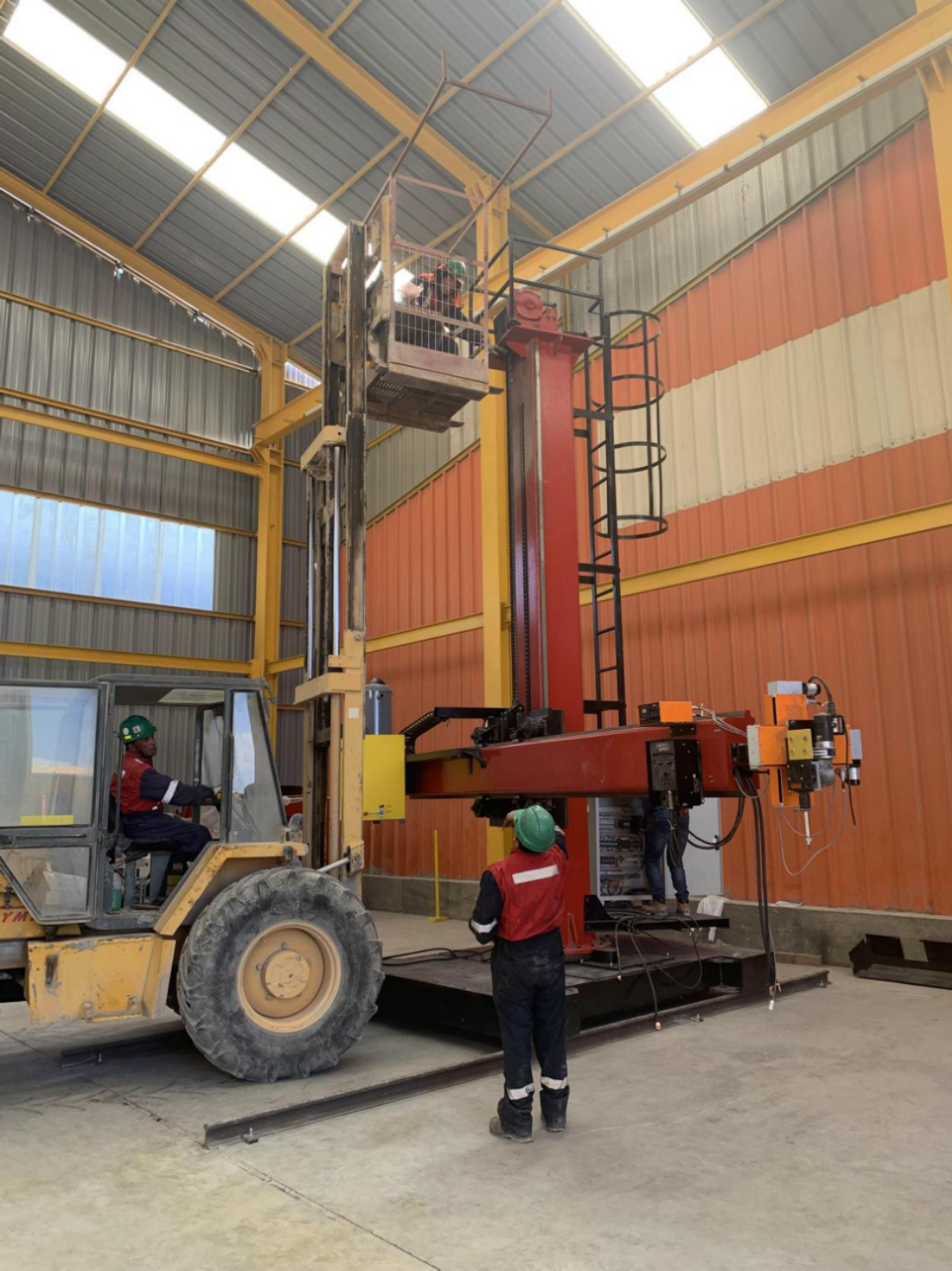
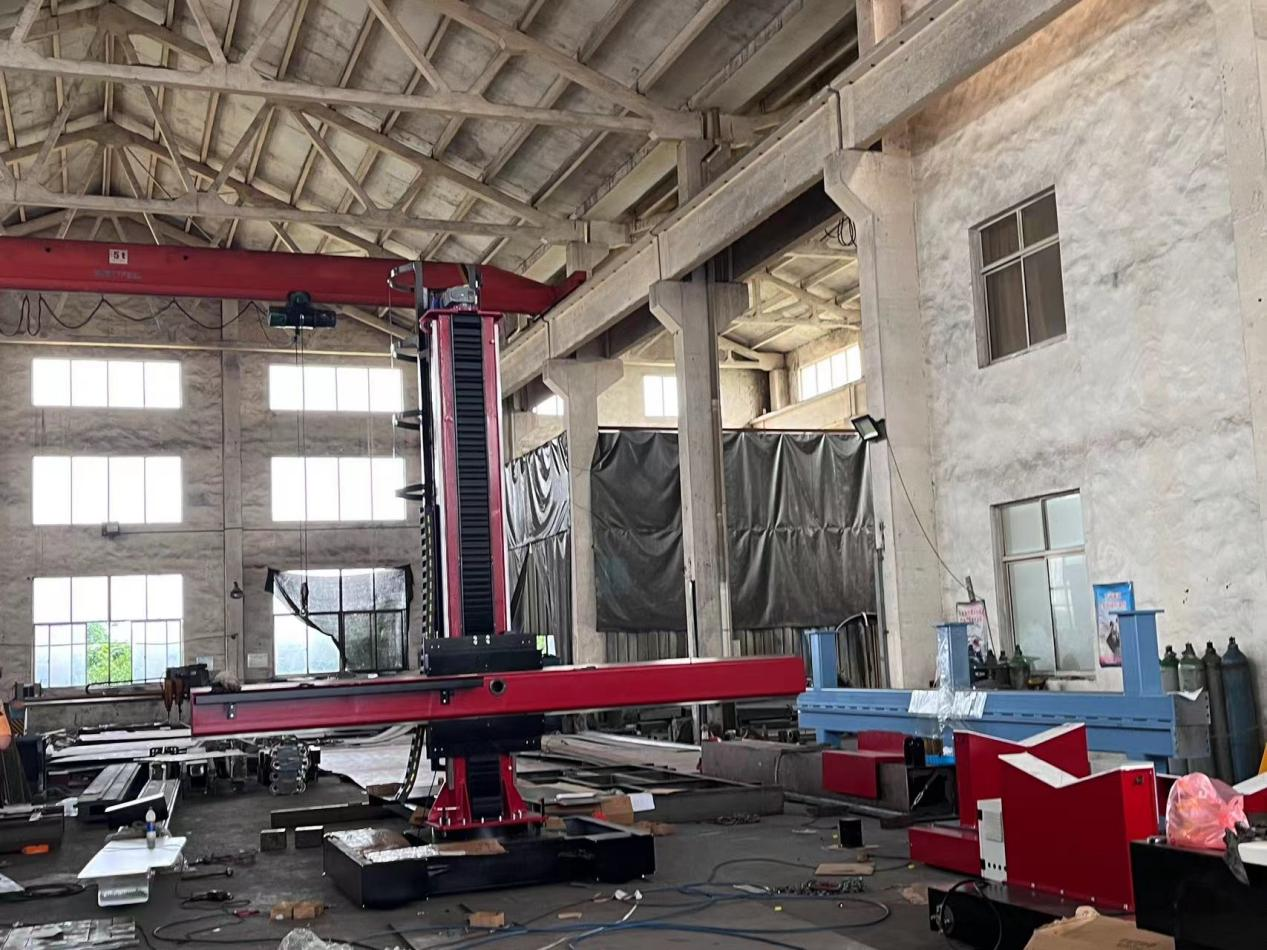
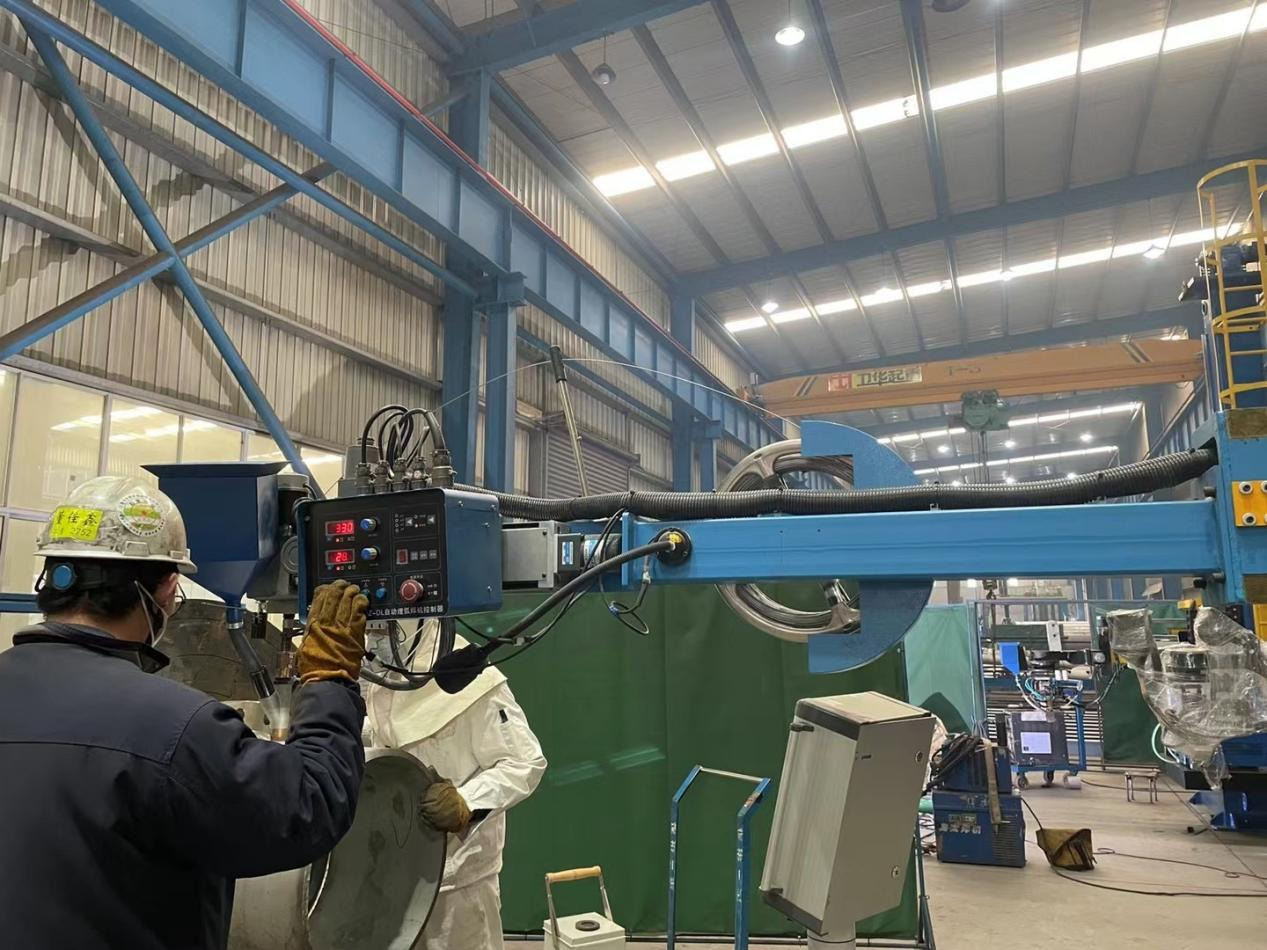
The column and boom welding manipulator is an advanced automated tool designed to solve welding challenges of large-scale, heavy-duty, and complex workpieces in industrial settings. As a high-precision mechanical welding solution, it takes over repetitive, labor-intensive tasks requiring consistent accuracy—tasks hard for human operators to sustain during long shifts.
Composed of a vertical column, horizontal boom, and intelligent control system, it enables flexible, stable welding torch positioning. This integrated design improves welding quality, efficiency, and operator safety. Unlike manual welding, it eliminates fatigue-induced errors, ensures uniform weld seams, and suits a wide range of applications—from small-diameter pipes to large storage tanks, supporting light, medium, and heavy-duty welding needs as a core equipment in modern manufacturing.
For businesses, it reduces labor costs, lowers rework rates, and shortens ROI cycles. Aligned with Industry 4.0, it integrates with IIoT systems for real-time welding data monitoring and fault early warning, facilitating smart workshop upgrades. It effectively addresses traditional large-workpiece welding pain points (low precision, high operational risk), boosting weld qualification rates from 85% to over 99%.
Additionally, it features an energy-saving motor with standby power consumption 60% lower than traditional models, saving 2,000–3,000 yuan in annual electricity costs. During welding, it recycles over 90% of flux, reducing industrial waste and meeting green manufacturing standards.
Design & Structure
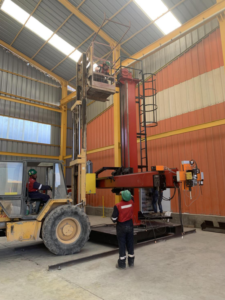
The column and boom welding manipulator adopts a robust modular structure, focusing on rigidity, precision, and safety in design. It consists of five core components that work together to ensure reliable and consistent operation. Below is a detailed breakdown of each component and its practical benefits:
1. Column
As the manipulator’s “backbone,” the vertical main support is made of high-strength steel to maintain stability under heavy loads. It supports the boom and can rotate 360° via manual or motorized drive. Equipped with brake motors for secure positioning and anti-fall devices (instantly locking the boom if the lifting chain fails), it prevents accidents and weld defects from component movement. Unlike traditional open guide rails, its carburized “V”-shaped guide rails increase wear resistance by 40% and avoid long-term loosening.
2. Boom
The horizontal operating arm is equipped with “V”-shaped guide rails, which undergo precision machining, grinding, and annealing for smooth, friction-free movement—minimizing welding deviations from jitter and reducing weld bumps and slag inclusion. A frequency converter enables stepless speed regulation, allowing flexible adjustment of retraction speed based on welding needs. A cross fine-tuning device supports 3D torch positioning, ensuring accurate weld placement for high-precision workpieces.
3. Trolley
As the mobile base, it supports the column and moves along guide rails (manual or motorized) to expand the working range. The inner span of its guide rails is customizable (typically 1,000mm–2,500mm or more) to fit workshop layouts and accommodate various workpiece sizes.
4. Control System
Known as the manipulator’s “brain,” it includes a control cabinet, wired/wireless remote control, and optional PLC touch screen for user-friendliness. With a 12m wired cable or wireless connection, operators can adjust boom height, extension, rotation angle, and welding speed from a safe distance, avoiding high-temperature hazards. An imported frequency converter ensures high speed accuracy, while built-in overload/overcurrent/undervoltage protection enhances reliability and reduces downtime.
5. Lubrication & Safety Systems
A fully sealed oil-immersion lubrication system acts as a “protective barrier” for internal components, blocking dust and welding slag to reduce maintenance and extend service life. Safety features include limit switches for boom extension and lifting, ensuring operation within safe parameters. The modular design allows post-purchase customization—users can add optional accessories (e.g., flux recovery systems, seam trackers) to improve welding efficiency and quality.
Models & Specifications
We offer a complete range of column and boom welding manipulators, covering light-duty, standard-duty, and heavy-duty models. Each model is custom-designed and manufactured based on specific load, stroke, and speed requirements to meet diverse industry needs. The table below outlines key parameters for our most popular models—note that all parameters can be tailored to your operational needs for optimal performance:
| Model | Effective Lifting Range (mm) | Effective Retracting Range (mm) | Lifting Speed (mm/min) | Retracting Speed (mm/min) | Max Permissible Load (kg) | Column Rotation | Trolley Travel Speed (mm/min) | Trolley Rail Inner Span (mm) | Applicable Welding Materials | Recommended Application Scenarios |
| 2×3 | 2000 | 3000 | 300 | 120–1200 | 60 | Manual | Manual | 1000–2000 | Mild steel, stainless steel | Small-diameter pipe welding, small tank welding |
| 3×4 | 3000 | 4000 | 1000 | 120–1200 | 80 | ±180° | 3000 | 1200–2500 | Mild steel, stainless steel, aluminum | Medium-sized pressure vessels, structural steel fabrication |
| 4×5 | 4000 | 5000 | 1000 | 120–1200 | 80 | ±180° | 3000 | 1200–3000 | Mild steel, stainless steel, alloy steel | Large pressure vessels, wind turbine tower components |
| 5×6 | 5000 | 6000 | 1000 | 120–1200 | 100 | ±180° | 3000 | 1500–3000 | Alloy steel, stainless steel, thick plate | Ship hulls, large offshore platform components |
Note:
All models are customizable to your needs—options include wireless control, flux recovery systems, and camera monitoring to enhance operational convenience. The equipment’s power supply adjusts between 110V and 600V to comply with global industrial standards, ensuring seamless integration with your workshop’s power system. For specialized welding scenarios, we offer personalized parameter customization to meet unique requirements.
Welding Process Compatibility
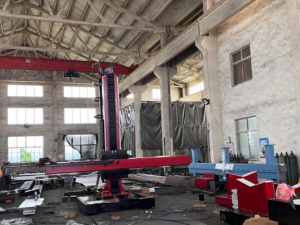
With its robust structure and precise motion control, the column and boom welding manipulator boasts strong versatility, supporting multiple welding processes to meet the needs of different materials and workpieces across industries. Below is a detailed overview of its compatibility with key welding processes and practical operation tips:
1. MIG/MAG Welding (GMAW)
Ideal for high-speed, high-volume welding of carbon steel, stainless steel, and aluminum. The boom’s smooth movement ensures stable arc length, reduces spatter, and enhances weld appearance. Practical tip: Use slow-speed fine-tuning for thin-walled aluminum parts to avoid burn-through; adopt high-speed mode for carbon steel structural parts to improve efficiency. Common applications: automotive parts, structural steel, and pipe welding.
2. TIG Welding (GTAW)
Suitable for precision welding of thin-walled components, stainless steel, and non-ferrous metals. The manipulator’s vibration-free operation and precise torch positioning deliver clean, defect-free welds—critical for aerospace and medical equipment industries with strict quality requirements. Practical tip: Use 3D fine-tuning to keep the torch perpendicular to the weld seam when welding thin-walled stainless steel pipes, reducing undercut defects.
3. Submerged Arc Welding (SAW)
Equipped with a flux recovery system, it excels at heavy-duty thick-plate welding (e.g., longitudinal/circumferential seams of pressure vessels, wind turbine towers, and ship hulls). Stable operation ensures uniform weld penetration and high productivity, while reducing operator labor intensity. Practical tip: For thick-plate multi-layer welding, use the programmable function to set welding speed and torch position for each layer, ensuring consistent quality.
4. Other Processes
It also supports plasma welding (PAW), flux-cored arc welding (FCAW), and hotwire GTAW bore cladding. For specialized scenarios, dual-process compatibility (e.g., TIG/PAW, SAW/MIG) enables quick switching to handle mixed-material workpieces.
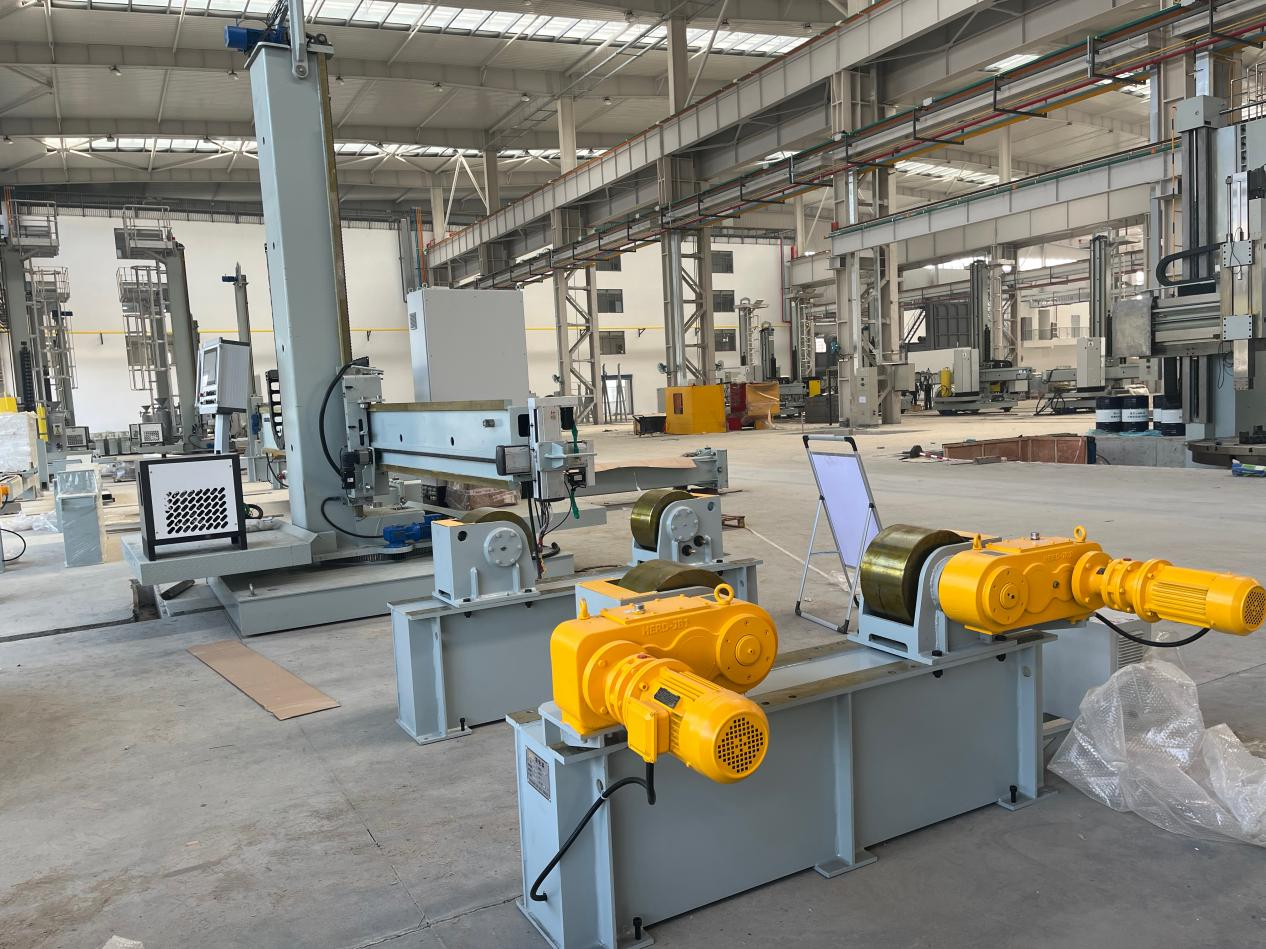
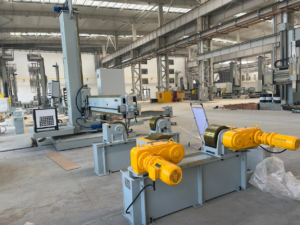
The manipulator integrates seamlessly with other welding equipment (turning rolls, positioners, head-tailstock positioners) to form a complete automated welding system, boosting efficiency, ensuring consistent weld quality, supporting large-scale mass production, and reducing human error.
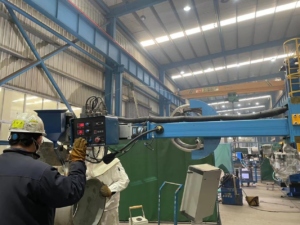
Applications
With its versatility, precision and adaptability, the column and boom welding manipulator is widely used in heavy industries requiring large-scale, high-precision welding. Its key application scenarios and real-world case studies are as follows:
1. Petrochemical & Pressure Vessel Industry
Mainly used for welding storage tanks, pressure vessels and pipelines. The column’s 360° rotation and extended boom reach enable efficient welding of circumferential and longitudinal seams, meeting strict industry standards like ASME and API. Case study: Deployed in 3 major petrochemical parks for welding φ500–φ2000mm chemical pipelines, with a weld qualification rate over 99.5%.
2. Shipbuilding & Offshore Engineering
Widely used in ship hull, deck and offshore platform fabrication. Its heavy-duty load capacity and stable movement facilitate thick-plate welding, and SAW compatibility ensures high productivity for large-scale components. Case study: Applied in 2 large shipyards for welding hull thick plates and offshore platform supports, reducing welding time by 40% compared to manual welding.
3. Wind Energy Industry
Essential for welding wind tower sections, nacelles and flanges. Its precision and consistency guarantee structural integrity, which is critical for wind turbine components in harsh outdoor environments. Case study: Adopted by 5 wind power equipment manufacturing bases for welding 3–5m diameter wind tower sections, extending component service life by 15%.
4. Heavy Machinery & Construction
Used in manufacturing excavators, cranes and structural steel components. Customizable stroke and speed adapt to different workpiece sizes, reducing rework rates and improving production efficiency. Case study: A leading construction machinery manufacturer uses it for welding excavator booms, cutting rework rates from 12% to 2%.
5. General Manufacturing
Light-duty models provide a cost-effective automated welding solution for small-to-medium workshops, suitable for small storage tanks, utility vessels and custom-fabricated workpieces. This lowers SMEs’ automation threshold, improving weld quality and reducing labor costs.
FAQs
We’ve compiled key answers to common questions about the column and boom welding manipulator to help you use the equipment effectively:
1. How to select the right model?
Key criteria: (1) Boom’s effective lifting range > workpiece diameter (critical for tank welding); (2) Manipulator’s maximum load ≥ total weight of welding torch and accessories; (3) Workshop overhead crane height > column height for smooth installation. Choose light/standard/heavy-duty models based on welding process and workpiece size (e.g., small workshops for small-diameter pipes: 2×3 model; large enterprises for heavy-duty thick-plate welding: 5×6 model).
2. What safety features does it have?
Standard features: Anti-fall devices (instantly lock boom if chain breaks), limit switches (prevent over-limit operation), and overload/overcurrent/undervoltage protection (avoid electrical damage). Optional features: Wireless remote control (keep operators away from high temperatures) and camera monitoring (remote arc observation for real-time parameter adjustment).
3. Is it easy to operate and maintain?
Yes. Intuitive remote and manual controls fit operator habits—personnel with basic welding experience can master it in 1–2 days of training. Maintenance is simplified by a fully sealed oil-immersion lubrication system; regular checks of lubricant levels and safety devices ensure stable operation. Detailed operation and maintenance manuals are provided.
4. Can it be customized?
Absolutely. Customization is available for stroke, load capacity, power supply, and accessories. We can also integrate it with your existing welding equipment (e.g., dual-process switching for mixed-material welding, IIoT data monitoring for intelligent management).
5. Does it include documentation and warranty?
Yes. Complete documents: operation manual, maintenance manual, and product certification. 1-year warranty (free maintenance and faulty part replacement) is provided, along with long-term technical support and genuine spare parts. Free on-site debugging and operator training are also available.
6. How to reduce energy consumption?
The intelligent energy-saving module switches to low-power mode when idle, reducing energy use by ~15% vs. traditional models. Regular lubricant checks (monthly) and replacements (every 6 months) reduce friction and further lower consumption.
7. How to extend its service life?
In addition to regular maintenance and lubrication: Avoid over-limit operation (controlled by limit switches); clean welding slag and dust promptly after use; conduct annual comprehensive inspections (guide rail wear, control system sensitivity, safety device integrity) to address potential issues early.
Common Fault Troubleshooting
Below are high-frequency operational faults and quick troubleshooting methods (completable in 5–10 minutes) to minimize downtime:
- Fault 1: Welding torch positioning deviation → Troubleshooting: Check if the cross fine-tuning device is loose; restart the control system and recalibrate 3D positioning parameters (a 5-minute process);
- Fault 2: Excessive equipment noise → Troubleshooting: Verify lubricant levels; if normal, check for guide rail obstructions—cleaning resolves the issue;
- Fault 3: Unstable welding arc → Troubleshooting: Check frequency converter settings and adjust to the standard parameters for your welding process (e.g., 50–60Hz for MIG welding).
UVP Module
Spec Sheet: Download our detailed specification sheet for comprehensive technical parameters, model comparisons, dimensional drawings, welding process compatibility, and practical operation guides. This free resource helps you select the right model, with regular updates to reflect product upgrades.
Structure Diagram: Our clear structural diagram visually outlines key components (column, boom, trolley, control system, lubrication system) and their connections. It simplifies understanding of component coordination, supporting daily inspection and maintenance.
Customized Value-Added Services: Beyond equipment customization, we offer free on-site debugging, 1–2 days of practical operator training, and annual free inspections to help you master the equipment quickly and ensure stable operation. Our professional after-sales team provides timely technical support and fault resolution, eliminating operational concerns.
Environmental Protection Upgrade Service: We offer custom environmental upgrades, including welding fume purification devices to reduce dust emissions and meet workshop environmental standards—supporting your green production transformation. The equipment’s flux recovery system recycles flux, minimizing waste and industrial emissions.
Reviews
There are no reviews yet.