Description
Cobot Welding
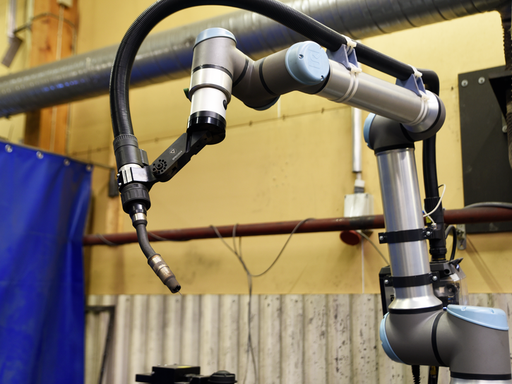
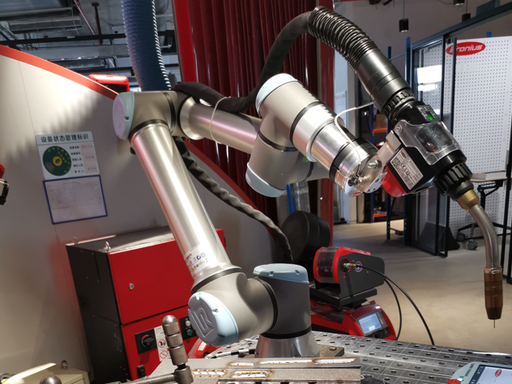
Cobot Welding is an intelligent welding integration system that combines collaborative robots (Cobots) with advanced welding engineering technologies. Its core goal is to solve the key pain points that have long plagued traditional welding in global manufacturing—labor shortages, inconsistent weld quality, and limited production flexibility. Simply put, it is a practical intelligent solution that bridges the gap between inefficient manual welding and inflexible traditional industrial robot welding. Core technologies such as laser positioning and arc tracking—powered by visual sensing and weld feature extraction algorithms—capture weld contour deviations in real time. This not only meets the critical technical requirement of “dynamic trajectory calibration” in welding engineering but also enhances welding accuracy and stability in real-world applications.
Welder Shortage
Amid the global “welder shortage” and rising labor costs, Cobot Welding has become the primary driver for the intelligent upgrading of welding processes. According to the 2026 Global Collaborative Welding Industry Survey by the International Robot Welding Association, it now has a 32% penetration rate in industrial welding scenarios—making it the top choice for small and medium-sized manufacturing enterprises (SMEs) seeking cost-effective automation solutions. Unlike traditional industrial robots, Cobot Welding does not require professional operators or complex safety setups, as it supports safe human-robot collaboration. Ordinary workers can learn basic operations in half a day, eliminating the need for expensive professional training and lowering the barrier to adopting automated welding.
Cobot Welding is widely used in auto parts, steel structures, new energy, hardware processing, marine manufacturing, and other sectors. It helps businesses worldwide reduce production costs, improve the consistency of weld quality, and alleviate labor pressure. To meet the needs of our overseas 2B customers, we offer global delivery, multi-language operation support, and localized after-sales maintenance. It also supports 110V/220V global voltage standards, complies with EU REACH environmental standards, and provides multi-language after-sales responses within 4 hours—all features tailored to diverse global production needs. Below are its key differences from traditional industrial robot welding.
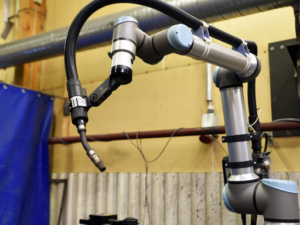
Cobot vs Industrial Robot
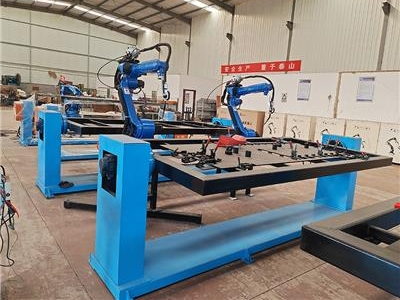
In welding automation, Cobot Welding and traditional industrial robot welding complement each other, with distinct differences in design, performance, and application. Each caters to the specific needs of enterprises. The comparison table below (UVP Module: Comparison Table) outlines their core differences to help businesses worldwide select the right solution.
Comparison Dimension | Cobot Welding | Industrial Robot Welding |
Safety Standards | • Complies with ISO 15066• Force control + collision detection (no safety fences) | • Requires safety fences/light curtains (no human-robot collaboration) • Additional safety modifications required for overseas use (time-consuming and costly for SMEs) |
Operational Threshold | • 3 programming modes (manual guided/graphical/remote APP) • No professional coding required (1-2 hours to master) • Addresses talent shortage issues | • Requires G-code/CAD training • 2-8 hours to program new parts • Professional operators are in short supply (resulting in higher costs) |
Deployment Flexibility | • Compact, lightweight + detachable magnetic base• Changeover ≤25 mins | • Fixed installation with a long commissioning cycle• Difficult to reconfigure |
Payload Capacity | • 3-20kg (mainstream: 5-10kg) • Compatible with most global welding torches • Adapts to diverse workpieces (no separate equipment required) | • 6-25kg (for large welding equipment) • Best suited for heavy-duty tasks • Poor adaptability to small workpieces (lack of versatility) |
Cost-Effectiveness | • $40,000-$70,000 per system • Low deployment and maintenance costs • Flexible payment terms for SMEs (low investment with quick returns) | • $80,000-$120,000 per unit • High modification and maintenance costs • High threshold (unaffordable for most SMEs) |
Key Features & Payload
Cobot Welding’s core competitiveness lies in its ability to balance welding accuracy, ease of use, and scenario adaptability. Its key features and payload parameters have been tested globally, meeting welding requirements across various industries and regions. These features shape its payload design, which includes three series for different welding scenarios.
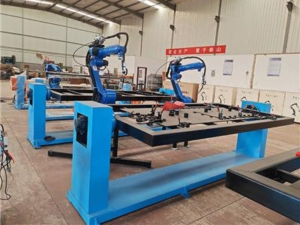
Core Features
- High-Precision Welding: With a repeat positioning accuracy of ±0.02mm, it integrates laser positioning and arc tracking. Arc tracking—powered by visual sensing and weld feature extraction—captures contour deviations in real time, automatically calibrating clamping errors and thermal deformation. This ensures consistent weld accuracy and penetration, reduces rework, and complies with AWS D1.1 standards, making it ideal for high-precision auto parts and new energy applications.
- Safe Human-Robot Collaboration: Built-in collision detection and force control limits enable it to decelerate or stop immediately upon contact with humans or obstacles—no safety fences required. Operators can work alongside it for clamping or quality checks, enhancing flexibility while complying with ISO 15066.
- Multi-Process Compatibility: It supports MIG, TIG, and laser welding, and is compatible with more than 15 global mainstream welding machine brands. It stably welds carbon steel, stainless steel, and aluminum alloy, eliminating the need for separate equipment and reducing enterprise investment.
- Flexible Deployment: Its modular design supports desktop, wall-mounted, and magnetic installation, with a minimum changeover time of 15 minutes. It fits in narrow workshops and is suitable for large workpiece welding, meeting multi-variety production needs without delays.
- Strong Environmental Adaptability: With IP65-IP67 protection, it resists welding spatter, dust, and humidity. This reduces equipment failures, extends service life, adapts to complex scenarios (such as steel structures and mining machinery), and lowers long-term maintenance costs.
Payload Parameters
Payload is a core indicator of Cobot Welding’s ability to adapt to different welding equipment. Designed for global industrial needs, it offers three ranges to choose from based on torch weight and process requirements:
- Light Load Series (3-5kg): Suitable for small welding torches, it is ideal for precision small parts (electronic components, small hardware). Flexible and low-energy, it is perfect for small-batch non-standard production in overseas SMEs.
- Standard Load Series (5-10kg): The most widely used range, it is compatible with conventional MIG/TIG torches. Cost-effective for auto parts, hardware, and new energy, it is the top choice for most overseas 2B customers.
- Heavy Load Series (10-20kg): Designed for large torches and thick plate welding, it supports multi-layer multi-pass welding. It increases thick plate efficiency by over 70%, making it ideal for steel structures and construction machinery.
Programming & Teach Pendant
A key advantage of Cobot Welding is its low programming threshold—operators do not need professional coding experience to use it. Its programming methods and teach pendant are designed to match the habits of overseas workshop operators, balancing ease of use and performance. No specialized programmers are needed; ordinary staff can learn quickly.
Programming Methods
- Manual Guided Teaching: The most intuitive method—operators drag the robot arm to set start/end points and key paths. The robot automatically records trajectories, with no coding required. Ordinary workers can complete their first program in 20 minutes, addressing talent shortage issues.
- Graphical Programming: Operators set trajectories, speed, and current via drag-and-drop icons on the teach pendant or tablet. It supports trajectory modification and copying, enabling quick changeover for multi-variety parts and improving efficiency.
- Remote APP Programming: High-end models support remote control via a mobile APP (e.g., Beacon APP) for programming, parameter adjustment, and fault diagnosis. Operators do not need to be on-site, improving efficiency and simplifying remote equipment management.
Teach Pendant
The teach pendant is Cobot Welding’s core operation terminal, designed for user-friendliness. It features a 10.1-inch HD touch screen with a simple interface, supporting Chinese-English switching and customizable languages (Spanish, German, Japanese) for global operators. Compact and lightweight, it supports handheld use and wired/wireless connection (≤10m range for large workshops), allowing on-site parameter adjustments. It integrates programming, parameter setting, fault alarms, and production monitoring, displaying real-time welding data (speed, current, voltage) to help operators track status and resolve issues promptly.
Applications
With its flexibility, efficiency, and ease of use, Cobot Welding is widely used in global industrial fields, including precision welding, heavy-duty welding, and non-standard customization. Below are its main application areas and real customer cases (UVP Module: Use Case Cards) to demonstrate its practical value for global 2B customers.
Main Application Fields
- Auto Parts Industry: It welds precision parts (seat frames, headlight brackets, battery trays) with high accuracy, low thermal deformation, and quick changeover. Widely used by European, American, and Japanese auto parts manufacturers, it meets strict overseas quality standards.
- Steel Structure/Construction Machinery: Suitable for thick plate welding (steel frames, machinery parts) with sufficient penetration and multi-layer multi-pass capability. It operates stably in complex environments, solving thick plate welding challenges for overseas enterprises.
- Hardware/Kitchen & Bathroom Manufacturing: Ideal for small-batch, non-standard parts (hardware, kitchen appliances). With low environmental requirements and flexible deployment, it is perfect for lightweight automation in overseas SMEs.
- New Energy Industry: It welds lithium battery modules and photovoltaic brackets with low heat input, good tightness, and strong oxidation resistance. It adapts to strong electromagnetic environments, supporting the development of overseas new energy industries.
Customer Cases (Use Case Cards):
Below are real global customer cases detailing Cobot Welding’s actual effects, helping overseas customers avoid model selection mistakes.
Case 1:
Nordic Auto Parts Co., Ltd. (Sweden) – Auto Parts Industry (Background: Medium-sized supplier to Volkswagen and Volvo; serves major European markets)
Pain Points:
The company produced more than 8 part types simultaneously, with a 91% weld pass rate (below European standards). It faced local welder shortages, high recruitment costs, and inflexible traditional robots—frequent changeovers reduced efficiency and caused order delays.
Solution: The company adopted our 5-10kg standard load Cobot Welding system (laser positioning, graphical programming, VW Group-compliant). Our team provided on-site installation, training, and process optimization, deploying the system in 2 days without disrupting production.
Effect: Operators mastered the system in 20 minutes; the weld pass rate increased to 99.3%. Changeover time was reduced to ≤18 minutes, and labor costs decreased by 38% ($8,000/month saved). The company maintained its partnerships with European automakers and expanded its capacity by 60%.
Case 2:
Australasian Steel Fabricators (Australia) – Steel Structure Industry (Background: Medium-sized enterprise specializing in bridge and building steel; serves Australia and Southeast Asia)
Pain Points:
Severe welder shortages led to slow thick plate welding, high error rates, and a 12% rework rate—delays caused customer complaints and reduced profits, creating an urgent need for an efficient, stable solution.
Solution: The company deployed our 10-20kg heavy load Cobot Welding system (capable of multi-layer multi-pass thick plate welding). We provided 24-hour remote support and customized welding guidance, solving technical challenges without additional staff.
Effect: Thick plate welding efficiency increased by 75%, and the rework rate dropped to 1.5%. The equipment paid for itself in 7 months, and the enterprise expanded into the Southeast Asian market with increased orders and stable growth.
FAQs
Below are common questions from global 2B customers about selecting and using Cobot Welding. Combined with overseas industry practices and real cases, we provide detailed answers to help customers understand the product and avoid mistakes.
Q1: Is Cobot Welding suitable for overseas SMEs?
A: Absolutely. The core needs of overseas SMEs for welding automation—flexibility, low investment, and ease of use—are exactly Cobot Welding’s strengths. The initial investment ranges from $40,000 to $70,000, with no need for professional programmers or workshop renovations. Deployed in 1-3 days (without disrupting production), it supports small-batch, multi-variety production. We also offer flexible payment terms and localized after-sales support to ease capital and service concerns.
Q2: Can Cobot Welding’s accuracy meet the needs of overseas high-end industries?
A: Absolutely. Mainstream models have a repeat positioning accuracy of ±0.02mm. With laser positioning, arc tracking, and contact positioning to automatically calibrate clamping errors and thermal deformation. Weld consistency exceeds that of manual welding, complying with strict European and American standards. For auto parts and new energy—making it directly suitable for high-end overseas customers.
Q3: What overseas after-sales and technical support do you offer?
A: We have professional after-sales centers in Europe, North America, and Southeast Asia, with 24-hour online support (≤4-hour response). We provide on-site maintenance for complex faults. Regular equipment maintenance guidance. and multi-language manuals/training materials to ensure the smooth operation of equipment for overseas operators.
Q4: Does Cobot Welding comply with mainstream overseas safety standards?
A: Yes. It fully complies with ISO 15066 and holds CE, UL, and FDA certifications. Meeting safety requirements in key markets such as the EU, US, and Japan. No additional safety modifications are required for overseas deployment—it is ready to use, reducing safety costs and compliance concerns.
Reviews
There are no reviews yet.