
Description
Wind Tower Welding Equipment
Overview
Wind tower welding equipment is a core component of wind power manufacturing, directly governing wind turbine towers’ structural stability, load capacity and service life.
Driven by the global shift toward 5–10 MW+ large-capacity units and deep-sea offshore wind projects, welding equipment now faces stricter demands for precision, efficiency, corrosion resistance and intelligent operation. Conventional manual and semi-automatic welding falls short of modern mass production needs, resulting in unstable weld quality, long lead times, heavy labor reliance and high rework rates.
Our dedicated wind tower welding solutions integrate intelligent control, automatic positioning and full-process monitoring systems. They deliver consistent, high-quality welding with higher efficiency and lower operational costs, enabling wind towers to meet the 25-year design lifespan standard.
- Project CaseIn 2025, a 500 MW onshore wind farm in Gansu needed 150 sets of 7 MW tower sections (5.2 m diameter, 65 mm wall thickness).
- Before upgrade: 25 skilled welders produced 7 sections monthly, with an 86% weld qualification rate.
After adopting our integrated welding line: 15 operators achieve 35 monthly sections, a 99.3% qualification rate and 88% lower rework costs, with 8 months of stable continuous operation.
Welding Equipment Types
Wind tower structures comprise tower sections, flanges, door frames, and reinforcing rings, each requiring specific welding processes. We provide three core welding equipment types tailored to different scenarios, with details as follows:
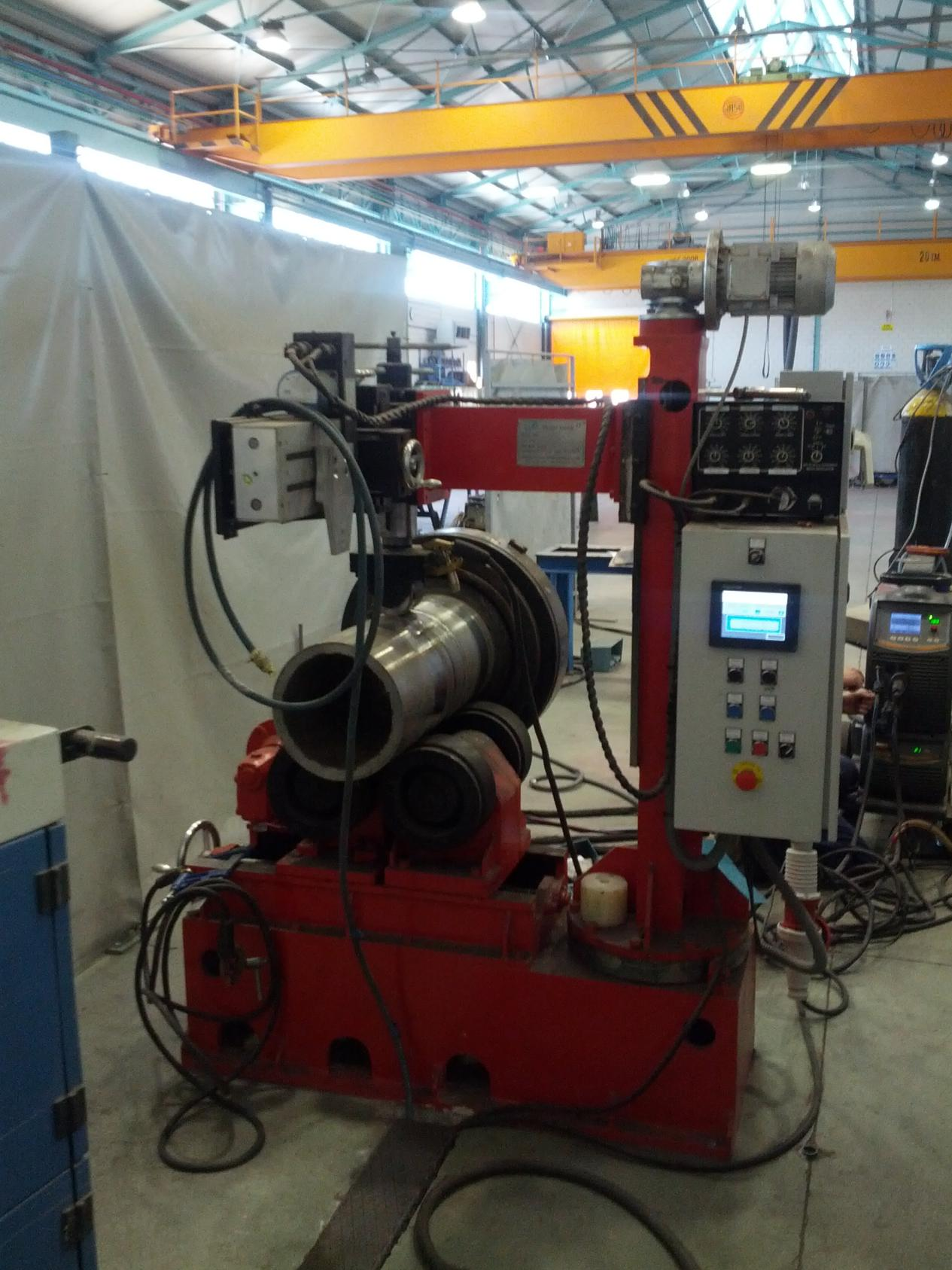
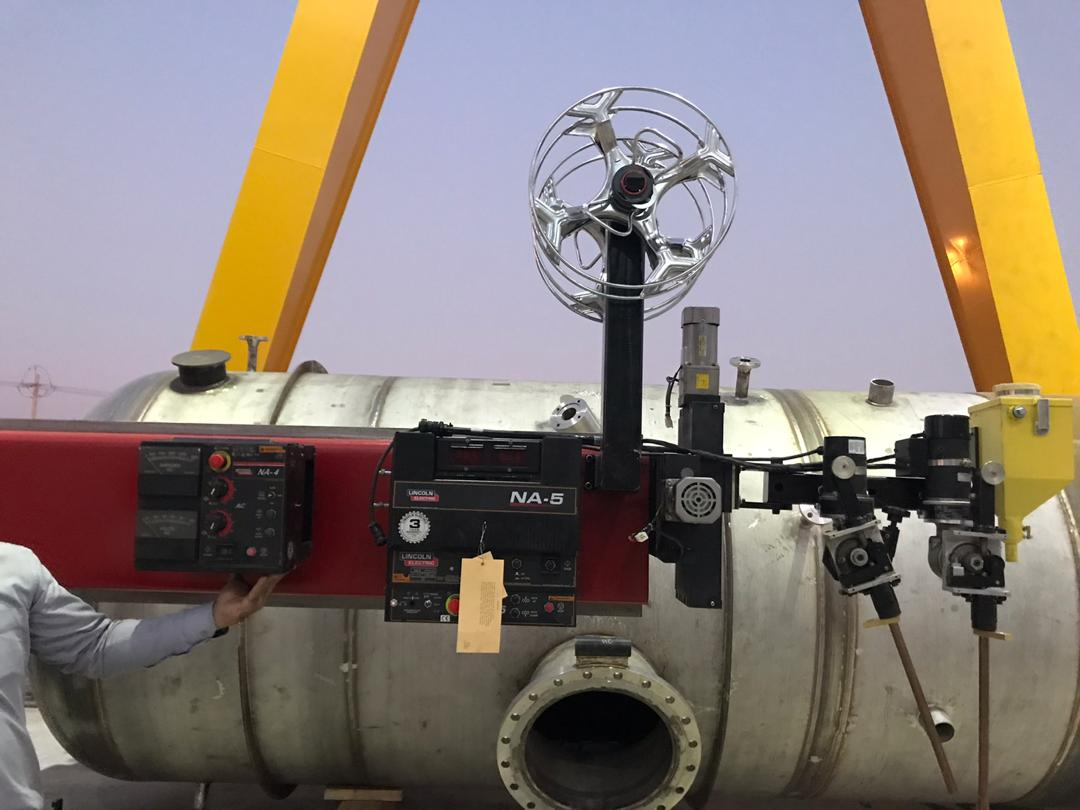
Gantry Type Welding Manipulator
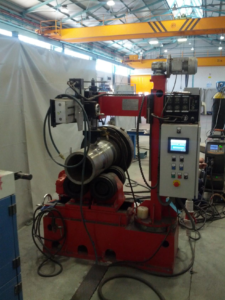
Widely used for longitudinal and circumferential welding of large-diameter tower sections and flanges, it features a high-rigidity gantry structure, precision ball screws, and servo drive, with ±0.08 mm/m positioning accuracy. Equipped with automatic arc ignition, arc length tracking, and stepless speed regulation, it boosts efficiency by over 60% vs manual welding. Optional configurations include flux recovery and parameter monitoring.
Case: A Jiangsu onshore wind tower manufacturer (5-8 MW units) adopted 10 sets of GM-WM-9090 in 2024. Welding time per tower section reduced from 14h to 4h, deformation from >1.6 mm/m to ≤0.7 mm/m, and weld qualification rate from 89% to 99.7%, completing a 250 MW project 3 months ahead of schedule.
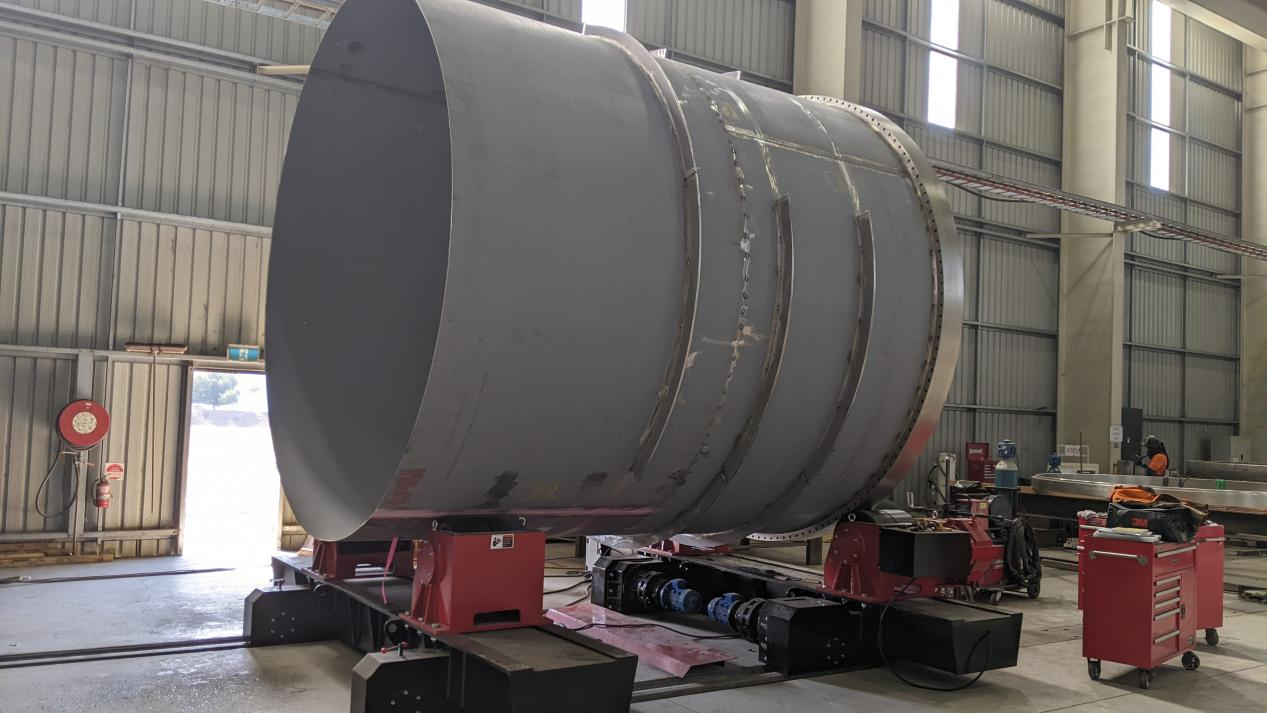
Self-Adaptive Welding Rotator
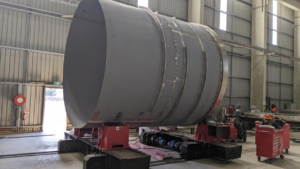
Essential for circumferential welding of tower sections and flange assembly, it has three models (self-aligning, adjustable, assembly-type) with 2-7 m workpiece diameter range and 2200 tons maximum load. The self-adaptive model auto-adjusts roller spacing; the assembly-type ensures coaxiality via hydraulic alignment. Wear-resistant polyurethane rollers prevent slipping and scratches.
Case: A Shandong offshore flange manufacturer (7-10 MW, 6 m diameter flanges) adopted 12 sets of SA-WR-1200 in 2024. Alignment time per flange reduced from 2.5-3.5h to 18 minutes, welding offset rate from 8% to <0.8%, rework costs down 87%, and 250 flanges passed third-party inspection with 100% pass rate.
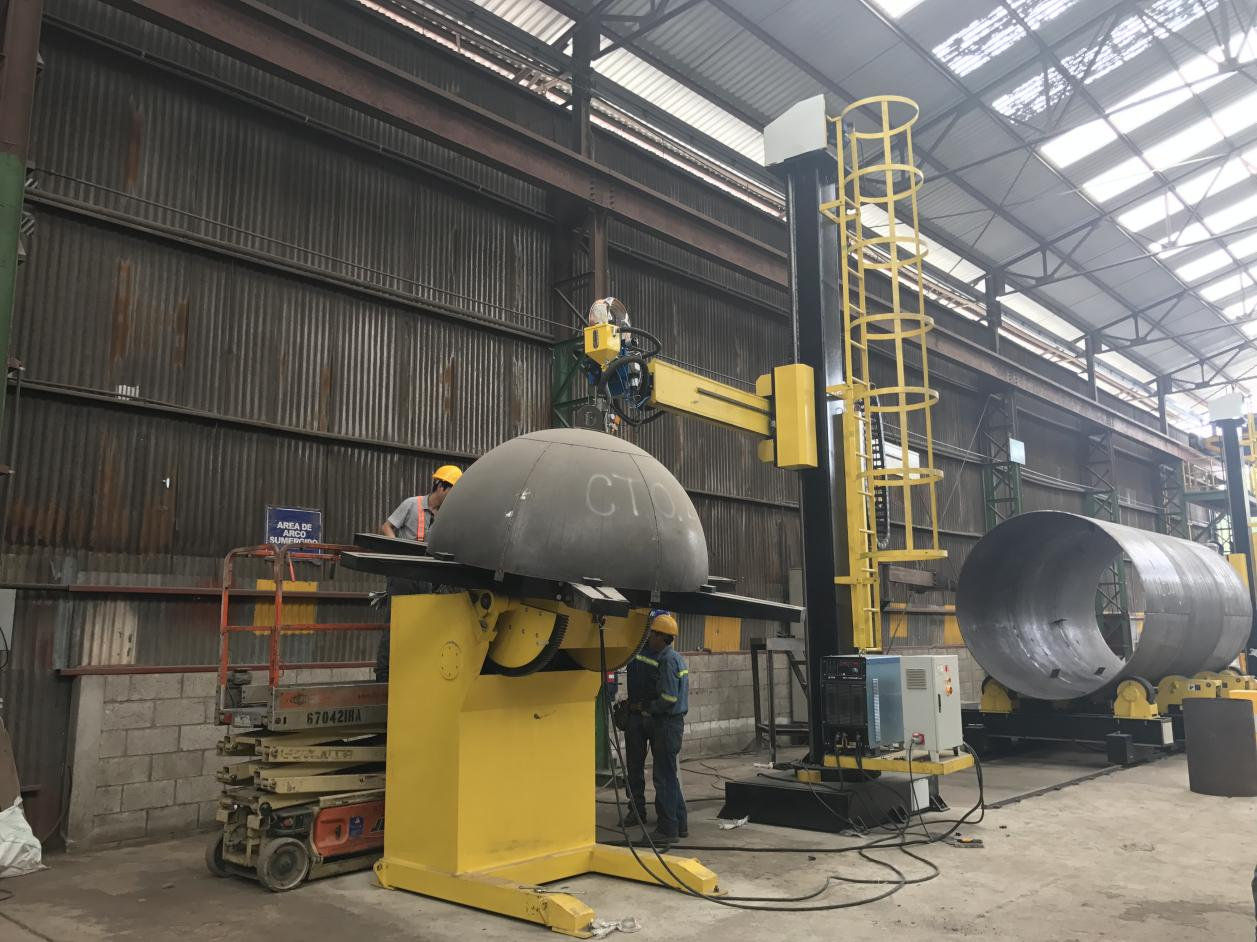
Intelligent Integrated Welding Line
Ideal for large-scale mass production, it integrates gantry manipulators, adaptive rotators, CNC cutting, bending, shot blasting, and painting, realizing full-process automation. It increases production efficiency by up to 320% for 3-10 MW wind towers with stable weld quality.
Case: A Xinjiang wind tower manufacturer (600 sets/year target) adopted 4 sets of IL-WL-6000 in 2023. With 30 employees instead of 90, it produced 620 sets/year, unit costs down 30%, and weld qualification rate stable at 99.6%.
Models & Specifications
Our wind tower welding equipment includes a variety of models, fully meeting the welding needs of onshore and offshore wind towers across different specifications. Technically, core equipment parameters directly determine compatibility with workpieces of varying sizes. To help you make an informed decision, below are the core parameters for each model, guiding you to select the optimal solution for your specific production requirements.
| Equipment Model | Equipment Type | Workpiece Diameter Range | Load Capacity | Positioning Accuracy | Welding Method | Power Supply | Dimensions (L×W×H) | Weight |
| GM-WM-9090 | Gantry Type Welding Manipulator | 2.8-7 m | N/A (Matching Rotator) | ±0.08 mm/m | SAW, FCAW-G | 3-phase 380V±15%, 50~60Hz | 8500×3200×8200 mm | 5.5 tons |
| SA-WR-1200 | Self-Adaptive Welding Rotator | 3.2-6 m | 1200 tons | ±0.9 mm | Compatible with All Methods | 3-phase 380V±15%, 50~60Hz | 4800×3000×1700 mm | 9.2 tons |
| IL-WL-6000 | Intelligent Integrated Welding Line | 2.8-7 m | 1800 tons | ±0.12 mm/m | SAW, FCAW-G, GTAW | 3-phase 380V±15%, 50~60Hz | 52000×8500×6200 mm | 125 tons |
| GM-WM-7070 | Gantry Type Welding Manipulator | 2.2-5 m | N/A (Matching Rotator) | ±0.08 mm/m | SAW, FCAW-G | 3-phase 380V±15%, 50~60Hz | 6500×2800×6500 mm | 4.0 tons |
Quality Assurance
We adhere to the quality philosophy of “full-process control and full-cycle guarantee,” implementing strict quality management throughout the design, manufacturing, testing, and after-sales stages. All our equipment complies with international standards (IEC 61400-1, ISO 9001:2015, EN 1090-3) and domestic standards (GB/T 19073-2008, GB 50661-2011), laying a solid foundation for product quality. Specifically, our quality assurance system consists of four core links, detailed below:
Core Component Quality Control
Core components are the backbone of equipment performance, so we prioritize their selection and testing. All core components (servo motors, reducers, welding power sources) are sourced from reputable international brands with certified qualifications, ensuring stability and reliability. Additionally, the high-strength steel used in equipment manufacturing undergoes rigorous chemical composition analysis and mechanical performance testing, with its welding adaptability evaluated in accordance with T/CI 102-2025 standards— a measure designed to prevent quality issues caused by material defects. A Hebei wind tower manufacturer’s experience exemplifies this: Specializing in 3-6 MW units, the company switched to our equipment (equipped with ABB servo motors and subjected to 6 rounds of steel performance testing), completely eliminating weld crack issues and achieving 4 years of stable operation— a testament to the effectiveness of our component quality control.
Manufacturing Process Supervision
The manufacturing process directly impacts final equipment quality— a key link in our quality assurance system. We use intelligent systems to monitor critical processes such as cutting, welding, and heat treatment in real time, ensuring each step adheres to standard requirements. Specifically, during welding, we employ a segmented symmetrical welding process and post-weld heat treatment technology, effectively controlling flange runout within 1.8 mm/m— an indicator critical to wind tower assembly accuracy. A Zhejiang offshore wind tower manufacturer’s results demonstrate this: After adopting our process supervision system, the unqualified rate for flange runout dropped from 16% to 0.4%, fully complying with offshore wind power equipment standards and validating the effectiveness of our process supervision.
Full-Scope Delivery Testing
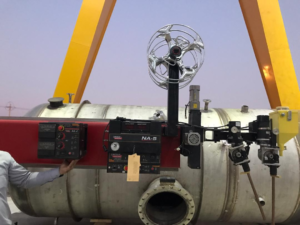
Before delivery, every piece of equipment undergoes rigorous load testing, precision testing, and welding performance testing— we never deliver substandard products, which is our uncompromising quality bottom line. For critical welds, we conduct non-destructive testing (X-ray, ultrasonic, magnetic particle) to ensure no internal defects. We also provide a detailed quality test report for each unit, allowing customers to fully understand equipment performance. For example, our GM-WM-7070 gantry welding manipulators passed third-party testing for a Fujian 300 MW wind power project, with positioning accuracy and weld penetration exceeding standard requirements by 15%— a clear reflection of our product reliability.
Comprehensive After-Sales Support
We understand that high-quality after-sales support is critical to our customers— and it is also an integral part of our quality assurance system. To provide comprehensive assistance, we offer one-stop after-sales services, including on-site installation, commissioning, 3-day operator training, an 18-month warranty, and 24/7 technical support— ensuring prompt resolution of customer issues. A Qinghai wind tower factory’s experience illustrates this commitment: When the factory encountered a failure with an SA-WR-1200 welding rotator, our technical team arrived on-site within 15 hours to resolve the issue, reducing the enterprise’s economic losses by over 600,000 yuan. Following the repair, we also provided regular maintenance guidance to ensure long-term stable equipment operation.
Welding Quality Report Sample
Report No.: WT-QR-20260427-001 | Equipment Model: GM-WM-9090 | Test Date: 2026-04-27 | Test Standards: EN 1090-3, ISO 15614-2
| Test Item | Test Method | Standard Requirement | Test Result | Pass/Fail |
| Weld Penetration | Ultrasonic Testing (UT) | ≥96% of Plate Thickness | 99% | Pass |
| Weld Appearance | Visual Inspection + Magnetic Particle Testing | No Cracks, Porosity, Undercut or Overlap | Smooth Surface, No Visible Defects | Pass |
| Tensile Strength of Weld Joint | Tensile Test | ≥430 MPa | 465 MPa | Pass |
| Impact Toughness (Low Temperature) | Charpy Impact Test (-25℃) | ≥36 J | 45 J | Pass |
| Positioning Accuracy | Laser Positioning Test | ±0.08 mm/m | ±0.06 mm/m | Pass |
Test Conclusion: From a welding technology perspective, all test items fully meet specified standards, confirming the equipment’s qualified welding quality. In practical terms, this means the equipment can be reliably used for welding onshore and offshore wind towers, meeting industry requirements for service life and safety.
Applications
Our wind tower welding equipment features wide applicability, covering onshore/offshore wind tower manufacturing, maintenance, and other large cylindrical component welding, supported by high adaptability and stable welding performance. Below is a detailed overview of its key application scenarios.
Onshore Wind Towers
Suitable for welding 3-10 MW onshore wind towers of various diameters and wall thicknesses. In a Ningxia 600 MW onshore wind power project, the GM-WM-9090 gantry welding manipulators and SA-WR-1200 welding rotators reduced single tower section welding time from 16 hours to 5.5 hours, completing 130 sections 4.5 months ahead of schedule with a 99.6% weld qualification rate.
Offshore Wind Towers
Designed for harsh marine environments with excellent corrosion, salt spray, and humidity resistance. A Guangdong 350 MW offshore wind farm adopted IL-WL-6000 intelligent integrated welding lines (marine-grade corrosion protection), which have operated stably for 2.5 years, maintaining 98.5% paint integrity and over 99% weld penetration.
Wind Tower Maintenance and Repair
Our portable welding manipulators and rotators enable on-site maintenance without disassembly, saving costs. A Shanxi wind farm used GM-WM-3030 portable manipulators and SA-WR-600 rotators, cutting single tower maintenance time from 8 days to 1.2 days and reducing costs by 32% for 15 towers.
Other Large-Scale Cylindrical Components
Its high adaptability also applies to pressure vessels, large storage tanks, and petroleum pipelines. A Shandong petrochemical enterprise used GM-WM-7070 gantry manipulators, reducing single large storage tank welding time from 28 days to 11 days (99.9% weld qualification rate) and saving 3.5 million yuan for 50 tanks.
FAQs
Customers often have questions when selecting and using wind tower welding equipment, especially for enterprises new to intelligent welding technology. Below are concise answers to common FAQs to help you select the right solution and avoid pitfalls.
Q: What welding processes are supported by the equipment?
A: It supports SAW (ideal for mass thick-walled component welding), FCAW-G (suitable for on-site/outdoor welding), and GTAW (for high-precision thin-walled welding). A Liaoning manufacturer using our GM-WM-9090 gantry welding manipulators with SAW increased deposition rates by 3.5x and reduced rework rates by 82% vs. manual welding.
Q: Can the equipment adapt to different workpiece diameters and wall thicknesses?
A: Yes. It accommodates diameters 2-7 m and wall thicknesses 12-105 mm (covering 3-10 MW wind towers), with customizable integrated lines for flexibility. A Sichuan manufacturer used our adjustable equipment to switch between 4 MW and 7 MW towers, boosting efficiency by 45%.
Q: What is the delivery time and after-sales service cycle?
A: Delivery: 50-65 days for standard models; 65-95 days for customized lines. After-sales includes on-site installation, 3-day operator training, 18-month warranty, and 24/7 technical support. A Yunnan factory received 12 GM-WM-7070 units in 52 days, with the production line operational in 60 days.
Q: Does the equipment meet international certification standards?
A: Yes. All equipment passes IEC 61400-1, ISO 9001:2015, and EN 1090-3. A Guangxi enterprise’s 60 sets passed TÜV SÜD EN 1090-3 and were exported to Southeast Asia and Europe.
Q: Can customized solutions be provided for special needs?
A: Yes. Our professional R&D team offers customization based on production scale, workpiece specs, and process requirements. A Shanghai offshore wind tower manufacturer customized an IL-WL-6000 line, improving 10 MW thick-walled tower efficiency by 42% and weld qualification rate to 99.8%.
UVP Module
Spec Sheet
We provide detailed Chinese and English specification sheets for all wind tower welding equipment models. These sheets include comprehensive technical parameters, structural drawings, installation requirements, and maintenance guidelines, helping you quickly verify if the equipment meets your production needs. As mentioned earlier, the Gansu 500 MW wind power project used our specification sheet to confirm the suitability of the IL-WL-6000 intelligent integrated welding line. If you need a specification sheet, please contact our sales team to obtain the download link and professional technical consultation— we are committed to providing you with comprehensive support.
Equipment Type Comparison
To help you select the most suitable equipment type for your production needs, below is a detailed comparison of the three core equipment types, focusing on their technical characteristics and practical applications. You can choose based on your production scale and process requirements, ensuring the selected equipment maximizes both production efficiency and quality.
| Equipment Type | Core Advantages | Applicable Scenarios | Efficiency Improvement | Key Features |
| Gantry Type Welding Manipulator | High positioning precision, stable operation, suitable for high-precision welding | Longitudinal/circumferential welding of tower sections and flanges | ≥60% vs manual welding | Servo drive, arc length tracking, flux recovery optional |
| Self-Adaptive Welding Rotator | Automatic alignment, large load capacity, no workpiece damage | Circumferential welding and assembly of tower sections/flanges | ≥50% vs manual alignment + welding | Hydraulic alignment, polyurethane rollers, anti-slip design |
| Intelligent Integrated Welding Line | Full-process automation, high production efficiency, consistent quality | Mass production of 3-10 MW wind towers | Up to 320% vs traditional production line | Integrated cutting, welding, post-processing, intelligent monitoring |
Reviews
There are no reviews yet.