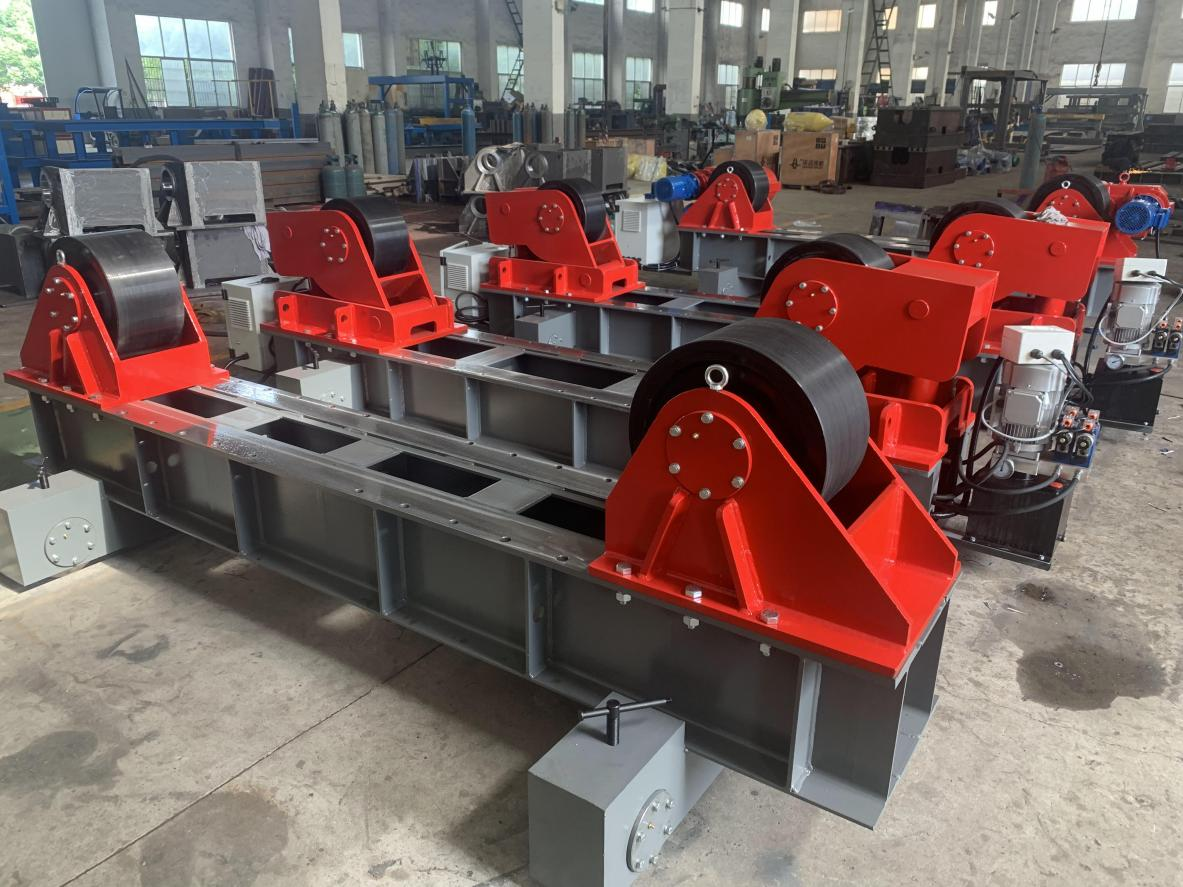
Description
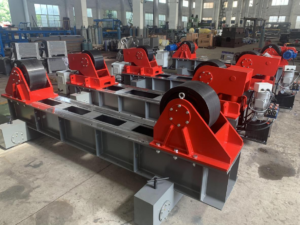
Pipe Rotator for Welding
Overview
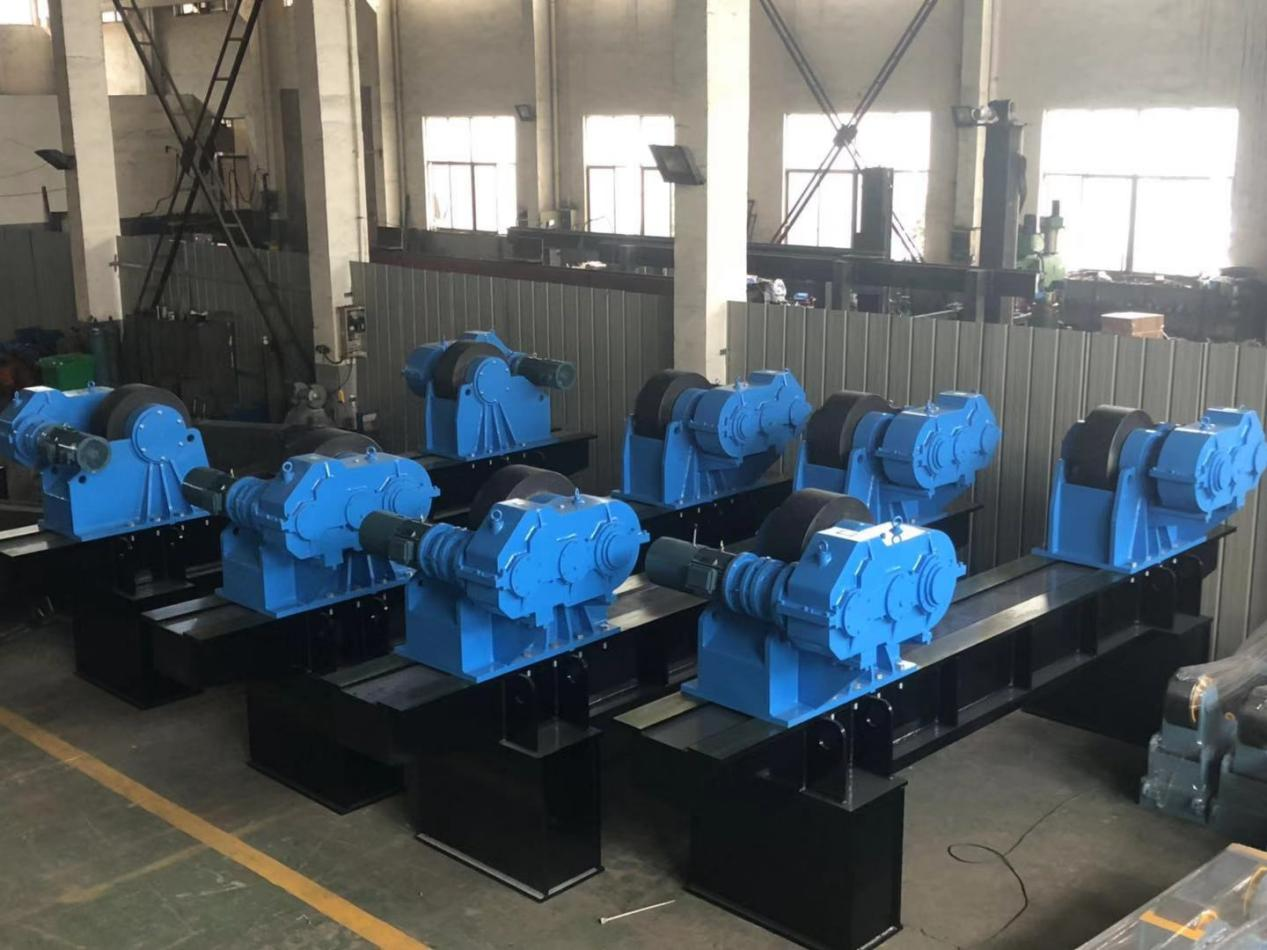
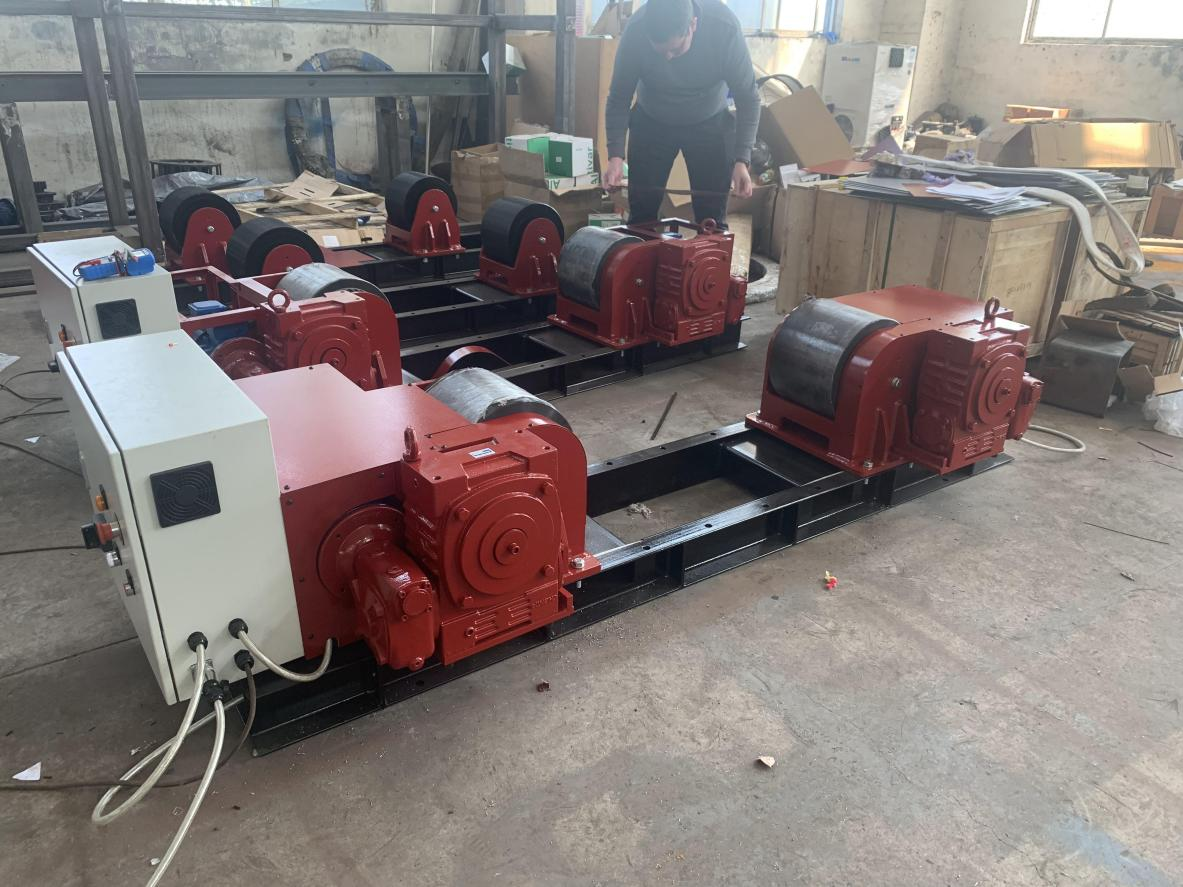
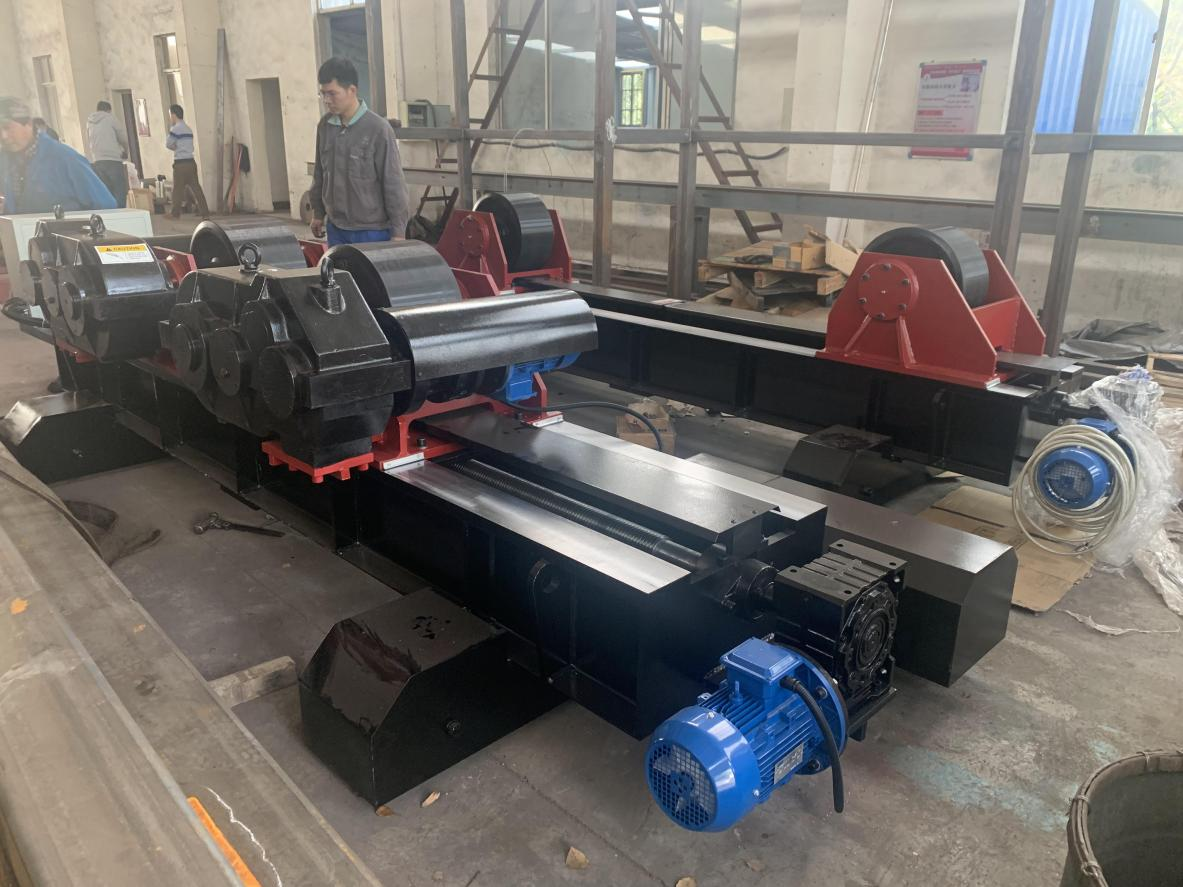
A welding pipe rotator is essential auxiliary equipment in modern welding engineering, purpose‑built to support and rotate cylindrical pipe workpieces during welding. In real welding operations, this machine is a core tool for professional fabrication; without it, efficient large‑diameter pipe welding would be nearly impossible. Its primary purpose is to help welders produce consistent, high‑precision circumferential and longitudinal welds while reducing operator fatigue.
In short, whether working in a fixed workshop or on a construction site, workers no longer need to rotate heavy pipes manually. Manual rotation is slow, strenuous, and often causes uneven beads, operator exhaustion, and project delays. Our pipe rotator supports a wide range of pipe diameters and load ratings, fully satisfying the demands of oil & gas, shipbuilding, chemical processing, and pressure vessel manufacturing—industries where precision and efficiency are strictly regulated.
Unlike manual positioning, which requires 4–5 workers per joint and frequently causes misalignment, our pipe rotator automates rotation with stable speed control to minimize human error, lower rework costs, and shorten project timelines. Structurally rugged and environmentally adaptable, it operates reliably long‑term in extreme temperatures from frigid cold to intense heat, complying with GB/T 30582-2014 General Technical Conditions for Welding Auxiliary Equipment.
Based on its core functions and industry requirements, the machine includes advanced technical features that further improve welding accuracy and efficiency, as detailed below.
Key Features
Precision Control: Accurate Alignment, Zero Avoidable Error
In practical welding use, our pipe rotator uses a laser alignment system and hydraulic servo adjustment to achieve alignment precision within 0.05 mm, eliminating misalignment that causes costly rework. The laser system monitors joint gaps in real time and automatically adjusts pipe position to meet the alignment requirements of API 1104:2020 Clause 5.2.3. In practice, this means virtually no alignment error and reliably consistent weld quality.
Structural Design: Heavy‑Duty, Stable, and Long‑Lasting
Built with a high‑strength steel frame and wear‑resistant components, the rotator supports loads from 5 to 40 metric tons, complying with load requirements in GB/T 30582-2014. It handles both light and heavy pipe assemblies without compromise. The reinforced structure and standard bearings simplify routine maintenance and reduce unplanned downtime—critical for high‑output welding environments.
Operational Convenience: Safe, Ergonomic, and Fast to Set Up
For on‑site usability, the machine features an ergonomic API‑style ring handle, foot pedal control, and optional remote operation. These features reduce fatigue and improve job site safety. Quick‑release fasteners and adjustable wheel spacing allow fast setup for different pipe diameters, minimizing changeover time and raising overall productivity.
Environmental Adaptability: All‑Conditions Performance
The rotator carries an IP65 protection rating and uses anti‑freeze lubrication, enabling stable operation from ‑45°C up to high‑heat environments. It performs reliably outdoors, on cross‑country pipelines, and in harsh industrial settings. A built‑in data logging system records alignment parameters, welding current, and interpass temperature, then automatically generates audit‑ready reports compliant with API 1104 and ASME IX, reducing administrative work for welders and supervisors.
Models & Specifications
We offer a full lineup of standard pipe rotators to match diverse industry needs, with full customization available for non‑standard pipe sizes and loads. Below are the specifications for our most popular models.
| Model | Load Capacity (MT) | Rotation Speed (mm/min) | Power (HP) | Pipe Diameter Range (mm) | Wheel Dimensions (Dia. × Width, mm) | Machine Weight (MT) | Control Mode |
| OR‑5T | 5 | 100–1500 | 2×0.5 | 250–2500 | 320×120 | 0.8 | Manual + Foot Pedal |
| OR‑10T | 10 | 100–1200 | 2×1.0 | 250–3700 | 320×170 | 1.0 | Electric + Remote |
| OR‑20T | 20 | 100–1200 | 2×1.5 | 1200–4800 (Customizable) | 400×190 | 1.5 | Electric + Remote |
| OR‑30T | 30 | 100–1200 | 2×2.0 | 250–4800 | 400×190 | 1.8 | Electric + Remote |
| OR‑40T | 40 | 100–1200 | 2×2.0 | 250–4800 | 400×210 | 2.4 | Electric + Remote |
Note: All models can be customized to meet on‑site requirements, including adjustments to pipe diameter, load capacity, and control systems. Contact our technical team for a tailored solution.
Wheels are the primary load‑bearing components of the rotator; material choice directly affects welding stability, precision, and service life. Below are the available wheel options and their ideal applications.
Wheel Options
Wheel material determines grip, durability, workpiece protection, and temperature resistance. We offer three industrial‑grade options for different welding scenarios:
Heavy‑Duty Steel Wheels
Made from high‑strength alloy steel meeting GB/T 1591-2018, steel wheels provide exceptional durability and high load capacity. They are ideal for heavy‑duty welding, rough‑surface pipes, and high‑cycle operation. Heat resistant up to 150°C, they can sustain heavy loads continuously. They may leave minor scratches on polished surfaces and have slightly lower grip on smooth pipes.
Polyurethane Wheels
Industrial‑grade polyurethane wheels offer strong grip, shock absorption, and zero‑scratch performance. They deliver precision positioning within 0.05 mm, making them ideal for stainless steel, polished pipes, and high‑precision welding. Maximum temperature resistance is 80°C; not recommended for high‑heat applications.
Rubber Wheels
Oil‑resistant rubber wheels provide superior grip and cushioning, ideal for light‑to‑medium loads, uneven pipe surfaces, and manual welding. They protect workpiece finishes effectively but are less durable than steel or polyurethane and can be damaged by prolonged oil exposure. Heat resistant up to 100°C.
We also offer optional lathe chucks in 4″, 8″, and 10″ sizes for custom setups or replacement parts. All chucks match standard rotator interfaces for direct, error‑free installation.
Applications
Pipe rotators are widely used across industries that require high‑quality cylindrical pipe welding. Key applications include:
Oil & Gas Industry
Used for onshore, offshore, and cross‑country pipelines (such as the China‑Russia Eastern Gas Pipeline). The customizable 1200–4800 mm diameter range supports large‑diameter line pipe, ensuring compliance with API 1104 and reducing alignment defects to improve first‑pass weld quality.
Shipbuilding Industry
Used for hull piping, exhaust systems, and marine pipelines. The rotator’s rotation and tilt capability allows access to confined spaces, while its rugged design withstands high humidity and salt spray, maintaining stable welding quality in marine environments.
Chemical Industry
Suitable for chemical plants, refineries, and pharmaceutical facilities. Corrosion‑resistant construction and sealed design meet the requirements of GB/T 30582-2014 for corrosive and high‑temperature settings, preserving accuracy and safety.
Pressure Vessel Manufacturing
Used for boilers, storage tanks, and cylindrical pressure vessels. Precision rotation ensures uniform welds that meet GB 150.4-2011 standards, preserving structural integrity and safety.
Wind Energy Industry
Used for wind tower shell and component welding. Custom load and speed settings support large tower sections, and environmental durability ensures reliable performance in outdoor and extreme weather conditions.
Construction Industry
Used for on‑site welding of water, drainage, HVAC, and structural steel pipes. Portable models allow easy transport, improving speed and quality for field construction.
Pipe Rotation Welding Case Study
The following real‑world example demonstrates the performance of our pipe rotator in a major cross‑border pipeline project.
A key contractor on the China‑Russia Eastern Gas Pipeline needed reliable welding for 1200–4800 mm pipes, with strict compliance to API 1104. Initially, manual rotation required 4–5 workers per joint, took 45 minutes per setup, and produced alignment errors of 2–3 mm—well above the 1.6 mm limit. First‑pass yield was only 92%, and rework added 5% to total project cost.
We supplied 20 units of OR‑20T pipe rotators customized for the project’s pipe diameter range. Equipped with laser alignment and dual‑motor synchronization, the machines eliminated misalignment. Variable speed control synchronized perfectly with submerged arc welding (SAW) for continuous 360° welding.
Results:
- First‑pass weld yield increased from 92% to 99.3%
- Joint setup time reduced from 45 minutes to 8 minutes
- Labor costs reduced by 60%
- Daily output increased from 40 to 68 joints
- Project timeline shortened by 30%
- Total rework savings exceeded CNY 5 million
- ROI achieved in only 10 months
The rotators operated reliably in Siberian conditions as low as ‑40°C, supported by anti‑freeze lubrication and IP65 protection.
FAQs
- What is the difference between basic and professional rotators?
Professional models use a 2:1 brake ratio and fine‑thread adjustment for higher precision and stability, plus an ergonomic API ring handle for long‑hour welding. Basic models use a 1:1 brake ratio and standard coarse threads, suitable for standard, lower‑intensity jobs.
- Are all models customizable?
Yes. We can adjust pipe diameter range (beyond 250–4800 mm), load capacity, wheel material, control systems, and environmental protections. Contact us for a custom solution.
- Heavy loads / rough surfaces: steel wheels
- Stainless / polished pipes / precision work: polyurethane wheels
- Light–medium loads / uneven surfaces / manual welding: rubber wheels
Our team can provide personalized recommendations.
- What routine maintenance is required?
Check and replenish lubrication, inspect wheel wear, and test the control system at intervals based on usage:
- High frequency: every 3 months
- Low frequency: every 6–12 months
Replace wheels if wear exceeds 0.5 mm to maintain accuracy.
- Is the machine suitable for outdoor use?
Yes. With IP65 protection and anti‑freeze lubrication, it operates reliably outdoors in extreme cold, heat, dust, and moisture.
- Can it integrate with automatic welding systems?
Yes. It synchronizes with SAW, GMAW, and other automatic welding processes for continuous 360° welding. Optional remote data monitoring is available for automated production lines.
UVP Module
Spec Sheet
Our full specification sheet includes complete technical data, dimension drawings (including 3D), load charts, and official certifications: API 1104, ASME IX, GB/T 30582-2014. Available free for download to support planning, installation, and purchasing decisions.
Wheel Material Comparison Guide
This detailed guide provides performance data, wear test results, temperature resistance, load limits, and industry application recommendations for all three wheel types. It helps you select the optimal wheel material with confidence, no guesswork required.
Both documents are available free of charge. Our technical team also provides one‑on‑one selection support to reduce risk and speed up your purchasing process.
Reviews
There are no reviews yet.