
Description
Pipe Welding Positioner
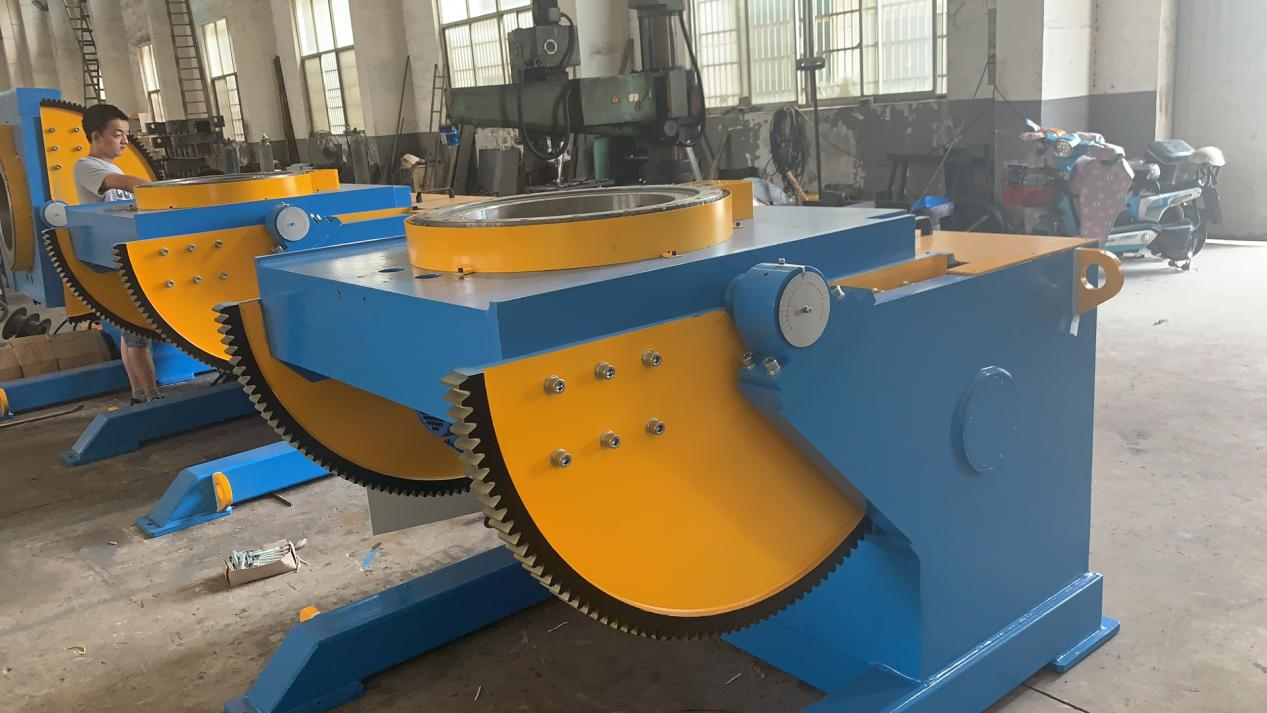
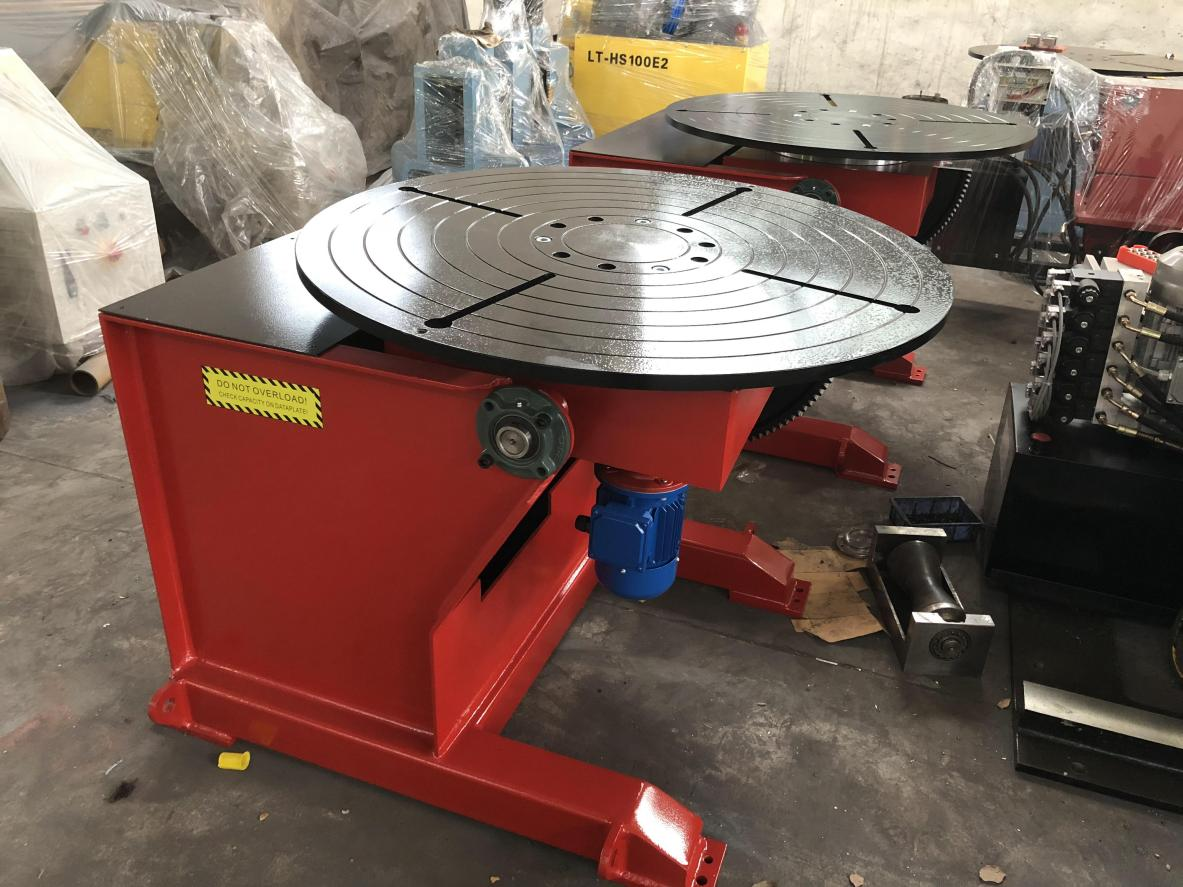
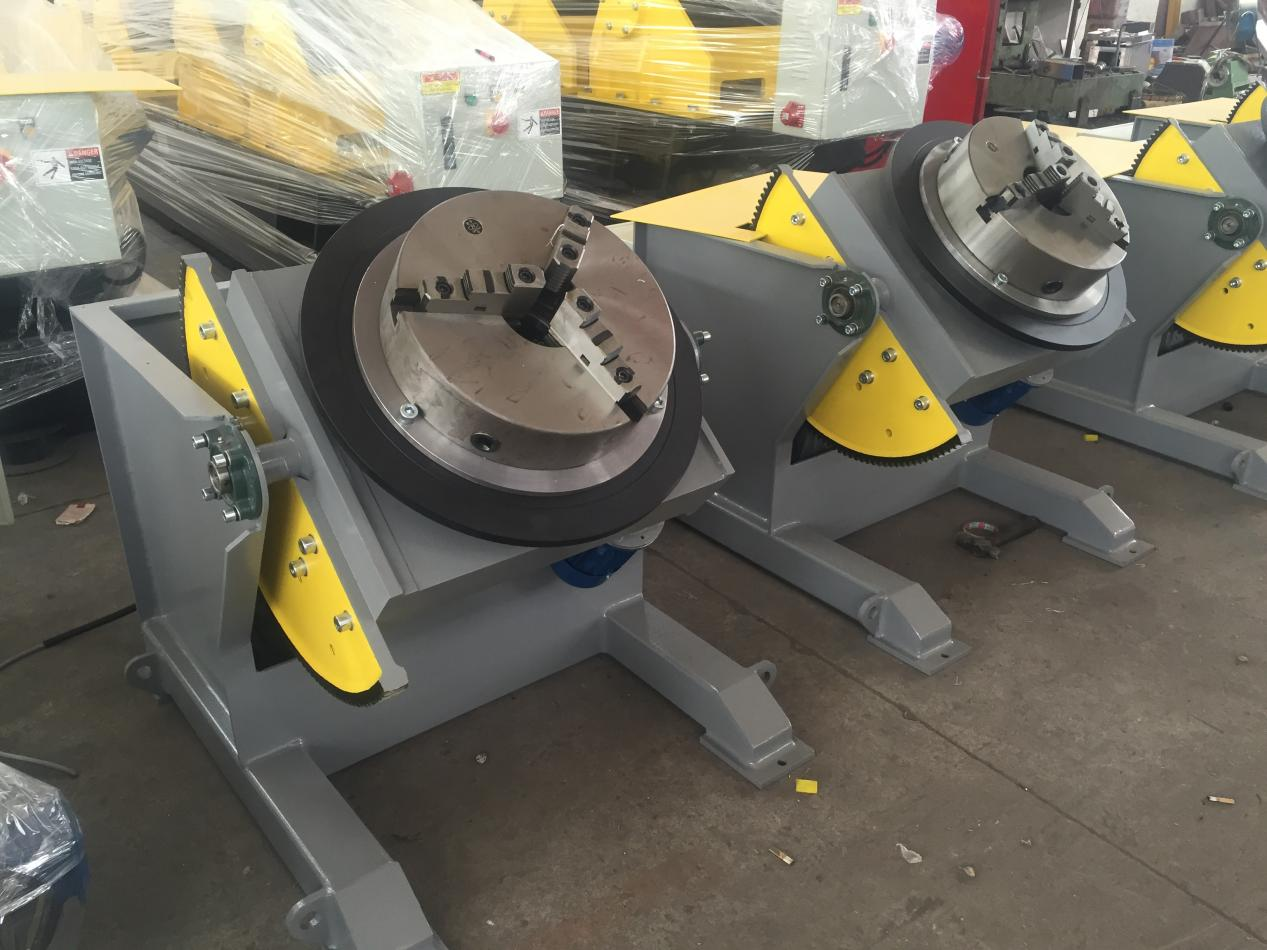
Pipe welding positioners are professional industrial automation equipment for adjusting pipe workpieces’ spatial attitude during welding. They rotate, tilt, and position pipes of various sizes and weights to keep weld seams at the optimal angle, ensuring consistent, high-quality welds. Widely used in pipe spool fabrication, pressure vessel manufacturing and energy infrastructure, they are essential for both manual and automated welding. Built with heavy-duty steel frames and precision gearboxes, they have safety systems, meet CE and ISO 9001 standards, feature a modular customizable design, and have an intuitive interface.
How Pipe Positioners Work
Pipe welding positioners achieve precise positioning of pipe workpieces via three coordinated core mechanisms—rotation, tilt adjustment, and height & position control—ensuring the pipe stays in the optimal welding position throughout the process. Its specific working principle and features are as follows:
Rotational Motion:
Driven by high-torque servo motors or VFD, it realizes 0.2–15 RPM stepless speed regulation, enabling continuous pipe rotation for circumferential/longitudinal welding without frequent shutdowns, thus improving efficiency.
Tilt Adjustment:
Equipped with gear tilt or hydraulic lifting mechanisms, the worktable can tilt 0°–180°, adjusting the pipe to flat, horizontal or other optimal positions to reduce welding spatter and ensure full weld penetration.
Height & Position Control:
Heavy-duty models have a 44”–69” height adjustment range; linear slides or track systems enable precise positioning, adapting to different pipe lengths and welding torch heights for easy weld access.
The equipment boasts user-friendly controls (digital HMI panels, hands-free foot pedals, programmable presets) for consistent welding sequences. Advanced models integrate with welding manipulators and robotic systems for automated workflows, suitable for complex joints (flanges, elbows, T-junctions). With an IP54 enclosure, anti-deflection system and emergency stop function, it ensures safety under heavy industrial loads.
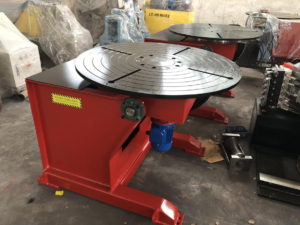
Models & Capacity Range
Pipe welding positioners are classified according to load capacity, structural design, and application scenarios, covering compact benchtop models to heavy-duty industrial models. The specific model parameters and application scope are as follows:
| Model Series | Load Capacity | Pipe Diameter Range | Core Design & Application |
| Benchtop Series | 50–300 kg | 50–300 mm | Compact floor-mounted; for small-bore pipe spooling, HVAC welding, general fabrication; ideal for space-limited small workshops. |
| Gear Tilt Series | 300–1000 kg | 200–600 mm | Integrated tilting & rotating structure; for variable-angle welding (elbows, reducers); mainly used in pressure vessel components. |
| Pipe Turning Series | 1–30 tons | 300 mm–6 m | Heavy-duty roller type with dual-motor drive; for large-diameter pipes, wind tower sections, boiler shells; stable welding rotation. |
| Headstock & Tailstock Series | 5–50 tons | 500 mm–8 m | Dual-support design; for long heavy pipes (wind tower segments, pipeline sections); precise synchronous rotation & height adjustment for high welding quality. |
| Custom Heavy-Duty Series | 50+ tons | 6 m+ | Custom engineered; for ultra-large projects (LNG tanks, nuclear piping); equipped with hydraulic lifting & laser-guided positioning for high-precision welding. |
The 30P-200 model is a representative high-capacity product, with a load capacity of 5,400 lbs, a 26” mounting plate, a rotation speed of 0.2–2.4 RPM, and compatible with submerged arc welding (SAW) and TIG welding processes. For projects with extreme load requirements, custom 60+ ton models can support pipe diameters up to 8 m, which are applicable to energy and petrochemical megaprojects.
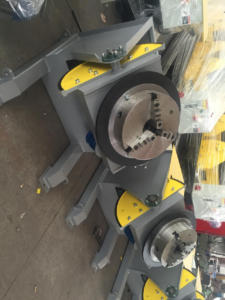
Key Specifications
The performance of pipe welding positioners is determined by core technical parameters, which directly affect welding quality and operational efficiency. The key specifications are classified and explained as follows:
Core Performance Specs
| Specification | Typical Range | Impact on Welding |
| Load Capacity | 50 kg – 30+ tons | Determine the maximum weight and size of pipes that the equipment can carry, which is the core parameter for selecting models according to project needs. |
| Rotation Speed | 0.2 – 15 RPM (stepless) | Adjust according to the welding process: 0.2–2 RPM for high-integrity seam welding (such as pressure vessels), 10–15 RPM for general pipe spooling welding. |
| Positioning Accuracy | ±0.1° to ±0.5 mm | Ensure the repeatability and precision of weld seam positioning, which is crucial for high-precision components such as wind tower flanges and pipeline joints. |
| Tilt Angle Range | 0° – 180° | Realize the adjustment of various welding positions, ensure the flat welding of all weld seams, and reduce welding defects such as incomplete penetration. |
Structural & Safety Specs
| Specification | Typical Value | Purpose |
| Drive System | Servo motor + helical gearbox | Realize smooth and backlash-free rotation, ensure stable welding, and the service life of the drive system is more than 10,000 hours. |
| Frame Material | Heavy-duty box steel (10–20 mm thick) | Ensure the rigidity of the equipment, prevent deflection during high-load rotation, and protect the precision of welds. |
| Protection Grade | IP54 (standard), IP65 (optional) | Prevent dust, moisture, and welding fumes from entering the equipment, ensuring stable operation in harsh industrial environments. |
| Safety Features | Emergency stop, overload protection, anti-drop device | Avoid equipment damage and operator safety accidents, reduce production downtime. |
Control & Compatibility Specs
| Specification | Typical Range | Use Case |
| Power Supply | 220/380V, 50/60Hz; 3-phase (optional) | Meet global electrical standards, applicable to international projects and various industrial scenarios. |
| Control Interface | HMI panel + foot pedal + remote control | Facilitate operation, realize hands-free speed adjustment, reduce operator fatigue, and improve work efficiency. |
| Compatibility | MIG, TIG, SAW, robotic welding systems | Seamless integration with automated welding lines to realize end-to-end automated production. |
Standard Dimensions (30P-200 Model)
- Footprint: 72” × 43-⅛” × 77” (L × W × H)
- Mounting Plate Diameter: 26” (customizable)
- Weight: 2,750 lbs
Applications
Pipe welding positioners are widely used in various industrial fields that require high-precision pipe welding. According to different industry characteristics, the applicable models and application scenarios are as follows:
Oil & Gas Pipeline Fabrication
Applicable to the production of pipe spools, flange joints, and pipeline segments in onshore and offshore oil and gas projects. Mainly matched with WP/HD Series models, which can reduce rework rate by 40% and labor cost by 20–30% compared with manual welding. It meets API and ASME standards and ensures the tightness of high-pressure gas and oil transmission pipelines.
Wind Tower & Energy Infrastructure
Core equipment for wind tower cylinder manufacturing, mainly using Pipe Turning Series and Headstock & Tailstock Series models, which can handle large-diameter steel pipes up to 6 m and realize precise circumferential welding. When integrated with automated welding lines, the production efficiency can be increased by 300%. It is also applicable to boiler manufacturing and LNG storage tank construction projects.
Pressure Vessel & Chemical Equipment
Used in the fabrication of pressure vessels, chemical reactors, and heat exchangers, mainly matching Gear Tilt Series and HD Series models. It can rotate and tilt thick-walled pipes to ensure uniform weld penetration, meet ISO 12944 and ASME BPVC standards, and adapt to extreme pressure and temperature working conditions.
Shipbuilding & Marine Engineering
Applied to the welding of ship hulls, pipe systems, and marine structural components, mainly using Benchtop Series and Standard Series models. It can solve the welding problems of marine-grade steel, ensure the corrosion resistance and strength of welds, and adapt to the confined space of shipyards.
Widely used in HVAC pipe systems, automotive exhaust components, and structural steel assembly welding. Benchtop Series models are suitable for small workshops, while heavy-duty models are applicable to large-scale manufacturing lines, with strong versatility.
FAQs
Q1: How do I select the right pipe welding positioner for my project?
A1: Select based on three core parameters: Load Capacity must exceed the heaviest pipe weight (including fixtures), Pipe Diameter & Length should match the model’s range with workpiece parameters, and Welding Process requires choosing a model compatible with your welding method (MIG/TIG/SAW) and integration mode (manual/automated); custom projects can adjust the tilt angle, rotation speed, and safety features.
Q2: What maintenance is required for pipe welding positioners?
A2: Routine maintenance is needed to extend service life: daily tasks include inspecting drive belts, lubricating moving parts, and cleaning the control panel; monthly checks cover the gearbox oil level, loose connections, and safety features; annual maintenance involves calibrating the system, inspecting frame wear, and maintaining motors/gearboxes (follow manufacturer guidelines).
Q3: Can pipe welding positioners integrate with robotic welding systems?
A3: Yes, all models support integration with industrial robots and welding manipulators, which includes programmable motion synchronization with robotic torches, digital communication protocols (Modbus, Profinet) for real-time data exchange, and custom mounting interfaces; integration also reduces labor costs and improves weld consistency.
Q4: What safety standards should I look for in a pipe welding positioner?
A4: The equipment must meet global safety standards, including CE (EU safety requirements), ISO 9001 (manufacturing quality certification), and IP54/IP65 (dust/moisture protection), plus additional features like emergency braking, overload protection, anti-drop devices, and locked control panels.
Q5: How do pipe welding positioners improve weld quality and reduce costs?
A5: Its key benefits include precise positioning that reduces defects by up to 40% and ensures uniform penetration, continuous rotation that increases welding speed by 50–300%, cost savings from cutting labor demand by up to 50%, reducing rework and extending equipment life, as well as improved safety by reducing manual heavy pipe handling and operator injury risks.
Spec Sheet
Product Overview
- Model: Customizable Pipe Welding Positioner (Series: Benchtop/Gear Tilt/Pipe Turning/Headstock-Tailstock)
- Core Function: Precision rotation, tilting, and height adjustment for pipe welding
- Certifications: CE, ISO 9001, IP54/IP65 (optional)
- Target Applications: Pipe spool fabrication, pressure vessel manufacturing, wind tower production, oil & gas pipeline welding
Technical Specifications
| Parameter | Specification |
| Load Capacity | 50 kg – 30+ tons (customizable) |
| Pipe Diameter Range | 50 mm – 8 m+ (customizable) |
| Rotation Speed | 0.2 – 15 RPM (stepless, VFD/servo control) |
| Positioning Accuracy | ±0.1° to ±0.5 mm |
| Tilt Angle | 0° – 180° (hydraulic/gear drive) |
| Drive System | Servo motor + helical gearbox (10,000+ hrs lifespan) |
| Frame | Heavy-duty box steel (10–20 mm thick) |
| Power Supply | 220/380V, 50/60Hz, 3-phase (customizable) |
| Control Interface | HMI panel + foot pedal + remote control |
| Safety Features | Emergency stop, overload protection, anti-drop device, IP54 enclosure |
| Weight | 100 kg – 50+ tons (varies by model) |
Standard Accessories
- 3-Jaw pipe gripper (for diameter-specific clamping)
- Foot switch (FWD/REV + variable speed)
- T-slot mounting plate (6–14 mm thick)
- Emergency stop button
- User manual & calibration certificate
Customization Options
- Custom load capacity (up to 100+ tons)
- Specialized fixtures (elbow, flange, wind tower cylinder)
- Higher protection grade (IP65)
- Robotic integration kit (Modbus/Profinet)
- Custom color/finish (for brand consistency)
- Extended warranty (up to 3 years for critical components)
Pipe Size Compatibility Chart
| Model Series | Minimum Pipe Diameter | Maximum Pipe Diameter | Maximum Pipe Length | Load Capacity |
| Benchtop Series | 50 mm | 300 mm | 1.5 m | 50–300 kg |
| Gear Tilt Series | 200 mm | 600 mm | 2.5 m | 300–1000 kg |
| Pipe Turning Series | 300 mm | 6 m | 6 m | 1–30 tons |
| Headstock & Tailstock Series | 500 mm | 8 m | 12 m | 5–50 tons |
| Custom Heavy-Duty Series | 6 m+ | 10 m+ | 20 m+ | 50+ tons |
Note: Pipe Welding Positioner Diameter and length limits are flexible; custom fixtures and extended supports can accommodate non-standard workpiece sizes. Consult the factory for project-specific compatibility verification.
Pipe Welding Case Study: Wind Tower Cylinder Production
Project Background
A leading wind tower manufacturer in Northern China needed to automate the production of 3 m-diameter, 12 m-long steel cylinders. The original manual welding process had problems such as inconsistent weld quality, low efficiency, and high labor costs, with each cylinder taking 16 hours to complete. The project required reducing production time by 60% and complying with ISO 12944 weld quality standards.
Solution Implementation
The manufacturer adopted a custom 50-ton Headstock & Tailstock Pipe Welding Positioner, integrated with a robotic MIG welding system and a welding manipulator. The key customizations are as follows:
- 360° synchronous rotation function, realizing continuous circumferential welding.
- Hydraulic height adjustment (4–8 m) to match the working range of the welding manipulator.
- Laser-guided positioning, with positioning accuracy of ±0.3 mm, ensuring precise alignment of weld seams.
- IP65 protection grade, adapting to the outdoor workshop environment with welding fumes and dust.
Results & Outcomes
- Production Efficiency: The single-cylinder welding cycle was reduced from 16 hours to 4.5 hours, an improvement of 72%; the daily output increased from 2 to 6, a 200% increase in productivity.
- Weld Quality: The weld defect rate decreased from 8% to 0.5%, fully complying with ISO 12944 standards; post-weld rework was eliminated, saving about ¥1.2 million in annual rework costs.
- Labor Savings: The number of operators per shift was reduced from 4 welders to 1, reducing labor costs by 75% and freeing up skilled workers for other tasks.
- Safety: Manual handling of 15-ton cylinders was eliminated, reducing workplace injuries to zero and improving operator working conditions.
Key Takeaway for Pipe Welding Positioner
The combination of custom pipe welding positioners and automated welding systems effectively solves the pain points of low efficiency and poor quality in manual welding of large-scale pipe workpieces, which is an important guarantee for scaling high-precision welding operations in the energy industry.
Reviews
There are no reviews yet.