Description
Pipe Welding Manipulator
As an advanced automated auxiliary device for pipe welding, the Pipe Welding Manipulator is specifically engineered to address the most common pain points in industrial pipe welding: inconsistent manual welding quality, low operational efficiency, and high labor costs. In essence, it integrates intelligent control, flexible positioning, and dual welding process compatibility, making it a reliable, cost-effective solution for industries including petroleum, construction, energy, and manufacturing. This static page will guide you through the product’s core advantages, technical details, model specifications, application scenarios, and frequently asked questions—helping you quickly understand its value and practical operation.
Overview
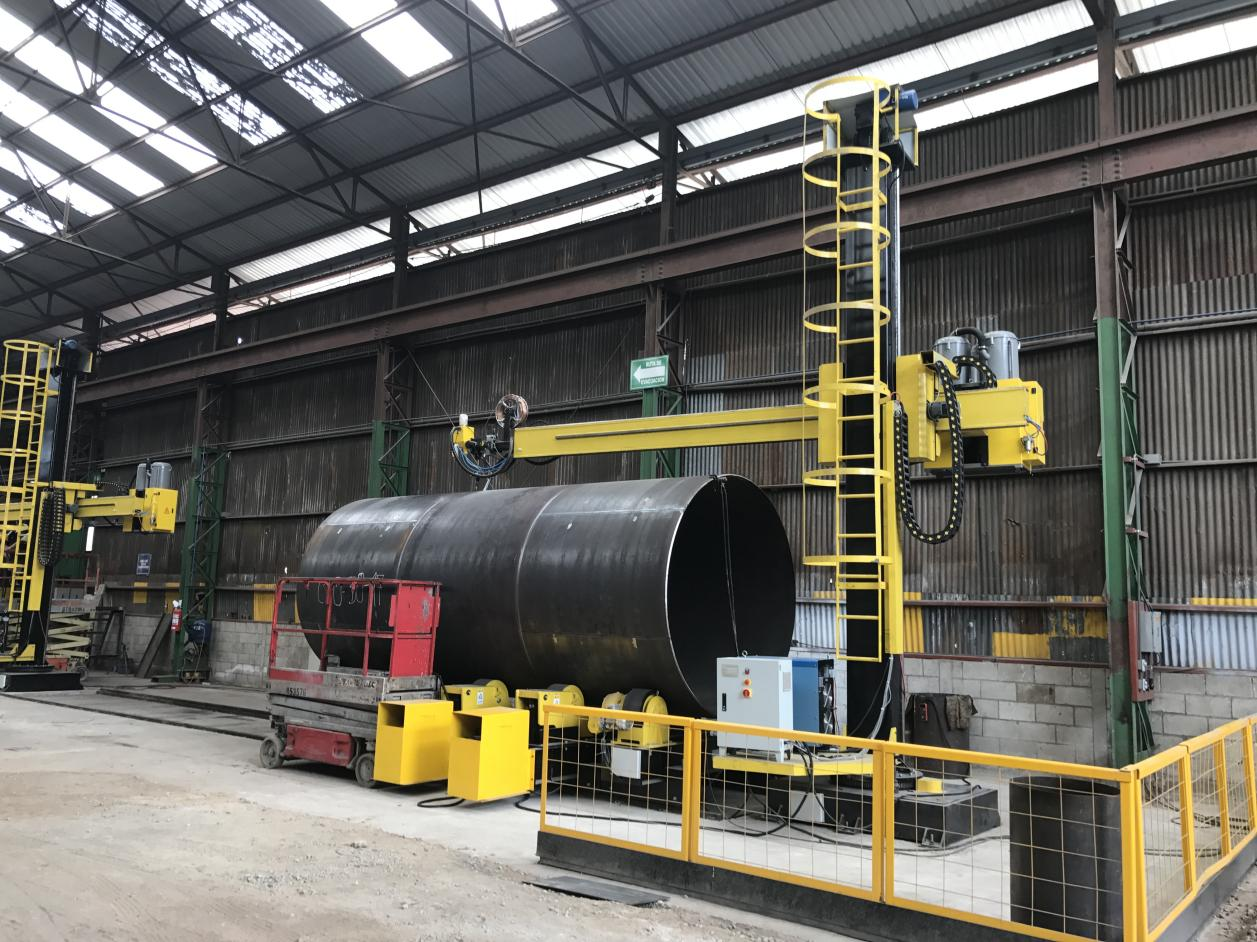
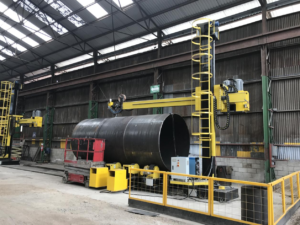
The Pipe Welding Manipulator is a purpose-built automated device designed for welding pipe longitudinal seams, circumferential seams, and special-shaped seams. Structurally, its key components consist of a stable column, telescopic boom, precision welding head fixture, intelligent positioning mechanism, and integrated control panel—all working in tandem to ensure precise positioning and smooth movement of the welding torch during operation.
Compared to traditional manual welding, this equipment effectively eliminates quality defects caused by operator fatigue, skill discrepancies, and human error. It guarantees consistent weld formation, stable penetration depth, and a substantial increase in weld qualification rates—directly addressing the quality control challenges faced by project teams.
In practical applications, the manipulator boasts a compact design, user-friendly operation, and robust environmental adaptability, making it suitable for both indoor pipe prefabrication workshops and outdoor on-site construction. It is compatible with a wide range of pipe materials, including carbon steel, stainless steel, low-alloy steel, and nickel-based alloys, and can accommodate pipes of varying diameters and wall thicknesses. By minimizing manual intervention, it reduces labor intensity and costs while shortening the construction cycle—delivering the practical, bottom-line benefits every project team prioritizes.
SAW & GMAW Integration
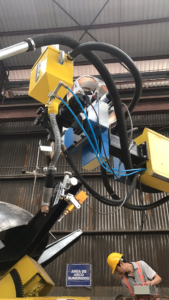
Through a modular design, the Pipe Welding Manipulator seamlessly integrates Submerged Arc Welding (SAW) and Gas Metal Arc Welding (GMAW). In real-world operations, you can flexibly switch between these two processes based on the specific welding requirements of different pipe workpieces—no complex equipment modifications required. This key advantage significantly enhances the equipment’s applicability and versatility in industrial settings, eliminating the need for multiple dedicated welding machines.
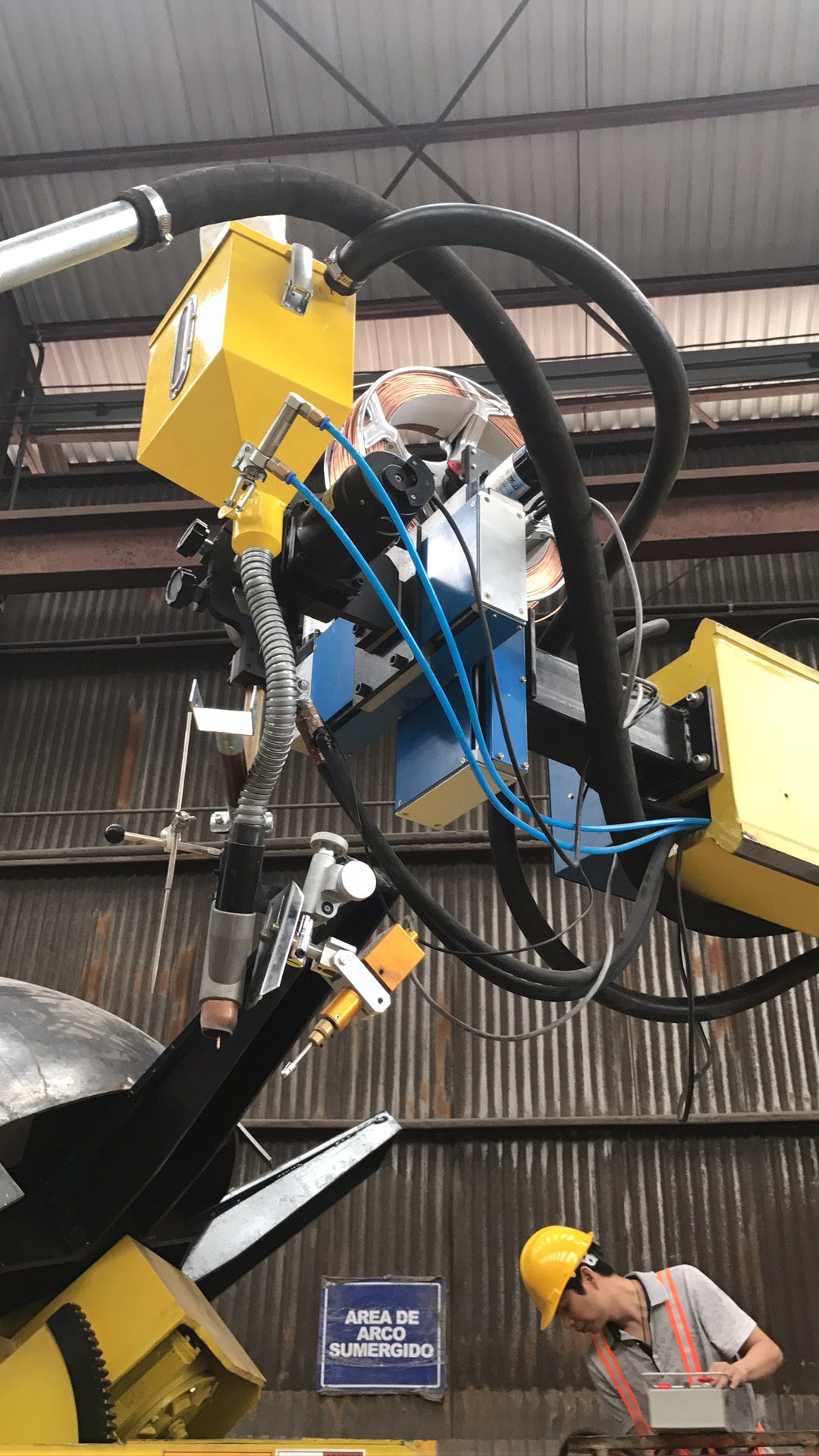
For SAW applications, the manipulator is equipped with a professional AWS-SAW-02 SAW welding head, automatic flux feeding system, and matching flux recovery device. It is particularly well-suited for high-efficiency welding of large-diameter, thick-walled pipes, offering technical advantages such as high deposition rates, deep penetration, and consistent weld quality—all of which meet the stringent welding standards of the petroleum and chemical industries.
For GMAW applications, it features a precision welding torch (1.0mm diameter) and stepless adjustable wire feeding mechanism, making it ideal for thin-walled pipe welding, stitch welding, and repair work. Its key benefits here include fast welding speeds, clean weld appearance, and strong adaptability to complex workpieces—ensuring versatility across diverse project needs.
The manipulator’s PLC intelligent control system unifies parameter settings for both SAW (27-33V, 370-430A, 320-520mm/min) and GMAW (17-23V, 110-160A), with pre-programmed stitch welding parameters stored for quick access. A real-time monitoring function displays welding parameters live and triggers alarms for abnormalities, ensuring the safety and stability of the entire welding process—critical for maintaining productivity and reducing downtime in industrial production.
Models & Specifications
We offer a comprehensive range of Pipe Welding Manipulator models—mini, light-duty, medium-duty, and heavy-duty—to meet the welding needs of different pipe specifications and project scales. Below is a detailed parameter table for our main models, covering key technical indicators such as stroke, load capacity, and welding precision to help you select the optimal equipment for your specific project requirements.
| Model | Type | Vertical Stroke (mm) | Horizontal Stroke (mm) | Max Load at Boom End (kg) | Lifting Speed (mm/min) | Rotating Angle (°) | Welding Precision (mm) | Applicable Pipe Diameter (mm) |
| PWM-0102 | Mini | 1200 | 1000 | 45 | 350 | 0 | ±0.1 | 60-350 |
| PWM-0204 | Light-duty | 2000 | 4000 | 140 | 950 | 0 | ±0.1 | 250-850 |
| PWM-0405 | Medium-duty | 4000 | 5000 | 190 | 1050 | 0 | ±0.1 | 550-1600 |
| PWM-0809 | Heavy-duty | 8000 | 9000 | 290 | 1450 | 0 | ±0.1 | 1100-3200 |
Note: All models support full customization. Specifically, parameters such as vertical/horizontal stroke, boom end load, and welding process configuration can be tailored to match your project’s exact requirements. For detailed customization specifications, refer to the Spec Sheet in the UVP module—all details are clearly outlined for easy reference.
Flux Recovery System
The Pipe Welding Manipulator is equipped with a high-efficiency Flux Recovery System, specifically designed to complement SAW processes. It effectively addresses three major industry pain points: excessive flux waste, significant environmental pollution, and rising welding costs—directly improving operational efficiency and sustainability.
Structurally, it is lightweight and compact, allowing for easy mounting on the manipulator boom without occupying additional workshop space. It adopts a non-electric design, relying on clean, dry compressed air (65-95 psi, 4.5-6.5 bar, 7.5 cfm) to achieve efficient, stable flux recovery—reducing reliance on additional power sources and simplifying maintenance.
Functionally, this system offers three core benefits: First, it automatically collects unused flux during SAW welding and separates slag, dust, and fine impurities through a multi-layer filtering structure—ensuring flux reusability and reducing consumable costs. Second, it continuously delivers recovered flux to the welding nozzle without the need for a transfer valve, enabling uninterrupted welding and boosting production efficiency. Third, it pairs seamlessly with the FT-120 pressure-type flux feeding tank to ensure uniform flux coverage during welding—critical for maintaining consistent weld quality and reducing rework.
Technically, the system includes a 1.2-inch inner diameter, 3.8-foot flexible flux recovery hose and an NZ-2 anti-clogging nozzle, which adapts seamlessly to the movement of the manipulator boom. It achieves a flux recovery speed of ≥26 kg/h and a maximum linear recovery distance of ≤11 m, reducing flux waste by more than 35%. It also keeps the welding area clean, meeting strict environmental standards—a highly practical feature for industrial workshops focused on compliance and workplace safety.
Applications
With its strong adaptability, high welding precision, and dual-process integration, the Pipe Welding Manipulator is widely used across industrial fields involving pipe welding. It delivers efficient, high-quality welding solutions for various pipe projects, with key application scenarios outlined below:
- Petroleum and Chemical Industry: Primarily used for welding oil and gas transmission pipelines, chemical reaction tanks, and storage tanks—especially large-diameter, thick-walled pipes that require high corrosion resistance and weld strength. The integrated SAW process ensures optimal efficiency and quality, fully meeting the strict industry standards for safety and durability.
- Construction and Infrastructure: Suitable for welding water supply and drainage pipelines, heating and ventilation systems, and steel structure pipes in bridges and high-rise buildings. Its flexible positioning adapts to complex on-site conditions, ensuring accurate weld placement—a key requirement for on-site construction where precision and adaptability are critical.
- Energy Industry: Meets the high safety and reliability requirements of power plant pipelines, nuclear power auxiliary pipelines, and wind power tower pipelines. Its stable performance and high-precision welding ensure the long-term safe operation of energy equipment, aligning with the industry’s core focus on reliability and uptime.
- Manufacturing Industry: Used for welding pipe components in the machinery, automotive, and shipbuilding industries. The dual-process integration caters to pipes of different thicknesses and materials, improving production efficiency and product qualification rates—helping businesses reduce costs and enhance productivity.
Below is a real-world SAW welding case from the petroleum pipeline industry, demonstrating how the Pipe Welding Manipulator solves practical industrial challenges and delivers tangible value.
SAW Welding Case:
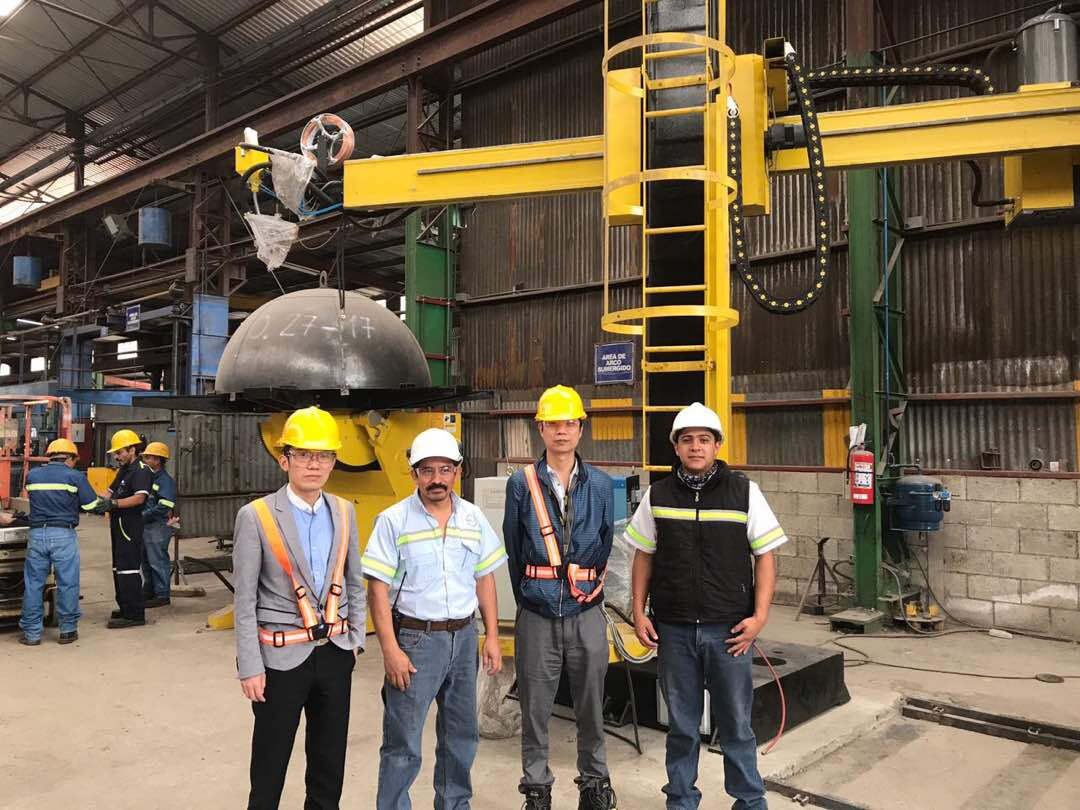
A Brazilian pipeline construction company undertook a critical petroleum pipeline project with strict technical requirements. The project required SAW for the external circumferential seams of 20-inch (508mm). Diameter API 5L X70 carbon steel pipes (18mm wall thickness, 6m maximum length). And GMAW for internal stiffener stitch welding (60mm stitch length, 120mm pitch). Welds were required to meet AWS D1.1 standards—with no cracks, incomplete fusion. Or porosity—and a qualification rate of at least 98%.
The company’s original manual welding process presented major limitations.
First, internal stitch welding required operators to work in confined spaces. Leading to high labor intensity and three minor safety incidents.
Second, manual adjustment of SAW parameters resulted in inconsistent weld quality. Bead width varied between 13-19mm, penetration depth between 4-9mm, and the qualification rate only reached 83%—leading to frequent rework and costly project delays.
Additionally, two separate welding stations were required, occupying 70㎡ of workshop space, and labor costs per pipe reached $130—18% over the project budget. These challenges nearly caused the company to lose the project.
Issues
To resolve these issues, we provided the customer with a customized medium-duty PWM-0405 model integrated with SAW and GMAW. The equipment features a 7-foot (2.1m) column, 18-foot (5.5m) boom (190kg end load). Professional AWS-SAW-02 SAW welding head (adjustable flux feeding speed: 12-32kg/h), high-efficiency Flux Recovery System. And a narrow-head GMAW torch (1.0mm diameter) with a 4K monitoring camera and wireless remote control.
The PLC intelligent control system unifies parameter settings for SAW (27-33V, 370-430A, 320-520mm/min). And GMAW (17-23V, 110-160A) and pre-sets stitch welding parameters. Eliminating the need for confined space work and fully resolving safety risks.
After two months of operation, the project results exceeded expectations. The welding cycle per pipe was shortened by 45% (from 9 hours to 5 hours). The weld qualification rate rose to 99.2%. (surpassing the project standard), and rework costs dropped by 85% (from $22 to $3.3 per pipe).
The SAW process delivered stable high-deposition welding. With bead width controlled at 15-17mm and penetration depth steady at 6-8mm—fully complying with AWS D1.1 standards. The GMAW process completed internal stitch welding safely, with no safety incidents throughout the project. Additionally, the manipulator’s integrated design merged two welding stations into one. saving 35% of workshop space (from 70㎡ to 45.5㎡). Labor costs per pipe fell to $91—successfully bringing the project back on budget.
FAQs
Q1: What is the warranty period for the Pipe Welding Manipulator?
A1: The product comes with an 18-month warranty. During this period, we provide free spare parts for equipment failures resulting from normal use and regular maintenance. After the warranty expires, we offer spare parts at cost with no hidden fees. Plus lifelong technical support ensuring peace of mind for your operations.
Q2: How do I choose the right Pipe Welding Manipulator model?
A2: When selecting a model, focus on four key factors: maximum pipe diameter and wall thickness, required welding stroke. Boom end load capacity, and the welding process (SAW/GMAW) your project requires. We recommend that the boom’s vertical expansion exceed the pipe diameter. That the boom end load stay within the rated range. Our technical team can provide professional advice simply share your project parameters with us.
Q3: Does the Pipe Welding Manipulator support customization?
A3: Yes, full customization is available. We can adjust parameters such as stroke, load capacity, welding process configuration, control system, and auxiliary functions. (e.g., seam tracking, welding monitoring) to match your project’s unique needs. Our team will design a tailored solution to ensure the equipment fits your welding requirements perfectly.
Q4: What is the equipment delivery time?
A4: The standard delivery time for conventional models is 28 days. For customized models, delivery time may be extended on the complexity of the customization. But we will inform you of the exact timeline upfront to help you plan your project schedule with confidence.
Q5: Is operation training provided?
A5: The Pipe Welding Manipulator features an intuitive interface that is easy to operate. We provide detailed operation manuals and video tutorials to help your team get up to speed quickly. For large-scale projects or special operational needs, we can also arrange on-site training. To ensure your operators master equipment operation and maintenance thoroughly.
UVP Module
For more detailed technical parameters, customization options, and process integration details. Refer to the following materials—they provide in-depth professional guidance to support your decision-making:
- Spec Sheet:
Includes detailed parameters for all models, material specifications, performance indicators, and customization options. It is a comprehensive reference to help you select and customize the right model. Contact our customer service team to get a copy—it’s easy to obtain. - Process Integration Diagram:
>>>>>>>>>>>>>>>>>>>>>>>>>>>>>>>>>>>>>>>>>>>>>>>>>>>>>>>>Clearly outlines the integration principles of SAW and GMAW processes, the connection between the manipulator and auxiliary systems (flux recovery, wire feeding), and the equipment’s control logic. This simplifies installation, debugging, and daily maintenance—reducing downtime and operational complexity.
If you need the Spec Sheet, Process Integration Diagram, or have any product questions, contact our customer service team anytime. We will provide professional, efficient support to keep your project on track. Our team responds promptly to ensure your pipe welding project runs smoothly.
Reviews
There are no reviews yet.