
Description
Robotic Welding Cell
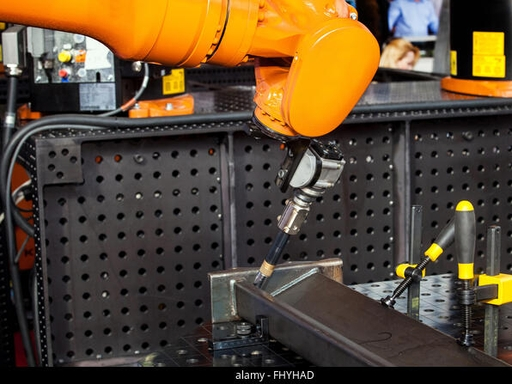
As a core component of smart manufacturing systems, a robotic welding cell is an integrated, pre-engineered solution combining 6-axis robotic arms, precision welding equipment, and intelligent control systems. It is a turnkey automation setup designed to solve manufacturers’ key welding pain points: inconsistent weld quality, high labor costs, and slow production rates.
Unlike standalone welding robots requiring time-consuming on-site integration, this all-in-one system comes fully equipped and ready to run. For businesses worldwide—especially SMEs with limited technical teams—it enables quick startup and immediate productivity gains.
From an industrial economics perspective, the global robotic welding cell market is projected to grow at a 5.8% CAGR between 2026 and 2032. This trend confirms these systems are no longer optional but essential for manufacturers aiming to stay competitive by balancing quality, efficiency, and safety in today’s fast-paced industrial landscape.
Their greatest value lies in delivering consistent, high-precision welds while reducing human error and operational risks. Manual welding is repetitive, tiring, and error-prone (due to fatigue, inconsistent skills, or human error), but these cells automate the process—slashing defects, reducing material waste from bad welds, and boosting output significantly.
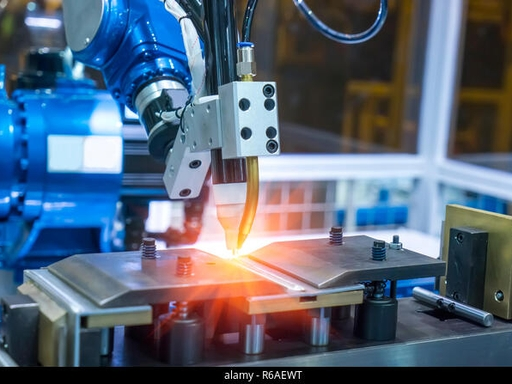
They support various welding processes (MIG, TIG, laser welding, spot welding) and materials (carbon steel, aluminum alloy, titanium alloy), fitting seamlessly into diverse production setups—from auto parts manufacturing to heavy equipment fabrication.
Their modular design allows reconfiguration as market demands shift or production scales up, eliminating the need to replace the entire system and saving on long-term investments.
Cell Configuration Options
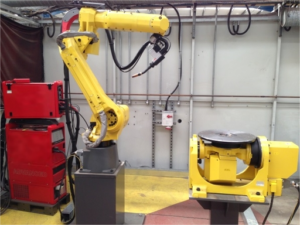
We’ve designed different configurations to match the unique production needs of all types of businesses—from small workshops with low-volume output to large manufacturing plants running high-speed production lines. All options are built on a modular framework, making customization and expansion simple and cost-effective.
Each configuration is tailored to specific workpiece sizes, welding processes, and production volumes, so you get the best performance for your investment. Below is a detailed breakdown of our core configurations to help you find the right fit for your operation.
Configuration Options Table (UVP Module)
Configuration Type | Core Components | Key Specifications | Suitable Scenarios | Core Advantages |
| Basic Fixed Station | 6-axis robot (1.4m/2m arm), digital welding power source, wire feeder, 2-3 workbenches (quick-change fixtures), basic control panel | Robot arm reach: 1.4m/2m; quick-change fixtures; optional laser seam tracking; easy maintenance | Small/medium workpieces, low/medium volume, simple weld joints; ideal for SMEs new to automation | Cost-effective, easy to operate/maintain, suitable for automation beginners |
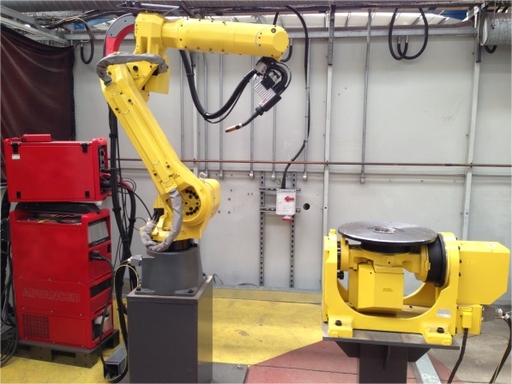
| Single-Axis Rotation Positioner | 6-axis robot, digital welding system, anti-collision torch, single-axis positioner (300kg load), torch cleaner, dual button boxes | Positioner load: 300kg; turntable: 1.6m×0.7m; 360° continuous rotation; compatible with laser seam tracking | Medium-weight workpieces, medium volume, irregular joint angles; reduces manual angle adjustment | Solves angle adjustment issues, high efficiency, stable positioning |
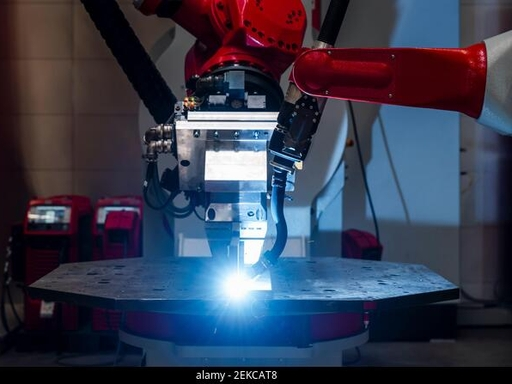
| Heavy-Duty Turntable | 6-axis robot, high-power welding source, anti-collision torch, single-axis turntable (500kg load), wire spool rack, advanced control system | Turntable load: 500kg; table options: 1.5m×1.2m (square) or ∅1.6m (circular); stable for large workpieces | Large workpieces, high volume, circumferential welding (pipes/tanks); ensures consistent quality | High load capacity, stable operation, consistent welds |
| Dual-Axis Flexible Positioner | 6-axis robot, precision welding system, anti-collision torch, dual-axis L-type positioner (300kg load), dual HMIs, integrated safety controls | Positioner load: 300kg; multi-angle adjustment; precise chuck fixation; compatible with vision systems | Complex workpieces, high-mix production, multi-angle welding; suits diverse product lines | High flexibility, supports multi-angle welding, ideal for high-mix production |
Safety & Enclosure Design
Safety is our top priority in robotic welding cell design. Welding involves inherent hazards—high heat, intense arc light, toxic fumes, and moving mechanical parts—that risk operators and equipment without proper control.
All our robotic welding cells fully comply with ANSI/RIA R15.06-2012 safety standards, featuring a multi-layered safety system and modular enclosure to protect operators, equipment, and your production environment—balancing safety and productivity perfectly.
In real workshops, we never compromise on safety. A safe workplace protects your team, reduces safety-related downtime, and minimizes liability risks.
The integrated safety system includes six core components, forming a full-cycle protection network. Detailed breakdowns with practical functions:
Interlocked Access Gates:
High-sensitivity ANSI/RIA-compliant interlocks at all access points. If an operator opens a gate while the robot runs, the system shuts down instantly—preventing access to hazardous areas and eliminating collision/burn risks.
Light Curtain Protection:
Invisible infrared light curtains at entry points act as a secondary barrier. If an operator’s hand/body blocks the curtain, the robot stops immediately—adding extra protection beyond interlocked gates.
Integrated Fume Extraction:
Built-in system captures welding fumes at the source, handling up to 1500m³/h to prevent toxic particles from spreading. It protects operators from respiratory hazards, keeps the workspace clean, meets global occupational health standards, and reduces environmental compliance risks.
Safety PLC & HMI:
High-performance Allen Bradley Compact GuardLogix safety PLC with a 12-inch color HMI monitors all safety components in real time. It tracks status, sends instant alerts for malfunctions, and allows quick emergency shutdowns via the HMI—shortening response time.
Strategic Emergency Stop Buttons:
E-stop buttons are placed inside and outside the cell for easy access from any position. In emergencies, any operator can press one to halt all operations instantly for rapid risk response.
Arc Light Shielding:
Tinted, heat-resistant enclosure panels block intense arc light—preventing eye damage (arc eye) and reducing glare. For laser welding, light-tight enclosures fully protect against laser radiation, safeguarding operators during long shifts.
The modular, space-saving enclosure assembles quickly with standard tools and can be customized to your workshop layout. In real installations, this enables easy setup, minimal floor space usage, and seamless integration with existing equipment—optimizing overall workshop efficiency.
Vision & Sensor Systems
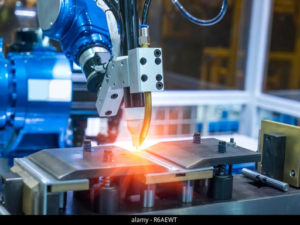
Vision and sensor systems are the “eyes” and “nerves” of robotic welding cells, enabling intelligent seam detection, real-time quality control, and adaptive welding adjustments—critical for consistent, high-precision welds, especially for complex workpieces or those with minor dimensional variations.
In real operations, these systems solve the key challenge of precise seam positioning. Manual positioning often causes weld deviations and defects (costly to fix), especially for irregular workpieces or those with subtle color differences.
Our robotic welding cells adopt advanced active-passive vision fusion technology, combining the strengths of both to perform reliably in complex workshop environments (e.g., inconsistent lighting, dust).
Passive Vision:
Uses high-resolution industrial CCD cameras to capture workpiece images under natural light, with advanced algorithms identifying weld seam regions of interest (ROIs). Ideal for parts with clear seams and stable lighting (e.g., standard auto components).
Active Vision:
Employs structured light sensors to generate 3D point clouds of workpieces, enabling precise depth perception and seam tracking even in low-visibility conditions (e.g., dim workshops, dark-surface parts).
Robotic Welding Cell for higher accuracy, the system integrates convolutional attention modules with YOLOv8n-seg networks for image segmentation, enhancing seam localization and mask extraction. 3D point cloud data is mapped to a 2D pixel plane for spatial alignment, with redundant data filtered via a grayscale matrix to ensure accurate ROI extraction—minimizing surface impurity impacts.
Auxiliary sensors further stabilize weld quality: Arc sensors monitor arc stability and adjust parameters to avoid defects; temperature sensors control heat input to prevent overheating/deformation; collision detection sensors protect the robot arm and torch. All sensor data is sent to the control system in real time, which automatically adjusts welding speed, voltage, and torch angle for consistent batch-to-batch quality.
Applications
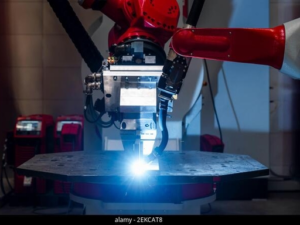
Robotic welding cells are highly versatile, with modular, flexible designs suitable for workpieces ranging from small components to large structural parts, adapting to diverse industry needs. They excel in scenarios requiring precision, consistency, and efficiency—here are their key real-world applications:
Automotive Manufacturing:
The largest application area, used for body-in-white welding, chassis/subframe assembly, and NEV battery pack/motor housing welding (critical for high weld strength and consistency). On production lines, they enable high-speed welding (4 seconds per spot weld) and multi-model mixed production (changeover ≤15 minutes). Dual-Axis Flexible Positioners and laser welding are commonly used for roof/trunk high-strength connections, enhancing vehicle safety and durability to meet strict industry standards.
Heavy Equipment Fabrication:
Widely used for welding structural components (excavator arms, tractor frames, crane booms) in construction, agricultural, and industrial machinery. Dual-axis positioners and heavy-duty turntables handle large, heavy workpieces, ensuring precise welding of complex joints. This consistency reduces equipment failure risks, cuts long-term maintenance costs, and boosts competitiveness.
Aerospace Components:
Deliver precision welding for aircraft engine parts, fuselage sections, and landing gear (extremely strict quality requirements). With ±0.05–0.08mm repeatability, they meet aerospace standards. Laser welding is used for lightweight aluminum/titanium alloys, reducing aircraft weight and improving fuel efficiency—critical for long-distance flights.
General Industrial Production:
Ideal for small-to-medium components (engine brackets, mufflers, electronic enclosures) in low-to-medium volume production. Basic Fixed Stations and Single-Axis Rotation Positioners, paired with quick reprogramming and fixture changes, suit small-batch, multi-variety manufacturing—helping SMEs boost efficiency without heavy upfront investment.
FAQs
Below are simplified answers to key questions about robotic welding cells, focusing on installation, operation, maintenance, and customization—tailored to manufacturers’ core concerns.
Q: How long does installation and commissioning take?
A: Pre-engineered robotic welding cells are delivery-ready. Installation takes 1–3 days; commissioning (programming, testing, operator training) takes 1–2 weeks. Timeline varies by configuration complexity and workshop setup, but we prioritize minimizing it for faster ROI.
Q: Can they handle high-mix, low-volume production?
A: Yes. Modular design and easy reprogramming, plus quick fixture changes and flexible positioning, enable quick adaptation to different workpieces and welding requirements—ideal for diverse, small-batch production, eliminating manual welding inefficiencies.
Q: What safety standards do they meet?
A: All configurations fully comply with ANSI/RIA R15.06-2012, including interlocked gates, light curtains, emergency stops, fume extraction, and safety PLC monitoring. They meet global workplace safety regulations, protecting your team, equipment, and business from penalties.
Q: How much maintenance do they need?
A: Routine maintenance is minimal: weekly (torch/filter cleaning), monthly (safety interlock/sensor inspection), and quarterly (robot arm/vision system calibration). Long component lifespans reduce downtime and costs.
Q: Can the cell be customized for my specific needs?
A: Yes. Customizable options include robot arm reach (1.4m–2m), positioner load capacity (up to 10,000 lbs), welding power source, enclosure size, and specialized vision systems—tailored to your workpieces, processes, and production goals.
Cell Layout Diagram (UVP Module)
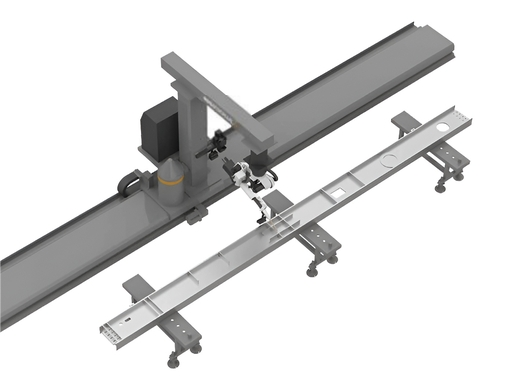
Our robotic welding cells adopt a robot-centered layout—proven the most efficient for welding. It boosts robot utilization by ≥30%, reduces floor space by 20%, and ensures smooth workflow, making it ideal for workshops with limited space or high production demands. Fully customizable, it fits your workshop environment and production needs. Below is a detailed breakdown of key elements with practical use cases:
Central Robot Mount:
A stable base holds the 6-axis welding robot (1.4m/2m arm reach), featuring an anti-collision torch and integrated wire feeder. An optional automatic torch cleaner enables in-operation maintenance, saving time and reducing manual labor—perfect for high-volume lines.
Configurable Workstations:
Positioned around the central robot, workstations (fixed workbenches, single/dual-axis turntables/positioners) have quick-change fixtures for fast workpiece swaps. This streamlines workflow and cuts downtime, critical for high-mix or high-volume production.
Modular Safety Enclosure:
Surrounding the entire cell, it has interlocked access gates, tinted arc-shielding panels, and integrated fume extraction ductwork. It protects operators, keeps the space clean, eliminates fume and arc light hazards, and enhances working comfort.
External Control Station:
Equipped with a 12-inch color HMI, safety PLC, and emergency stop, it allows one operator to supervise multiple cells—maximizing labor efficiency, boosting productivity, and cutting costs, especially for large plants with multiple cells.
Support Components:
Robotic Welding Cell Wire spool rack and welding power source are mounted on the enclosure or near the robot, with cables routed to avoid interfering with robot movement. This prevents damage, ensures smooth operation, and simplifies long-term maintenance by reducing cable inspection/replacement time.
Reviews
There are no reviews yet.