
Description
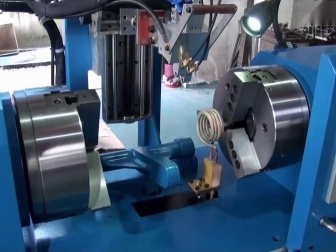
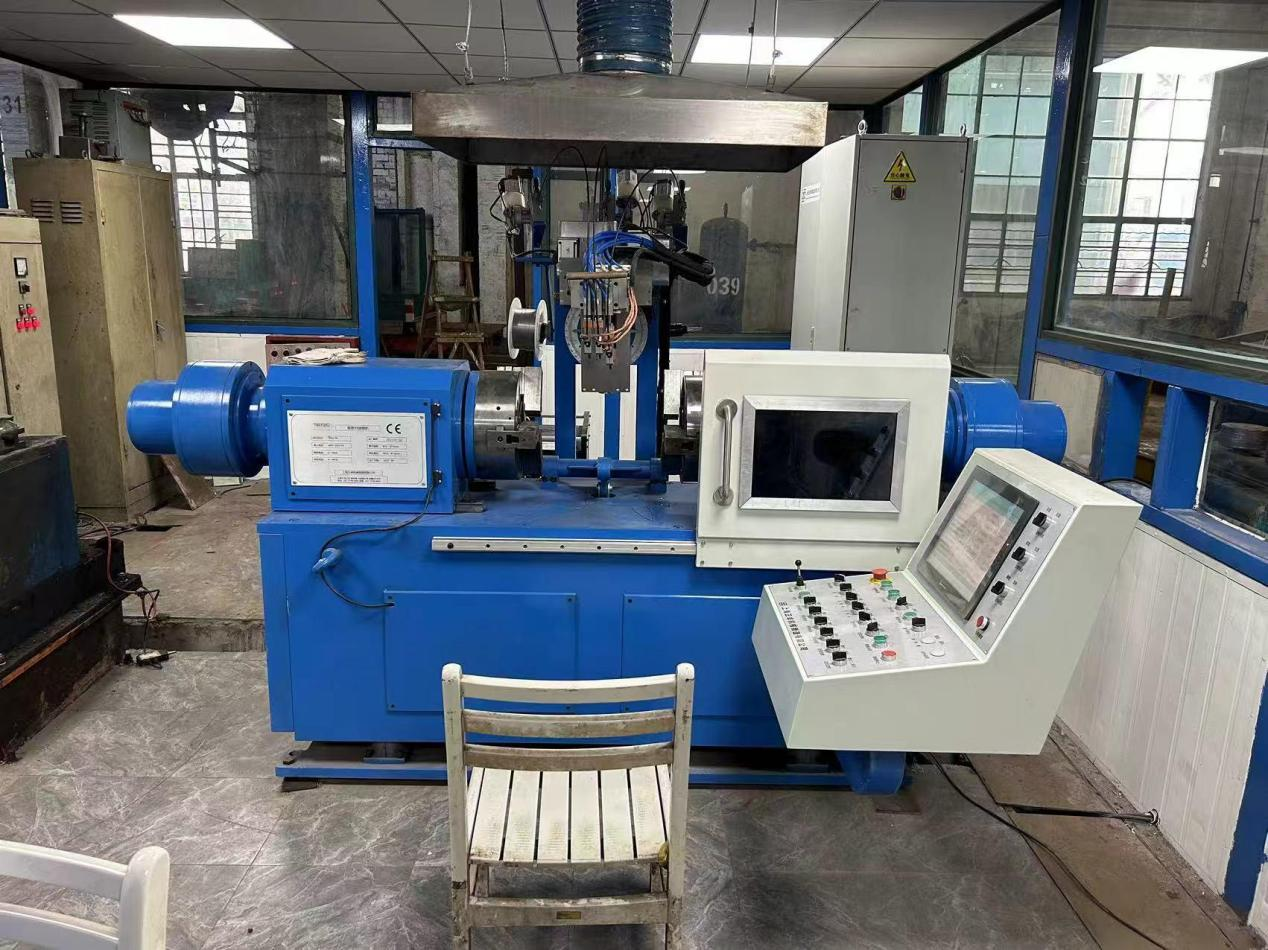
Tube to Tube Welding Machine
Tube-to-tube welding machines are specialized automated equipment designed to form secure, precise, and durable joints between metal tubes—an indispensable component in industries such as petrochemicals, power generation, HVAC, and heavy manufacturing. From an academic perspective, unlike traditional manual welding, which relies heavily on the operator’s skill and often results in inconsistent weld quality, these automated systems utilize cutting-edge welding technology to ensure uniform joint performance, enhance production efficiency, and reduce overall operational costs.
Designed for versatility, our Tube to Tube Welding Machine can accommodate a wide range of tube sizes and metal materials—including carbon steel, stainless steel, alloy steel, and titanium—while adapting to diverse welding requirements. Put simply, they are suitable for both standard production runs and custom project needs. Whether used in fabricating heat exchangers, boilers, industrial piping systems, or other tube-based equipment, these machines strictly adhere to rigorous industry standards (e.g., ASME, EN), ensuring structural stability and reliable operation even in high-pressure, high-temperature working environments.
Orbital TIG & Resistance Welding
Two core processes stand as industry standards for Tube to Tube Welding Machine : Orbital TIG (Tungsten Inert Gas) welding and Resistance Welding (RW). Each process offers distinct advantages tailored to different project scenarios and requirements, enabling you to easily select the optimal solution for your specific needs.
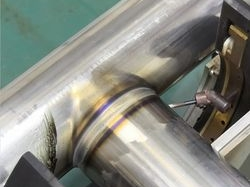
Orbital TIG welding is a precision-driven process, ideal for applications that demand exceptional weld quality, clean finishes, and leak-tight joints. Technically, it operates by rotating a non-consumable tungsten electrode around the tube joint, delivering consistent heat input to ensure uniform weld penetration. An inert gas—typically argon—shields the weld pool from atmospheric contamination, preventing oxidation and ensuring the formation of clean, robust joints. This process is particularly well-suited for thin-walled tubes, dissimilar metal welding, and critical applications (e.g., heat exchangers, boiler tubing), offering key benefits such as minimal material distortion, precise control over welding parameters, and compatibility with a wide range of metals, including high-alloy steels.
Resistance Welding
Resistance Welding (RW) generates heat through electrical resistance at the contact point of two tubes. When an electric current passes through the tubes, the contact area heats to its melting point, and external pressure is applied to fuse the two components into a solid joint. Its primary advantage is speed: RW is significantly faster than Orbital TIG, making it the preferred choice for high-volume production. The most common types of RW used in tube-to-tube applications are seam welding and projection welding, both of which perform well for thick-walled tubes and projects where speed and cost-efficiency are top priorities (e.g., automotive piping, large-scale industrial tube fabrication). While RW excels in productivity, it cannot match the precision and aesthetic quality of Orbital TIG—so the choice between the two ultimately hinges on material type, tube thickness, and quality standards.
Models & Specifications
We offer a comprehensive range of Tube to Tube Welding Machine to meet diverse industry needs—from small-diameter tubes for heat exchangers to large-diameter pipes for boiler systems. Each model is engineered with advanced features to ensure reliable performance and user-friendly operation. Below is a detailed parameter table (Table 1) outlining the key specifications of our core models, including all necessary technical details.
Model | Weldable Tube Diameter (Φ) | Wall Thickness Range | Max Welding Current | Welding Speed (rpm) | Welding Process | Cooling Method | Weight (Incl. Accessories) | Compatible Materials |
| TTP-50 | 12-50mm | 0.8-6mm | 280A | 0.2-5 | Orbital TIG | Circulating Water Cooling | 3.8kg | Carbon Steel, Stainless Steel |
| TTP-90 | 16-90mm | 1-12mm | 320A | 0.3-6 | Orbital TIG / Resistance Welding | Circulating Water Cooling | 6.5kg | Carbon Steel, Stainless Steel, Alloy Steel |
| TTP-130 | 30-130mm | 2-16mm | 360A | 0.4-5 | Orbital TIG / Resistance Welding | Circulating Water Cooling | 8.2kg | Carbon Steel, Stainless Steel, Alloy Steel, Titanium |
| TTP-175 | 40-175mm | 4-22mm | 360A | 0.4-4 | Orbital TIG | Circulating Water Cooling | 15.2kg | Stainless Steel, Alloy Steel, Titanium |
All our models feature automatic rotation (which stops automatically after one full weld cycle), an adjustable torch angle (0°-45°), and compatibility with argon shielding gas—all designed to ensure clean, high-quality welds. Technically, they are equipped with Intelligent Arc Voltage Control (AVC) for precise torch height adjustment, which compensates for minor tube ovality or joint misalignment to guarantee consistent weld penetration.
Heat Exchanger Applications
Heat exchangers are vital components in the petrochemical, power generation, and HVAC industries, as they are responsible for efficiently transferring heat between two or more fluids. Tube to Tube Welding is a critical step in heat exchanger fabrication: it connects tubes (along with elbows and return bends) to form a continuous flow path, directly impacting the equipment’s efficiency and operational safety.
The leak-tight, high-precision joints created by our Tube to Tube Welding Machine minimize heat loss and prevent fluid cross-contamination—two essential factors for maintaining heat exchanger performance and safety. Our machines are specifically engineered to meet the strict requirements of heat exchanger fabrication, ensuring compliance with industry standards and reliable long-term operation.
Case Study: Offshore Platform Heat Exchanger Fabrication
A leading marine engineering firm approached us to fabricate 30 shell-and-tube heat exchangers for offshore oil platforms. The project required welding BFe 30-1-1 cupronickel tubes (22mm diameter, 2.5mm wall thickness) to elbows and return bends, with strict compliance with TSG 21-2016 (equivalent to ISO 15614-1) and GB/T 151-2014 (equivalent to ASME Section VIII) standards—both critical for withstanding the harsh seawater environment and high corrosion risks associated with offshore operations.
Prior to partnering with us, the client relied on manual welding, which resulted in a 5% defect rate, inconsistent weld quality, and repeated pressure test failures. Given the tight delivery timeline and strict corrosion resistance requirements, transitioning to automated welding solutions was imperative.
We recommended our TTP-90 model, which supports both Orbital TIG and Resistance Welding. Orbital TIG was used for hard-to-reach joints and areas requiring leak-tightness, while Resistance Welding was employed for high-volume straight joints to boost efficiency. The machine’s Intelligent Arc Voltage Control (AVC) compensated for minor tube ovality, ensuring uniform penetration, and its circulating water cooling system prevented overheating during extended welding sessions. Additionally, its self-learning software optimized welding parameters after each batch, reducing setup time and enhancing overall productivity.
The results were remarkable: the client achieved a 99.8% weld pass rate, reduced labor costs by 45%, and completed the project 12 days ahead of schedule. The heat exchangers passed third-party pressure and corrosion testing on the first attempt, and the client reported a 28% improvement in heat transfer efficiency compared to their previously manually welded units. This case clearly demonstrates the value of automated tube-to-tube welding in critical heat exchanger applications, where precision and corrosion resistance are non-negotiable.
Boiler Applications
Boilers operate in extreme high-pressure and high-temperature environments. So the quality of tube-to-tube welds is critical to both operational safety and performance. Boiler tubes are subjected to constant thermal stress, pressure. And corrosion meaning welds must be strong, leak-tight, and resistant to fatigue and oxidation.
Our Tube to Tube Welding Machine are engineered to meet the rigorous standards of boiler fabrication. Including ASME Section I and EN 12952, ensuring that welds can withstand the harsh internal conditions of boilers. In boiler applications, these machines are used to connect water tubes, steam tubes, and superheater tubes. As well as to repair damaged joints during maintenance.
Orbital TIG welding is particularly well-suited for boiler applications, as it delivers precise. Clean welds with minimal distortion—critical for maintaining the structural integrity of thin-walled boiler tubes. Our machines also support hot-wire TIG technology. Which increases deposition rates by 40% compared to cold-wire TIG, boosting productivity without compromising weld quality. Additionally, our machines can weld dissimilar metals. (e.g., carbon steel and alloy steel) commonly used in boiler construction, ensuring compatibility with diverse boiler designs.
Whether fabricating new boilers or maintaining existing ones, our Tube to Tube Welding Machine deliver reliable. Long-lasting welds that reduce downtime and the risk of costly failures, ensuring safe and efficient boiler operation.
FAQs
Q1: What factors should I consider when choosing between Orbital TIG and Resistance Welding for tube-to-tube applications?
A1: Key factors include your project’s quality requirements, tube thickness, and production volume. Put simply, Orbital TIG is ideal for precision, leak-tight joints, thin-walled tubes, and high-quality applications (e.g., heat exchangers, boilers). From an academic perspective, Resistance Welding is faster and more cost-efficient, making it better suited for high-volume production of thick-walled tubes where speed is a top priority. For most offshore or boiler projects, we recommend Orbital TIG for critical joints.
Q2: Can your Tube to Tube Welding Machine handle dissimilar metal welding?
A2: Yes, our TTP-90, TTP-130, and TTP-175 models are capable of welding dissimilar metals, including carbon steel, stainless steel, alloy steel, and titanium. This capability is particularly critical for boiler and heat exchanger applications, where different metals are used to enhance corrosion resistance and overall performance.
Q3: What range of tube sizes do your machines support?
A3: Our models cover a wide range of tube diameters, from 12mm (TTP-50) to 175mm (TTP-175). If you require a machine for larger or smaller tube sizes, we can provide custom solutions tailored to your specific project requirements.
Q4: How do your machines ensure consistent weld quality?
A4: Technically, our machines are equipped with Intelligent Arc Voltage Control (AVC) for precise torch height adjustment, automatic rotation for uniform welds, and self-learning software that optimizes welding parameters after each batch. These features minimize human error and ensure consistent penetration, even with oval tubes or misaligned joints. All machines also meet ASME and EN quality standards to further enhance reliability.
Q5: Are your Tube to Tube Welding Machine portable for on-site use?
A5: Yes, all our models are lightweight and portable, weighing between 3.8kg and 15.2kg. This makes them easy to maneuver around fabrication shops or transport to on-site locations. Highly practical for large heat exchangers, boilers, or on-site maintenance work where access to tube joints is limited.
UVP Module
Welding Process Comparison:
Our comprehensive guide compares Orbital TIG and Resistance Welding for tube-to-tube applications. Breaking down their pros, cons, and ideal use cases in detail. From an academic perspective, it includes technical insights on processing speed, precision, material compatibility. And cost, along with real-world application examples to help you make an informed decision for your project.
Reviews
There are no reviews yet.