From pressure vessel fabrication in Alberta to pipeline spool production for LNG facilities, WXABK provides advanced Oil & Gas Industry Welding Solutions that improve precision, reliability, and productivity. Our welding rotators, positioners, and manipulators deliver the consistent, ASME-compliant performance required by Canada’s oil and gas fabrication sector.
Oil & Gas Industry Welding Solutions are essential in one of the most code-intensive welding environments in heavy industry. Pressure vessels, heat exchangers, separators, storage tanks, and pipeline spools require strict compliance with ASME Section VIII, CSA Z662, API 620/650, and CWB standards. Furthermore, fabricators in Alberta, British Columbia, and Saskatchewan supporting the oil sands, LNG, and petrochemical sectors must deliver flawless welds with zero tolerance for defects that could compromise pressure integrity.
The challenge is not skill it is consistency at scale. A single oil sands processing facility can require hundreds of pressure vessels and thousands of pipeline spools. WXABK welding rotators and positioners keep every joint in the flat 1G/1F position, automate the rotation of heavy vessels up to 1,000T, and allow one operator to manage multiple welding stations simultaneously without compromising the weld quality that ASME and API codes demand.
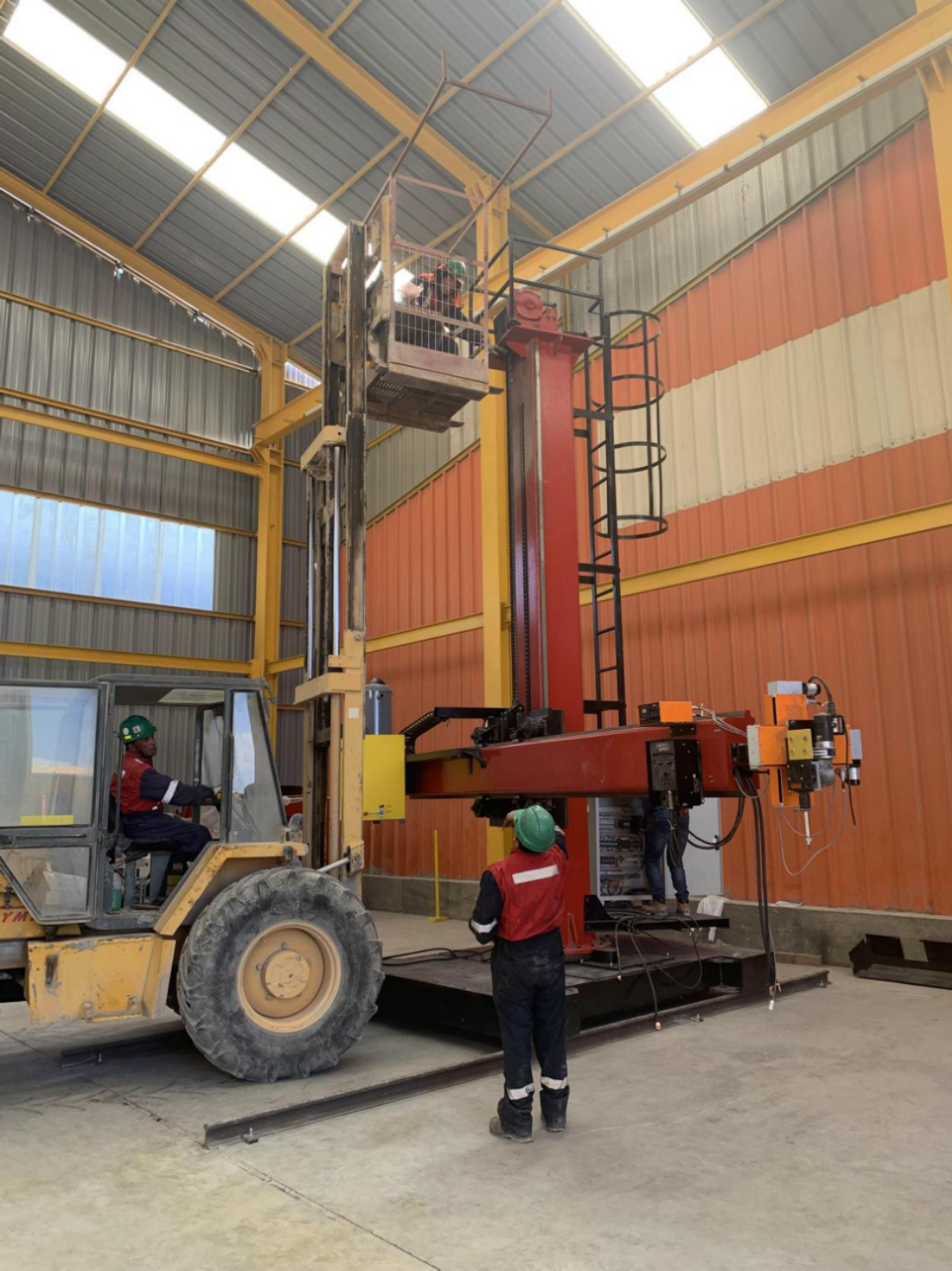
These are the fabrication challenges Canadian oil and gas fabricators face most — and how WXABK automation solves each one.
Oil sands separators, reactors, and storage vessels frequently weigh 100–1,000+ tonnes. Under-specified rotators deflect, slip, or fail under these loads — creating safety hazards and production stoppages on critical project schedules.
ASME Section VIII pressure vessel fabrication requires strict weld procedure qualification, welder certification, and NDE compliance. Inconsistent welding due to poor positioning equipment increases the risk of ASME non-conformances and costly NDE failures.
Welding interior shell seams and bottom annular rings on large API 620/650 storage tanks requires extended reach equipment. Scaffolding solutions are slow, expensive, and create confined space safety risks for welders.
Pressure vessels in oil & gas processing have dozens of nozzles, manholes, and instrumentation connections — each requiring precise positioning for flat-position welding. Manual repositioning of the vessel for each nozzle is impractical on large assemblies.
Alberta and BC face a chronic shortage of CWB-certified pressure vessel welders. Manual welding processes amplify this problem by requiring more welders per vessel — making project delivery schedules increasingly difficult to commit to.
Oil sands and LNG capital projects operate on fixed commissioning schedules with substantial penalty clauses for late equipment delivery. Fabrication bottlenecks in vessel shops directly affect project completion dates and contractor relationships
An ASME-certified pressure vessel fabricator in Alberta serving the oil sands sector was facing NDE failure rates of 3.1% on circumferential seams. As part of its commitment to delivering reliable Oil & Gas Industry Solutions, the company identified positional welding defects caused by inadequate rotation equipment as a major challenge. Consequently, costly repairs increased project expenses and placed delivery schedules at risk.
"Our NDE rejection rate dropped from 3.1% to 0.3% in the first quarter. ThatThat alone saved us more per month than the machine repayments. We wish we had done this ten years ago."
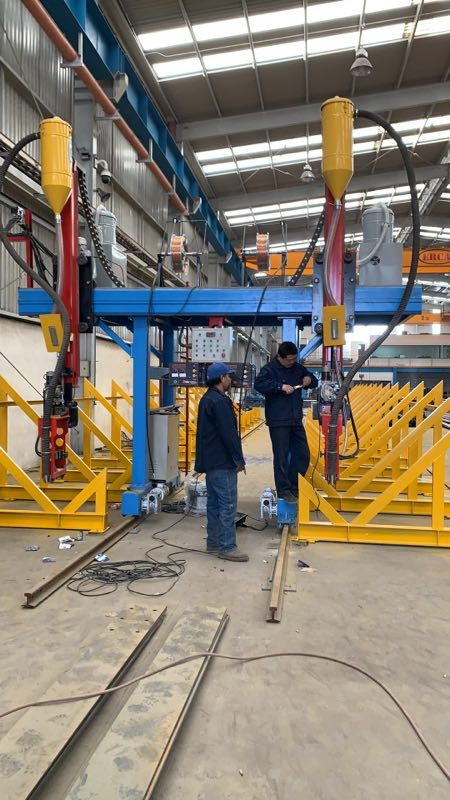
Our end-to-end process ensures the right machine is engineered, tested, shipped, and commissioned on time — every time.

Share your workpiece dimensions, load capacity, and production goals with our engineers.
We design a machine configuration matched exactly to your welding process and facility.

Built in our ISO-certified factory with full load testing, run-off, and inspection report.
Sea, air, or land freight with full export documentation, crating, and insurance.

On-site installation, operator training, and 12-month warranty support included.
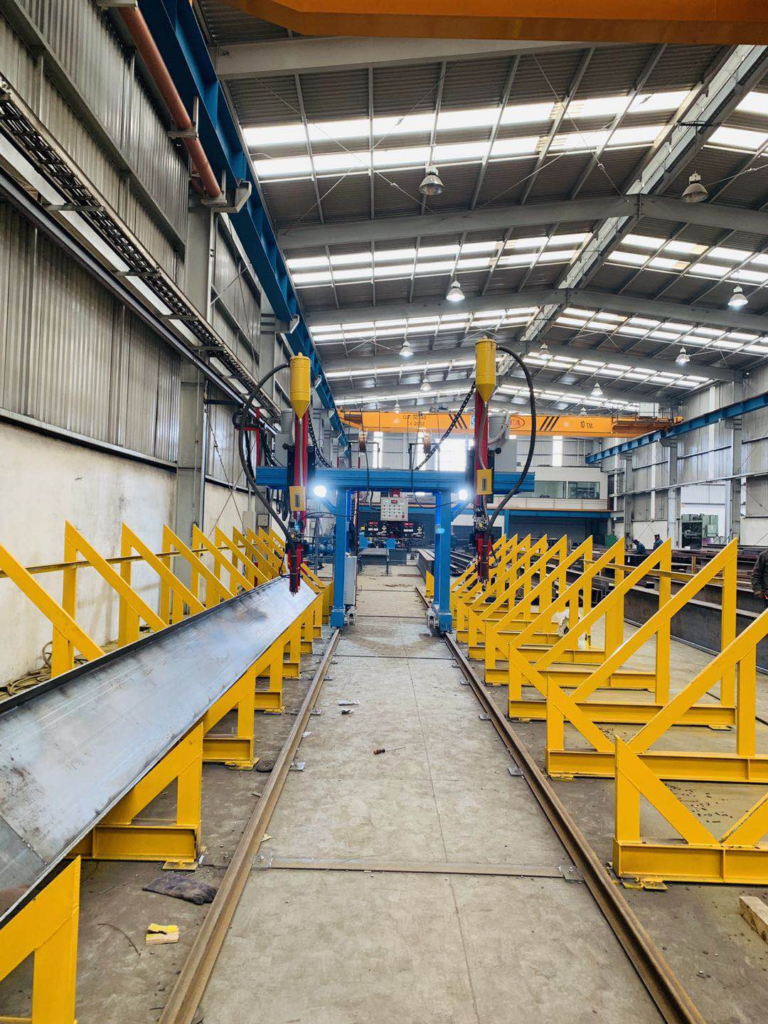
From raw flanges and web plate to finished, straightened H-beam — the WXABK line handles every stage automatically, reducing the number of operators required from 6+ to just 2.
The rolled shell courses are lifted onto WXABK welding rotators. The rotator drives maintain the shell in round and begin rotating at the specified speed for the first circumferential seam joint welding pass.
The shell rotates continuously as the submerged arc or FCAW torch completes the exterior circumferential seam. Multiple passes are completed without topping the machine — consistent flat position, consistent heat input, consistent weld profile across all passes.
The completed shell assembly is transferred to the welding positioner. The positioner tilts the vessel to present each nozzle in the flat position for welding. All nozzle connections are completed without repositioning the vessel from the positioner table.
The completed vessel is transferred for NDE inspection, post-weld heat treatment where required, and hydrostatic pressure testing. With WXABK automated positioning, NDE failure rates are consistently below 0.5% — reducing rework and protecting your ASME certification schedule.
Share your vessel dimensions, capacity requirements, and welding process. A WXABK engineer will respond within 24 hours with equipment recommendations, ASME-compliant configuration options, and a fully itemised quote.
Every pipe & vessel enquiry is reviewed by a specialist engineer — not a generic sales team.
We model your exact payback period based on current labour rates and output — at no charge.
Leasing, hire-purchase, and instalment payment options available through our financial partners in 30+ countries including Canada.
A consultation and quote costs you nothing. We provide expert advice regardless of purchase timeline.
Fill in the form and a specialist engineer will respond within 24 hours.