
Description
Metal Welding Services
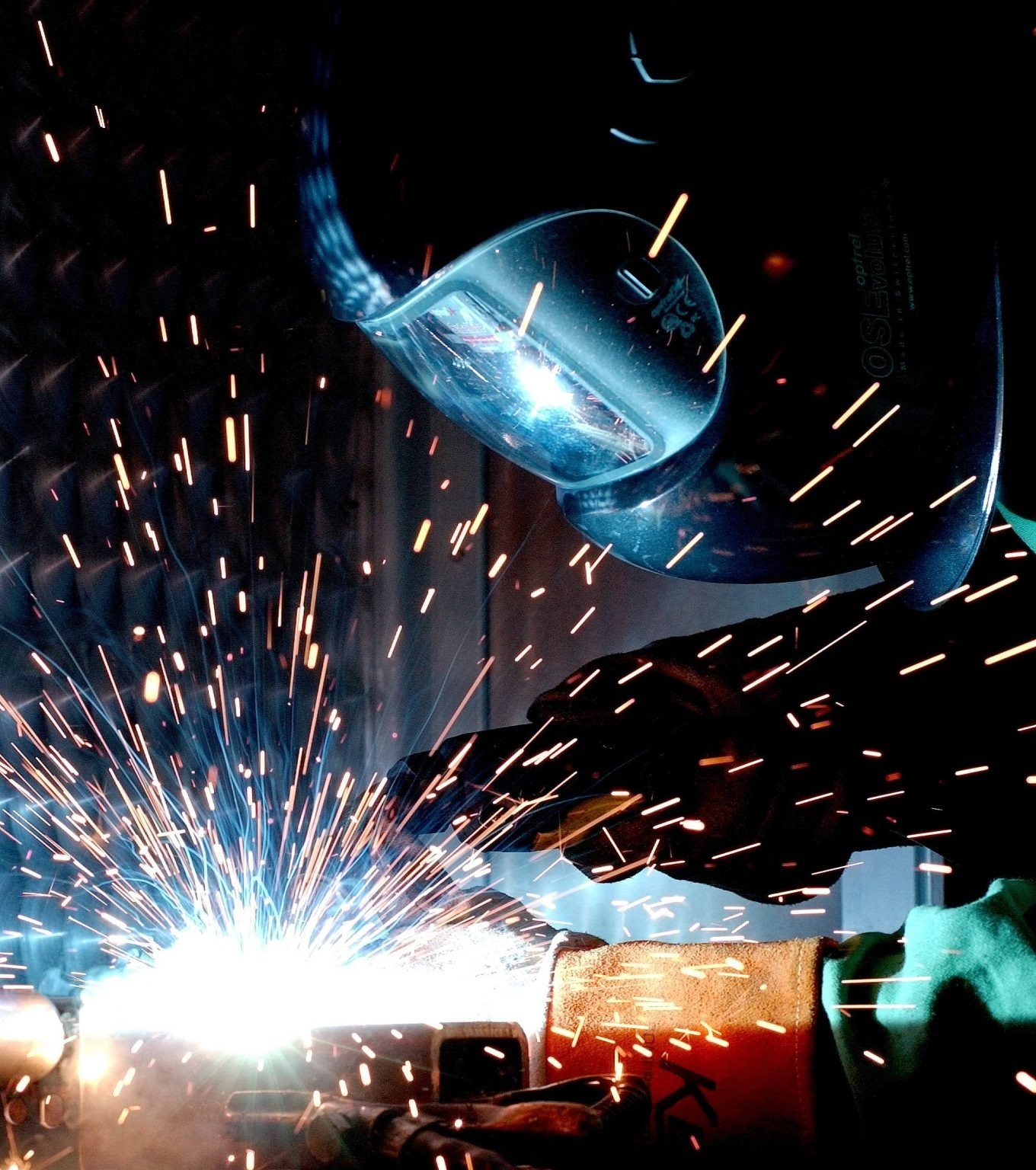
Our professional metal welding services focus on delivering high-precision, reliable, and code-compliant joining solutions for industrial, commercial, and custom projects of all sizes—regardless of the scope or complexity. Backed by certified welders, state-of-the-art automated and manual equipment, and strict quality management systems, we specialize in three industry-leading welding processes: TIG, MIG, and SAW. From a technical standpoint, each process is carefully selected to match your material type, thickness, structural requirements, and production volume, ensuring consistent performance and long-term durability in real-world applications.
Every weld we produce meets or exceeds global standards, including ISO 15614-2:2025 and ASME codes—this is non-negotiable. Whether you require delicate precision components, heavy-duty structural assemblies, pressure vessels, or custom metal parts, we combine professional technical expertise, strict process control, and customer-centric service to become your trusted welding partner. Our core goal is to deliver safe, stable, and cost-effective results that support your project’s success from prototype to full-scale production.
Welding Processes (TIG MIG SAW)
We offer three core welding technologies to address the diverse needs of the industrial and manufacturing sectors—essentially, we have a solution for nearly every welding requirement. Our certified welders are fully trained in all three methods, allowing us to select the optimal process based on material properties, workpiece geometry, and performance specifications.
TIG Welding (Tungsten Inert Gas Welding)
Technically classified as a gas-shielded arc welding process, TIG welding uses a non-consumable tungsten electrode to create a controlled arc, with manual filler metal added as needed. Shielded by an inert gas (typically argon), this process effectively prevents weld contamination, resulting in clean, spatter-free, and highly precise welds with excellent aesthetics and corrosion resistance. It is particularly well-suited for thin materials, complex joints, and non-ferrous metals such as aluminum, titanium, and high-alloy steels.
Typical applications include aerospace components, medical devices, precision instruments, food-grade equipment, and high-finish architectural metalwork. While TIG welding requires advanced operator expertise and operates at a lower deposition rate than other processes, it delivers unmatched precision and weld integrity—making it the ideal choice for projects where quality cannot be compromised, regardless of cost.
MIG Welding (Metal Inert Gas Welding)
MIG welding is a semi-automatic or automatic gas-shielded arc welding process that uses a continuously fed solid wire electrode and shielding gas to form a stable weld pool. It is defined by its versatility, high efficiency, ease of automation, and compatibility with a wide range of common and alloyed metals. In practice, it performs reliably with carbon steel, stainless steel, aluminum, and nickel alloys, making it well-suited for high-volume production, long weld seams, and general metal fabrication.
One of the key advantages of MIG welding is its minimal spatter, which significantly reduces post-weld cleaning efforts. It also supports both manual and robotic operation, offering flexibility for projects of all sizes. You will commonly find it used for automotive frames, machinery housings, general metal assemblies, and medium-pressure components where efficiency and consistency are critical.
SAW Welding (Submerged Arc Welding)
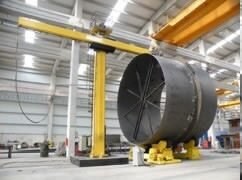
SAW is a heavy-duty, high-productivity welding process that operates under a layer of granular flux. The flux serves two key purposes: it shields the molten weld pool from oxidation and contamination, while also enhancing the weld bead’s shape and mechanical properties. From a technical perspective, SAW offers deep weld penetration, high deposition rates, and strong automation potential, making it ideal for thick plates and large-scale industrial fabrication.
In practice, it is widely used for pressure vessels, heat exchangers, large structural steel, pipe spools, reactor components, and heavy equipment. SAW produces consistent, high-strength welds that are well-suited for harsh operating environments—where exceptional durability and reliability are essential.
Materials & Thickness Range
We specialize in welding a wide range of ferrous and non-ferrous metals, with certified processes for both standard and specialized alloys. Our welders receive professional training in material-specific welding procedures, ensuring proper fusion, sufficient mechanical strength, and excellent corrosion resistance in every weld joint.
Supported materials include:
- Carbon steel (the most widely used material in general fabrication)
- Stainless steel (304, 316, duplex, and other common grades)
- Aluminum and aluminum alloys (commonly used in the aerospace and automotive industries)
- Titanium and titanium alloys (for high-precision, corrosion-resistant components)
- Nickel alloys (Hastelloy, Inconel, Monel), suitable for high-temperature and high-pressure environments
- Copper, brass, and bronze (for electrical and decorative components)
Thickness capabilities vary by welding process, in line with industry standards and our equipment capabilities—here’s a clear breakdown:
- TIG Welding: 0.3mm – 12mm (prioritizes precision over thickness)
- MIG Welding: 0.8mm – 25mm (balances efficiency and thickness range)
- SAW Welding: 6mm – 100mm (specialized for heavy-duty thick plates)
For custom heavy-wall projects beyond these standard ranges, we utilize multi-pass welding techniques and specialized equipment to achieve full weld penetration and ensure compliance with your project specifications—no shortcuts are taken.
Quality Inspection
Quality assurance is integrated into every stage of our welding services—we don’t just inspect at the end; we monitor every step of the process. We implement a full-cycle inspection system covering pre-weld preparation, in-process monitoring, and post-weld testing to ensure compliance with standards, operational safety, and stable performance. All inspections strictly adhere to ISO 15614-2:2025, ASME, and client-specified standards, conducted by certified inspectors using professional testing equipment.
Inspection Stages
- Pre-weld material verification: We carefully verify material certificates, dimensional accuracy, surface cleanliness, and workpiece fit-up to ensure all materials and pre-processing meet project specifications—this forms the foundation of a high-quality weld.
- In-process monitoring: Our team continuously monitors welding voltage, current, travel speed, gas shielding effectiveness, and weld formation in real time to maintain stable welding parameters and prevent defects during the process.
- Post-weld testing: We combine visual inspection, non-destructive testing (NDT)—including ultrasonic testing (UT), magnetic particle testing (MT), and liquid penetrant testing (PT)—and destructive testing (when required) to comprehensively verify weld soundness and mechanical properties.
Quality Inspection Report Sample
| Inspection Item | Details |
| Report No. | WQR-2026-008 |
| Project Name | Heavy Wall Pressure Vessel Welding |
| Client | [Client Name] |
| Welding Date | April 20, 2026 |
| Processes Used | SAW (fill passes), TIG (root pass) |
| Base Material | Carbon Steel A516 Gr.70, 20mm |
| Welding Parameters | SAW: 380A, 34V, 45 cm/min; TIG: 190A, 13V, 11 cm/min |
| Inspection Methods | Visual, UT, MT |
| Results | Visual: No porosity, cracks, or undercut; bead width and reinforcement within tolerance. UT: No internal defects; penetration ≥19mm. MT: No linear or rounded indications detected. |
| Conclusion | All welds passed inspection; fully compliant with ISO 15614-2:2025 and ASME standards; safe for operational use. |
| Inspector | [Name], UT/MT Certified |
| Inspection Date | April 21, 2026 |
Applications
Our TIG, MIG, and SAW welding services cater to multiple industries with customized, code-compliant solutions—regardless of your industry, we can tailor a plan to meet your needs.
Industrial Fabrication
We specialize in welding heavy industrial components such as pressure vessels, storage tanks, heat exchangers, columns, and reactor components. SAW and MIG welding are the primary methods used here, delivering robust, high-temperature, and corrosion-resistant joints that fully meet ASME and TEMA standards—critical for industrial safety.
Automotive & Aerospace
In the automotive industry, MIG welding is used for chassis, frames, and exhaust systems, balancing high efficiency and structural strength. In the aerospace sector, TIG welding is employed for thin-wall aluminum, stainless steel, and high-alloy components, meeting the strict dimensional accuracy and corrosion resistance requirements of aerospace products.
Construction & Infrastructure
For construction and infrastructure projects, SAW and MIG welding deliver stable, high-strength joints for steel structures, bridges, beams, and support frames—ensuring the safety and durability of the entire structure. We also provide custom architectural welding for railings, facades, and decorative metalwork, combining functionality and aesthetics.
Energy & Petrochemical
We provide professional welding solutions for pipelines, power generation components, wind turbine structures, and petrochemical equipment. SAW excels in thick-wall pipes and pressure vessels, while TIG supports precision components in nuclear and renewable energy facilities—all complying with strict industry safety standards.
Custom & Precision Manufacturing
For custom and precision manufacturing, TIG welding produces clean, delicate welds for medical devices, electronics, and small precision parts. MIG welding, meanwhile, supports high-volume custom fabrication with consistent quality and fast turnaround—ideal for clients seeking both quality and efficiency.
FAQs
What are the differences between TIG, MIG, and SAW, and which is best for my project?
Simply put, TIG is designed for precision work, thin materials, non-ferrous metals, and high aesthetics—think small, delicate components. MIG is versatile, fast, and suited for high-volume production and general fabrication—ideal for most common projects. SAW is heavy-duty with high penetration, making it perfect for thick plates and large industrial assemblies—for large, heavy components. Our team will evaluate your material, thickness, and specific application to recommend the optimal process, so you don’t have to worry about making the wrong choice.
What materials can you weld?
We weld a wide range of metallic materials, including carbon steel, stainless steel (all grades), aluminum, titanium, nickel alloys (Hastelloy, Inconel, Monel), copper, brass, bronze, and specialty high-performance alloys.
What thickness ranges do you support?
Thickness ranges vary by process: TIG: 0.3–12mm; MIG: 0.8–25mm; SAW: 6–100mm. For thicker sections beyond these ranges, we can use custom multi-pass procedures to meet your needs—just let us know your specific requirements.
Do you provide inspection reports?
Yes, we do. Every project includes a comprehensive quality inspection report with detailed welding parameters, inspection methods, test results, and compliance statements—all signed by certified inspectors. You will receive a clear record of every inspection step, giving you complete peace of mind regarding quality of Metal Welding Services.
How long does a welding project take?
Project timelines depend on size, complexity, material type, and welding process. Small custom jobs typically take 1–3 days, medium fabrication projects take 1–2 weeks, and large industrial projects (such as pressure vessels or structural steel) take 2–6 weeks.
Are your welders and inspectors certified?
Absolutely. All our welders hold professional certifications in TIG, MIG, and SAW Metal Welding Services, with extensive on-site experience. Our inspectors are qualified in UT, MT, PT, and visual testing, ensuring every inspection is professional and rigorous—we never compromise on certification standards.
UVP Module: Process Comparison & Thickness Capability
Process Comparison Table
Welding Process | Key Advantages | Material Suitability | Precision & Deposition | Ideal Applications |
| TIG | Ultra-high precision, clean spatter-free welds, excellent aesthetics, and strong corrosion resistance | Aluminum, titanium, stainless steel, high alloys | Very high precision; low deposition rate (1-3 lbs/hr) | Aerospace, medical, precision parts |
| MIG | Fast, versatile, easy to automate, low spatter, and high efficiency | Carbon steel, stainless steel, aluminum, nickel alloys | Medium precision; medium-high deposition rate (8-12 lbs/hr) | Automotive, general fabrication, long seams |
| SAW | Deep penetration, ultra-high productivity, heavy-duty performance, and stable weld quality | Carbon steel, stainless steel, thick plates | Medium precision; very high deposition rate | Pressure vessels, structural steel, heat exchangers |
Thickness Capability Chart
Process | Material | Thickness (mm) | Notes |
| TIG | Aluminum / Titanium | 0.3 – 8 | Ideal for thin precision parts; multi-pass welding available for thicker materials |
| TIG | Stainless / Carbon Steel | 0.5 – 12 | Suitable for root passes and clean finishes; ideal for applications requiring high aesthetics |
| MIG | Carbon / Stainless Steel | 0.8 – 25 | High efficiency for medium-thickness materials; ideal for high-volume production |
| MIG | Aluminum | 1.0 – 20 | Requires specialized wire and gas setup to ensure optimal weld quality |
| SAW | Carbon / Stainless Steel | 6 – 100 | Suited for heavy industrial applications; automated operation ensures deep penetration |
Metal Welding Services Process Capability Table
Process | Speed (cm/min) | Shielding | Automation | Cleaning | Standards |
| TIG | 6 – 12 | Pure argon | Low automation; requires highly skilled operators | Minimal (no slag, minimal spatter) | ISO 15614-2:2025, ASME |
| MIG | 20 – 50 | Argon mix / pure argon | Medium-high automation; easy to implement automation | Low (minimal spatter, no slag) | ISO 15614-2:2025, ASME |
| SAW | 30 – 60 | Granular flux (no gas needed) | Very high automation; suitable for full automation | Medium (flux removal required after welding) | ISO 15614-2:2025, ASME, TEMA |
Reviews
There are no reviews yet.